
Reviewed · WALKING TOURS
Private Prague Art Nouveau and Cubism Walking Tour
Prague’s grandest sights are not the only reason to take this tour. Art Nouveau curves, mosaics, ironwork, and Cubist angles appear all over the city, and this route teaches you how to spot them. You begin at Prague Main Station and finish near Albertov, seeing famous buildings as well as odd little details most visitors walk past.
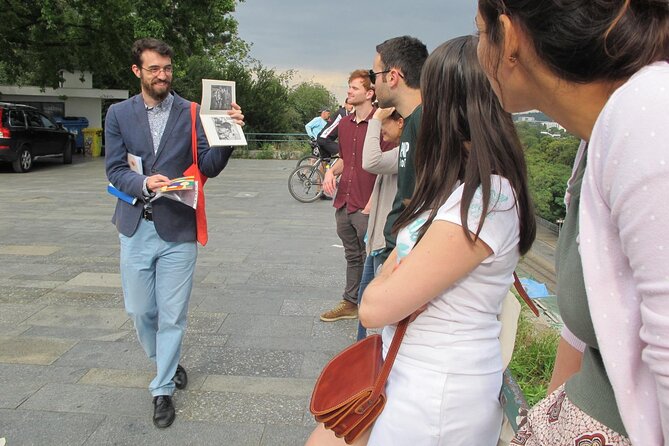
I like two things right away: the tour is private for your group, and the price is $94.93 for up to 15 people, which can be strong value if you are sharing it with family or friends. I also like the focus. Max Hutar of Prague Articulate brings architecture, history, and human stories together instead of simply pointing at façades.
The main caution is time. The advertised length is about two and a half hours, but there is plenty of walking between stops, and one participant found the tour ran longer. Several stops are quick exterior views, and admission fees at some buildings are not included.
In This Review
- Key details before you book
- Why Prague is such a good city for Art Nouveau and Cubism
- Central Station and the first Art Nouveau clues
- Senovážné Square and the early Hotel Central
- Municipal House and the grand public face of Art Nouveau
- House of the Black Madonna: Prague Cubism in one sharp turn
- Na Příkopě and the Cubist lamppost
- Wenceslas Square and Vodičkova’s mixed streetscape
- Three Cubist Houses and Villa Kovarovic
- Neklanova and the finish near Albertov
- Walking time, public transit, and the two-and-a-half-hour estimate
- What the $94.93 group price really means
- Who will get the most from this Prague walk
- Should you book the Prague Art Nouveau and Cubism tour?
- FAQ
- Where does the tour start?
- Where does the tour finish?
- How long does the tour last?
- Is this a private tour?
- What language is offered?
- Are admission tickets included?
- How much does the tour cost?
- Is public transportation part of the tour?
- Can I cancel for a full refund?
Key details before you book
- Prague Main Station begins the story: The 1909 station gives you an immediate look at Prague’s Art Nouveau style in a grand public building.
- Cubism gets its own Prague chapter: The route includes the House of the Black Madonna, Emil Králicek’s Cubist lamppost, the Three Cubist Houses, Villa Kovarovic, and a Cubist apartment building on Neklanova.
- Max Hutar leads the experience: His approach combines architectural detail with stories about the people, ideas, and controversies behind the buildings.
- The route crosses several city districts: You move from the main station through the New Town and Old Town edge toward the area below Vyšehrad.
- The tour is private: Only your group participates, with a maximum group size of 15.
- Expect a moving tour, not a museum visit: Walking and public transportation form part of the experience, and some stops last only five minutes.
Why Prague is such a good city for Art Nouveau and Cubism
Prague is unusually rewarding for anyone interested in early modern architecture. Art Nouveau arrived in the city with flowing lines, decorative façades, floral details, stained glass, and carefully designed interiors. Cubism then took a sharper turn, using angular forms and fractured-looking shapes in buildings, furniture, and even street furniture.
This tour places both styles in the same urban setting. That matters because you can compare them as you go. One building may soften its façade with ornament and curves, while another nearby uses triangles, facets, and hard geometric lines.
I like this kind of city tour because it gives you a way to keep exploring after the guide leaves. The most useful skill is not memorizing names. It is learning what to look for: the shape of a doorway, the pattern around a window, the way a façade projects into the street, or the difference between decoration and structure.
The route also adds a useful historical frame. Prague’s Art Nouveau and Cubist buildings date mainly from the years before and around World War I, when architects were experimenting with new forms while still borrowing from older Gothic, Baroque, Moorish, and classical traditions.
More walking tours in Prague:
- Prague: 3-Hour Walking Tour of Old Town & Prague Castle
★ 4.7 · 5,696 reviews - Prague: Ghost Walking Tour Where Legends Come To Life
★ 4.4 · 5,253 reviews - Prague: Jewish Quarter Walking Tour with Admission Tickets
★ 4.7 · 3,729 reviews
Central Station and the first Art Nouveau clues
The tour starts at Prague Main Station, on Wilsonova. The station’s historical building opened in 1909 and is one of the strongest first examples of Prague Art Nouveau on the route.
A recent reconstruction has restored much of the beauty of its halls and corridors. You can expect the station to feel like more than a place for catching a train. It is an architectural introduction, with decorative details that help your guide explain the local version of Art Nouveau before you move into the streets.
This is a smart starting point. The station is practical to reach, easy to identify, and free to enter. It also gives the tour a clear beginning: public architecture, built for a modern city, presented with great care.
From there, you move to the Jerusalem Synagogue. Built in 1906 in a traditional Moorish style, it also uses Art Nouveau elements. The short five-minute stop is not a full visit, and admission is not included, so think of it as a façade and style comparison rather than a long interior stop.
That comparison is useful. The synagogue shows how architectural movements could cross cultural and religious boundaries. Moorish forms and Art Nouveau decoration meet in one building, giving you a more complicated picture than a simple march from one style to another.
Senovážné Square and the early Hotel Central
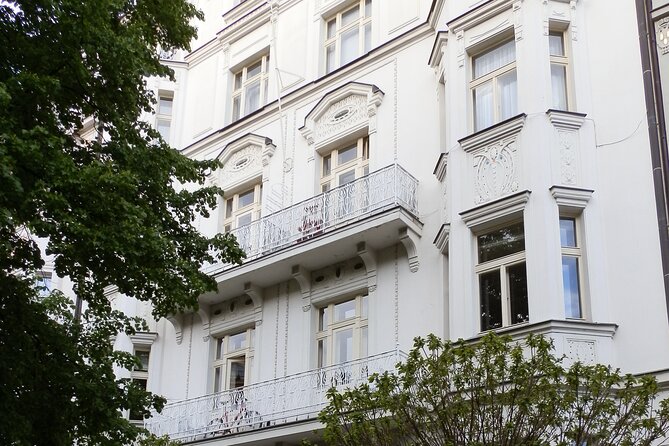
At Senovážné Square, three luxurious apartment buildings from the Art Nouveau period give you a look at how the style entered ordinary city life. The stop lasts about five minutes and is free.
These buildings are important because Art Nouveau was not limited to grand civic monuments. It shaped apartment houses, commercial façades, and the streets where people lived. Look for the repeated decorative language across the three buildings and consider how a whole square can gain its character from several related designs.
Next comes Hotel Central on Hybernská 10. Dating from 1899, it is one of Prague’s early Art Nouveau buildings. Again, this is a quick stop, and admission is not included.
The short timing means you will need to stay close to Max and listen while looking. This is not a slow sketching tour or an extended interior study. It is a guided city walk that uses several brief examples to build your eye.
Municipal House and the grand public face of Art Nouveau
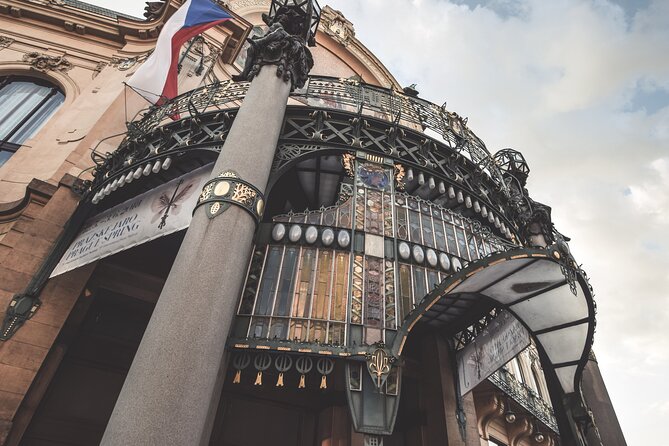
The Municipal House is one of the major moments of the tour. Projected in 1905, it continues to serve as a cultural and representative center for Prague and is one of the city’s most important Art Nouveau buildings.
You receive about ten minutes here. Admission is not included, so the tour does not promise a full paid visit through the interiors. Even so, the exterior and its role in Prague’s public life give Max plenty to discuss.
I especially like this stop for the contrast it offers with the apartment buildings. The Municipal House uses Art Nouveau on a large civic scale. It was designed to represent the city, not simply to house residents or serve as a hotel.
If you want extra time inside, ask about that before booking. The scheduled tour moves on, and the overall route has many more places to cover. The building deserves attention, but it is one part of a wider architectural route rather than the entire focus.
A few more Prague half-days to weigh up
- Prague Old Town: Private Tour
★ 5.0 · 1,223 reviews - Prague Airport Private Arrival Transfer
★ 4.5 · 991 reviews - Prague Airport Private Departure Transfer
★ 4.5 · 780 reviews - Discover Prague Private Tour – 3 hours
★ 5.0 · 705 reviews
House of the Black Madonna: Prague Cubism in one sharp turn
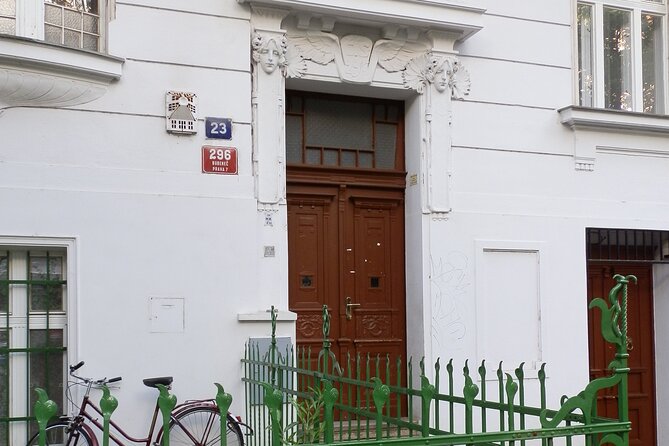
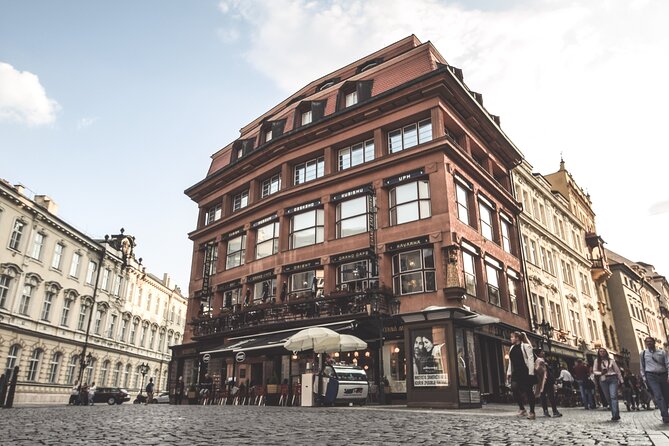
The House of the Black Madonna is the route’s clearest introduction to Prague Cubism. Built in 1912, it is often treated as a flagship of Cubist architecture, especially because of its central location and stylistic purity.
The shift from the Municipal House to this building should be striking. Art Nouveau tends to invite the eye along curves and ornament. Cubism breaks the surface into harder planes and bold angles. Here, the building itself helps explain the movement.
The stop lasts ten minutes, and admission is not included. The tour description does not promise an interior visit, so you should book this experience for the architectural explanation and exterior viewing unless Max confirms otherwise.
This is also where the tour becomes more than a collection of pretty façades. Prague’s Cubist architects were not merely adding decoration. They were testing a new visual language, and the House of the Black Madonna lets you see that ambition in a compact, memorable form.
Na Příkopě and the Cubist lamppost
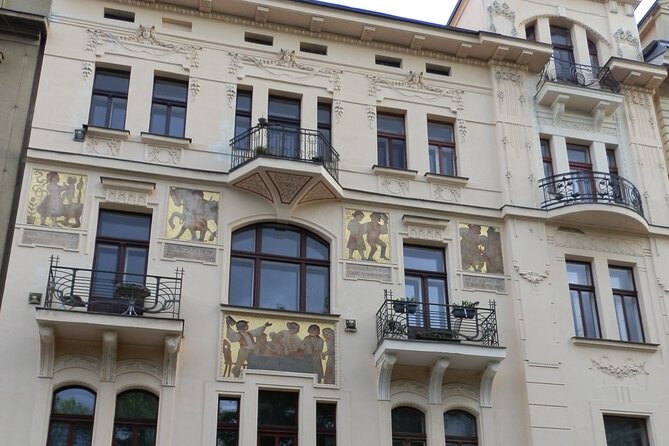
Na Příkopě forms a boundary between Prague’s Old Town and New Town. Its banks and other buildings provide more Art Nouveau examples, making this five-minute stop a quick urban comparison.
The route then reaches Emil Králicek’s Cubist lamppost, one of the most unusual pieces of street furniture in Prague. It is free to see and takes about five minutes.
This may be one of the most useful stops for families and casual architecture fans because it makes Cubism less intimidating. You are not looking at a remote monument. You are looking at a lamppost, placed in the street, transformed by angular design.
It also shows how far the movement could reach. Cubist ideas did not belong only to large buildings. They could shape small public objects too. That is the sort of detail you might continue spotting around Prague after the tour.
Wenceslas Square and Vodičkova’s mixed streetscape
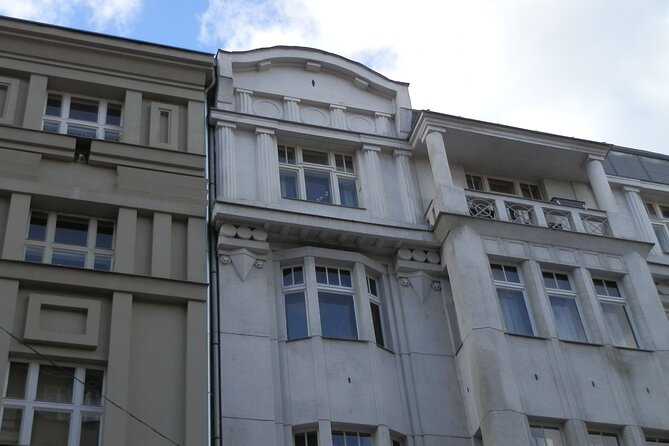
Wenceslas Square receives about 20 minutes, the longest stop on the itinerary. This central downtown square includes Art Nouveau hotels and department stores, so you have time to compare several commercial buildings in one area.
The square is useful for seeing how architecture meets city life. Hotels and department stores were designed to attract attention, signal modernity, and compete for space in a busy central district. Their façades tell you something about commerce as well as style.
From there, the route continues along Vodičkova, where several Art Nouveau and Cubist buildings appear. The stop lasts about ten minutes.
This section should appeal to you if you like side-by-side comparison. Instead of treating Art Nouveau and Cubism as sealed-off subjects, the route lets you see them sharing the same streets. The city becomes a visual lesson, with different ideas layered onto the same urban setting.
Three Cubist Houses and Villa Kovarovic
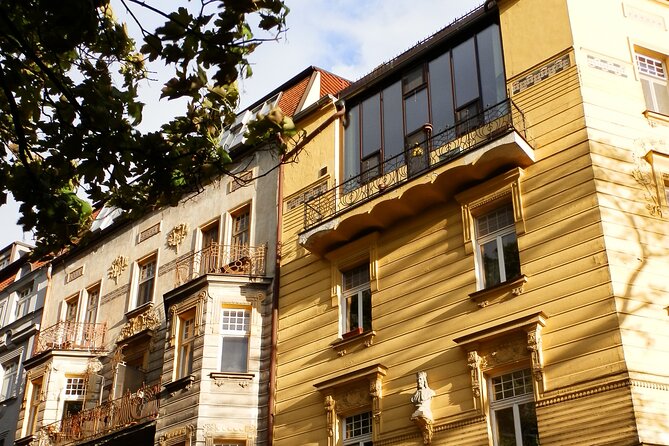
The tour then moves toward the area below the Vyšehrad fortress. The Three Cubist Houses are among Prague’s best-known Cubist constructions. Their triplet arrangement gives the stop a strong sense of unity, while the angular façades make the buildings easy to recognize.
You get about five minutes here, and admission is not included. Since the stop is brief, keep your expectations practical. You will have time to understand the design and take in the group of buildings, but not to linger for a long architectural study.
Villa Kovarovic, built beside the Vltava in 1912, offers a different kind of Cubist expression. It draws on Gothic and Baroque architecture while using Cubist forms. That mix is central to Prague’s architectural character: new ideas did not wipe away the old ones. They borrowed, reshaped, and argued with them.
The villa stop lasts about ten minutes, with admission not included. Its position by the river adds another setting to the route after the dense central streets, though you should not assume the tour includes a river cruise or a full villa interior visit.
Neklanova and the finish near Albertov
The final architectural stop is on Neklanova, where an impressive Cubist apartment building from 1913 brings the tour to a close.
Ending with an apartment building is fitting. You have already seen Cubism in a department of public architecture, a lamppost, a group of houses, and a villa. Neklanova shows the style in a residential setting, giving the route a broad finish.
The tour ends at Albertov tram stop, near Na Slupi 2102/2b. The public transportation ticket used for the last part of the tour remains valid long enough to take you back toward central Prague. That is a thoughtful practical touch, since the finish is outside the main sightseeing core.
Because the tour ends away from the starting point, plan your day around the route rather than treating it as a loop. You may want to continue in the Albertov area, or use the tram to return to central Prague.
Walking time, public transit, and the two-and-a-half-hour estimate
The listed stop times add up to far less than the full 2.5 hours. That is not a mistake. The route includes short walks between buildings and public transportation at one point.
Still, do not treat the duration as a strict guarantee. There is walking involved, and the tour can run beyond the advertised time. Wear comfortable shoes and leave space in your schedule, especially if you have a restaurant booking, train departure, or another timed activity afterward.
The route is offered in English and uses a mobile ticket. It is near public transportation, and most people can participate. Service animals are allowed.
The private format helps with pacing. Your group can ask questions without competing with a large crowd, and Max can respond to your interests. The tradeoff is that a private walking tour depends on everyone staying engaged and moving at a reasonable pace.
What the $94.93 group price really means
At $94.93 per group of up to 15 people, the price works differently from a per-person walking tour. For two people, it is a fairly significant cost for 2.5 hours. For a family or group of friends, the cost per person drops quickly.
The value comes from the route’s breadth and the private guide. You are not paying simply to be led between famous buildings. You are paying for a way to recognize styles across Prague, including places that are easy to miss without an architectural focus.
There are also no included admission tickets at several stops. That keeps the listed price lower, but it means you should not expect a series of paid interior visits. The Municipal House, Jerusalem Synagogue, House of the Black Madonna, Three Cubist Houses, and Villa Kovarovic all list admission as not included.
The tour is booked an average of 25 days ahead, so reserve early if your schedule is fixed. Free cancellation is available up to 24 hours before the start time. After that point, the payment is not refunded, and changes are not accepted.
Who will get the most from this Prague walk
I would choose this tour if you enjoy design, city streets, photography, or the way older cities absorb new ideas. You do not need a background in architecture. The best part of the experience is learning a visual vocabulary you can use for the rest of your stay.
It also suits repeat visitors who have already seen Prague Castle, Charles Bridge, and the Old Town Square. The route takes you beyond the standard postcard circuit and gives the New Town, central commercial streets, and the area near Vyšehrad more attention.
Families can benefit from the short stops and the surprising Cubist lamppost. Large groups should find the private pricing attractive, provided everyone is comfortable walking together.
I would hesitate if you want a relaxed café-to-café stroll, long interior visits, or a tour confined to central Old Town. This experience keeps moving, includes public transit, and may last longer than the stated time.
Should you book the Prague Art Nouveau and Cubism tour?
Book it if you want Prague to become easier to read. Max Hutar’s tour is especially useful for visitors who want more than dates and building names. His enthusiasm for the subject, ability to connect architecture with human stories, and willingness to adapt to group needs are central strengths.
The strongest reasons to go are the private format, the focused route, and the range of examples. You begin with a grand station, pass through synagogues, hotels, banks, department stores, and apartment buildings, then follow Cubism into a lamppost, villas, and residential architecture.
Skip it if you dislike walking or need a strict end time. For everyone else, especially architecture and design fans, this is a smart way to see a less obvious side of Prague and leave with an eye trained to spot I think that’s Cubist moments on your own.
FAQ
Where does the tour start?
It starts at Prague Main Station, at Wilsonova 300/8 in Prague 2.
Where does the tour finish?
The route concludes at Albertov tram stop, near Na Slupi 2102/2b in Prague 2.
How long does the tour last?
The advertised duration is approximately 2 hours and 30 minutes. Walking between stops and public transportation form part of that time, and the tour may run longer.
Is this a private tour?
Yes. Only your group participates, with space for up to 15 people.
What language is offered?
The tour is offered in English.
Are admission tickets included?
Admission is free at some stops, including Prague Main Station, Senovážné Square, Na Příkopě, Wenceslas Square, Vodičkova, Neklanova, and the Emil Králicek Cubist lamppost. Admission is not included at the Jerusalem Synagogue, Hotel Central, Municipal House, House of the Black Madonna, Three Cubist Houses, or Villa Kovarovic.
How much does the tour cost?
The price is $94.93 per group of up to 15 people.
Is public transportation part of the tour?
Yes. Public transportation is used at a certain point, and the same ticket used for the final leg remains valid long enough to return toward central Prague.
Can I cancel for a full refund?
You can cancel up to 24 hours before the local start time for a full refund. Cancellations or changes made less than 24 hours before the start are not accepted for a refund.
Just added around Prague
- Prague Highlights 4 Hour Private Walking Tour★ 5.0 · 3 reviews
- VIP Prague Segway Tour Around Monastic Breweries★ 4.0 · 3 reviews
- Private Guided Tour from Prague to UNESCO Kutna Hora★ 5.0 · 3 reviews
- From Prague Day Unique Tour To Cesky Krumlov★ 4.5 · 3 reviews
- Cesky Krumlov: Insta-Perfect Walk with a Local★ 5.0 · 3 reviews
- Prague: WWII Tour with Local Historian SMALL GROUP★ 5.0 · 3 reviews
- Learn Traditional Czech Cooking from Authentic Family Recipes★ 5.0 · 3 reviews
- Prague Tour in Spanish★ 5.0 · 3 reviews
Walking Tours, compared.
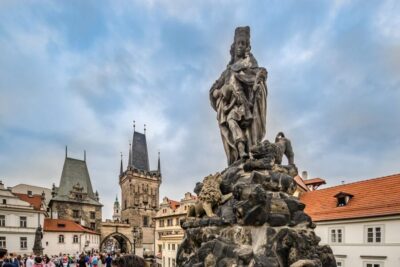
3-Hour Walking Tour of Old Town & Prague Castle
Read our review →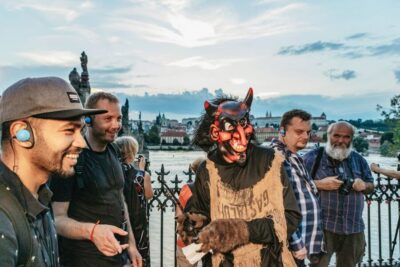
Ghost Walking Tour Where Legends Come To Life
Read our review →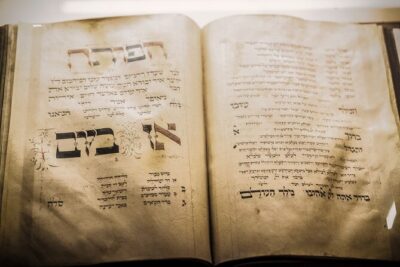
Jewish Quarter Walking Tour with Admission Tickets
Read our review →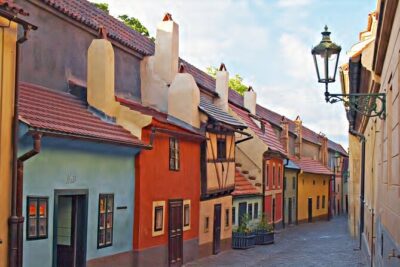
Prague Guided Walking Tour and Cruise with Authentic Czech Lunch
Read our review →
Old Town and Jewish Quarter Guided Walking Tour
Read our review →
Prague Ghost and Legend of Old Town Walking Tour
Read our review →
Prague 3-hour Afternoon Walking Tour including Prague Castle
Read our review →
Ghosts and Legends Nighttime Guided Walking Tour
Read our review →Browse the lists this tour appears in