
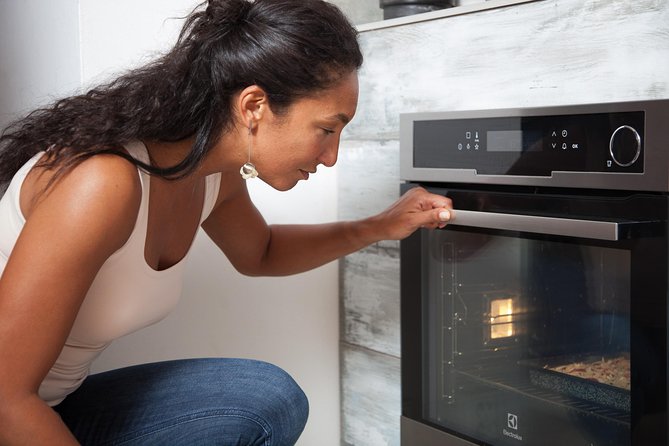
Reviewed · PRAGUE
Cook Authentic Czech with Grandma’s Recipes
The most interesting part of this Prague experience is that you do not just watch a chef prepare Czech food. You help make a full meal, using family-style recipes in a working kitchen inside a 400-year-old building. I like the practical setup, with ordinary equipment you can find at home, and I like the mix of cooking, stories, wine, and homemade snacks.
I also like the small size, capped at eight people, because Aida or Bret can keep everyone involved. The main consideration is the location: Křižíkova 70/67 in Karlín can be tricky to spot, especially around the locked alleyway entrance, so allow time to find the door and use the bell if needed.
In This Review
- Key points at a glance
- Why this cooking class works so well in Prague
- Arriving in Karlín at 2:30 p.m.
- The first tastes: pickles, marmalades, and Czech snacks
- Starter choices: soup or potato-sauerkraut pancakes
- The main event: Czech comfort food on your own plate
- Why bread dumplings matter
- Dessert: fruit dumplings, cake, or kremrole
- A long table, a small group, and plenty of conversation
- The guide makes the difference
- Is the $167.74 price good value?
- Who should book it?
- My call: book it for the meal and the people
- FAQ
- Where does the Czech cooking class take place?
- What time does the class start?
- How long does the experience last?
- Who leads the cooking class?
- What food will I prepare?
- Are drinks included?
- How many people can join?
- Can I cancel for a refund?
Key points at a glance
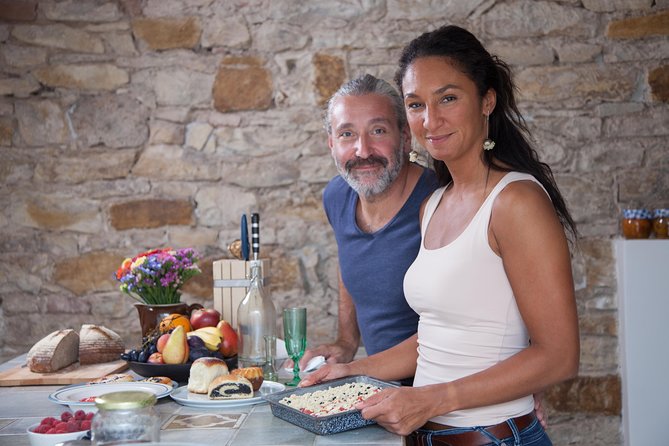
- Cook a complete Czech meal: Prepare a starter, main dish, side, and dessert from start to finish.
- Learn the dumpling method: Bread dumplings are a Czech staple and the required side for many traditional meals.
- Choose from classic dishes: Menus may include svíčková, goulash, duck, rabbit, beef with mushrooms, or a vegan prejt.
- Meet Aida or Bret: One of the two Good Mood Food hosts leads every class in English.
- Eat more than the menu: Homemade pickles, marmalades, snacks, wine, coffee, tea, and water are included.
- Plan for a long afternoon: The class starts at 2:30 p.m. and lasts about four and a half hours.
Why this cooking class works so well in Prague
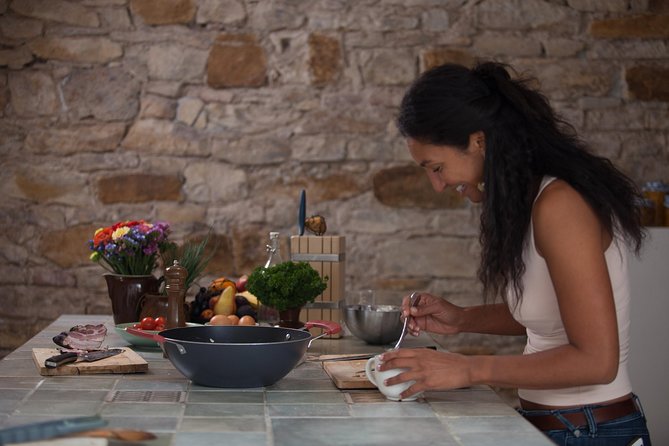
Prague has no shortage of restaurants serving Czech food, but a plate of goulash tells you only part of the story. Cooking gives you a better sense of how the food fits into daily life, family meals, holidays, and old kitchen habits.
That is the point of Good Mood Food. Aida and Bret use cooking as a way to talk about Czech and Moravian traditions. You chop, mix, shape, taste, and wait for food to cook while hearing about the dishes and the customs around them. It feels closer to being invited into someone’s kitchen than attending a formal demonstration.
The class takes place in the hosts’ self-designed Good Food Atelier. The kitchen is intentionally simple rather than fitted with restaurant equipment. That matters if you want to repeat the recipes at home. You will not need a special machine or an obscure tool just to recreate the meal.
One of the strongest features is the balance between instruction and conversation. Bret, in particular, is often described as funny, relaxed, and easy to work with. Aida brings the same warm hosting style, and the class is always led by one of them rather than by an anonymous kitchen team.
Other Prague outings people book alongside this one:
- Prague: 50-Minute Sightseeing Evening Cruise
★ 4.2 · 33,780 reviews - Prague: Medieval Dinner with Unlimited Drinks
★ 4.4 · 19,847 reviews - Prague: Skip-the-line Castle Ticket and Optional AudioGuide
★ 4.3 · 11,121 reviews
Arriving in Karlín at 2:30 p.m.
The meeting point is Good Mood Food, Křižíkova 70/67, in Prague 8’s Karlín district. The area is outside the Old Town sightseeing core, but it is near public transportation and can be reached by metro, taxi, or Uber.
Give yourself extra time. The entrance has caused confusion for some people because the doorbell is on the right side of a locked alleyway car door. If you arrive and cannot immediately see the entrance, check the address carefully and call the hosts rather than wandering around the block.
The class begins at 2:30 p.m. That start time shapes the whole day. You can spend the morning sightseeing, have a light lunch, and then walk into the kitchen ready for an afternoon meal. Since you will eat a substantial dinner during the activity, do not arrive after a large lunch.
The activity ends back at the meeting point. The advertised duration is about four hours and 30 minutes, though the actual pace can depend on the menu and the group. Allow the rest of your evening to remain flexible.
The first tastes: pickles, marmalades, and Czech snacks
Before the main cooking gets fully underway, you may taste homemade pickled vegetables and marmalades. These small items help explain Czech eating habits better than a quick restaurant meal can.
You may also receive a snack spread during pauses in the cooking. Past menus have included bread, cheese, sausages, jam, and dark bread with lard and paprika sausage. These are not the main course, but they make the kitchen feel social and give you something to nibble while a broth simmers or pastry bakes.
Wine is included, along with water, tea, and coffee. Some classes have also included small tastes of moonshine. The alcohol is part of the convivial mood, but you can focus on the cooking and the food if you prefer. The supplied information confirms wine and nonalcoholic drinks, while the stronger drinks appear to be an occasional extra rather than a fixed part of every menu.
This is one reason the class can run longer than a strict cooking demonstration. You are not simply racing through recipes. You are eating, talking, and sharing the table as you work.
Starter choices: soup or potato-sauerkraut pancakes
The opening dish may be a traditional broth turned into soup. You could help prepare the broth and finish it with noodles and vegetables, or with potatoes and mushrooms.
This is a useful lesson because broth is a base for many Czech meals. You see how a straightforward stock becomes a finished dish through seasoning and simple additions. It also gives you a chance to practice kitchen tasks before the more involved main course begins.
Another possible starter is a potato-sauerkraut pancake. This provides a sharper, more rustic contrast to soup. Expect hands-on work with potatoes and sauerkraut, then a lesson in cooking and flipping the pancakes in a skillet. Bret has been praised for helping people master that flip, including participants who arrived with little cooking confidence.
Menus can vary. You should not assume you will get every dish listed, since the selection may depend on the day, season, and dietary needs. If you have allergies, eat vegetarian food, or need another adjustment, contact Good Mood Food before the class. The hosts have accommodated food allergies and vegetarian requests, but specific substitutions should be settled ahead of time.
Same city, a completely different afternoon:
- Prague: Castle Tour with Local Guide and Entry Ticket
★ 4.6 · 10,422 reviews - Prague Castle 2.5-Hour Tour Including Admission Ticket
★ 4.7 · 8,927 reviews - Prague: Oldtown, Medieval Underground & Dungeon History Tour
★ 4.2 · 8,244 reviews - Prague: Vltava River Night Cruise with Buffet
★ 4.3 · 7,338 reviews
The main event: Czech comfort food on your own plate
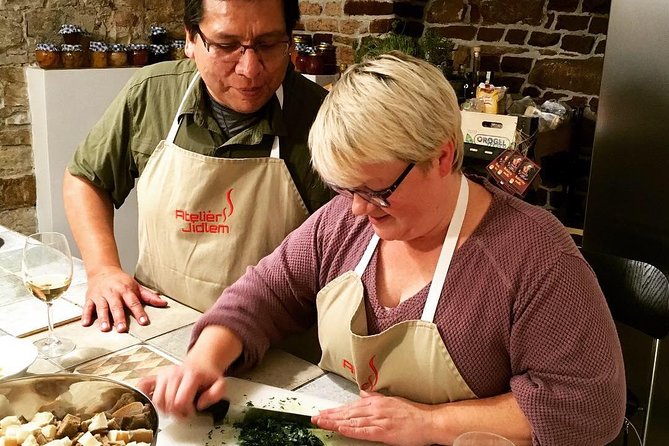
The main dish is drawn from a group of traditional Czech recipes. Possible choices include:
- Svíčková, a classic beef dish with sauce
- Beef goulash
- Roasted duck
- Rabbit with vegetables
- Beef with mushrooms
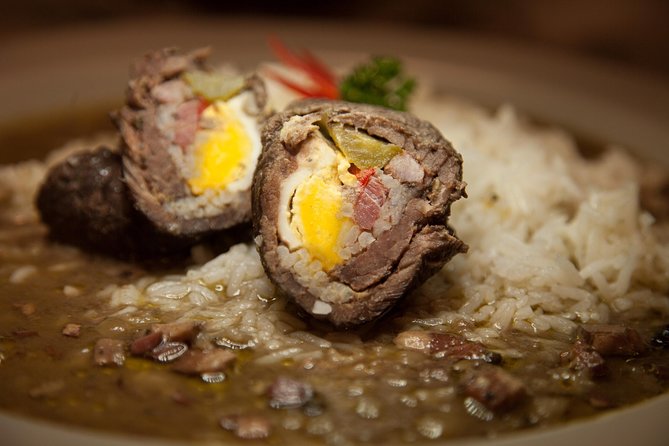
- Spanish bird
- Vegan prejt
The range is useful because it shows that Czech food is not just one bowl of goulash. Some dishes are hearty and meat-based, while vegan prejt provides a plant-based option. Duck and rabbit may appeal to adventurous eaters, though rabbit is not everyone’s first choice. One especially useful lesson from the class is that unfamiliar dishes can become approachable when you learn how they are prepared and seasoned.
The cooking is hands-on, but you do not need advanced skills. The hosts keep people busy with manageable tasks and explain what to do as the meal progresses. If you cook often, you will still pick up techniques and context. If you rarely cook, the relaxed teaching style keeps the class from feeling like an exam.
The recipes are described as simple enough to make at home. That is an important value point. Some cooking classes produce impressive food with restaurant tricks that are hard to repeat. Here, the emphasis is on methods and ingredients that fit a normal home kitchen.
Why bread dumplings matter
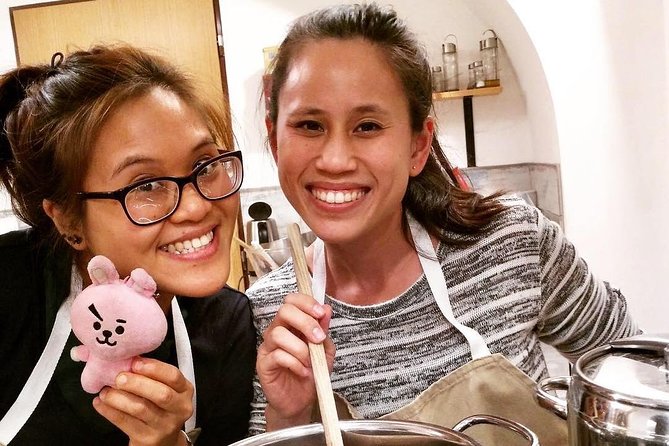
Bread dumplings are the required side dish for many Czech meals, and making them is one of the most useful parts of the class. They are a key companion to saucy dishes such as goulash and svíčková, since they soak up the sauce and turn it into a complete meal.
You learn how the dough is prepared and how the dumplings fit into the timing of the main dish. That timing is part of the lesson. Czech cooking often involves several simple elements that must be ready together, so the process teaches more than one recipe at a time.
The dumplings also help explain why Czech meals can feel so filling. A plate may include meat or vegetables, a generous sauce, and a substantial bread-based side. Come hungry, especially if you plan to sample the snack platter as well.
Dessert: fruit dumplings, cake, or kremrole
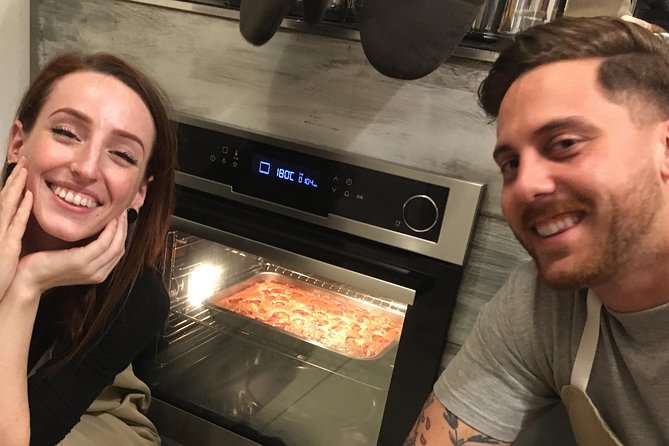
Dessert may be a fruit cake, seasonal fruit dumplings with poppy seeds and quark, or kremrole, a delicate pastry filled with meringue.
Fruit dumplings offer a distinctly Czech finish and make good use of seasonal produce. Kremrole is more delicate and pastry-focused. Several menu combinations have included cream rolls, and they have been a favorite for people who enjoy a lighter, crisp dessert after a heavy main meal.
Dessert also makes the class feel complete. You are not stopping after the savory dishes or watching someone else bring out a final course. You take part in the whole meal, then sit down to eat it.
A long table, a small group, and plenty of conversation
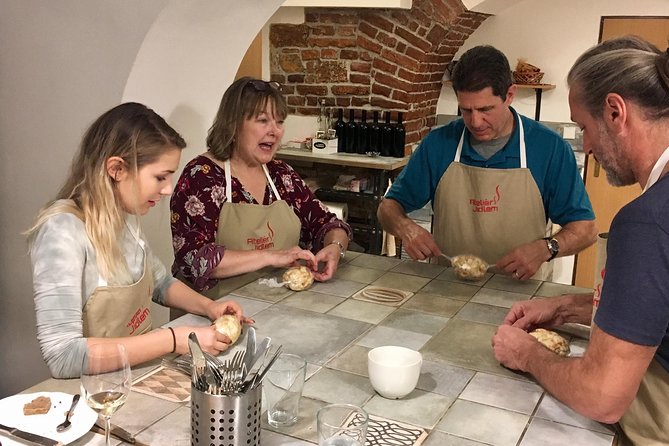
The group limit is eight people, which is small enough for real participation. Larger cooking classes often leave one person chopping while everyone else watches. Here, the hosts can assign jobs and keep the group moving through the menu.
The class can become especially personal when the booking is small. It has sometimes gone ahead with only two people, giving the host plenty of time to explain techniques and answer questions. At the other end, a full group still has enough room for shared conversation without turning the kitchen into a crowd.
You should expect to work alongside people you have just met. That is part of the design. Cooking gives everyone an easy subject to discuss, and the meal at the end turns the group into a temporary dinner party.
The setting is modern and comfortable inside an old building. Descriptions of the room compare it to an underground or cave-like space, but the kitchen is presented as clean, professional, and practical. This contrast gives the class some character without making it feel like a polished restaurant show.
The guide makes the difference
Aida and Bret are central to the experience. Each leads classes alone, so your host will be one or the other. Bret is often praised for his humor, food stories, and ability to explain the history behind a dish without making the lesson feel like school.
His English has been described as clear enough for cooking questions and conversation. You may hear an accent, but the class is offered in English and is built around practical demonstration, repetition, and shared work.
Aida is described as a gracious host who makes the cooking feel comfortable and social. Both hosts connect recipes with family traditions, Czech food customs, and stories from the country’s past. That context is the part you cannot easily get from a printed recipe.
The experience is also forgiving. You do not have to arrive as a skilled cook. The hosts are used to mixed ability levels and can give you a task that matches your confidence. Couples, families, vegetarians, serious home cooks, and complete beginners have all been accommodated in the class format.
Is the $167.74 price good value?
At $167.74 per person, this is not a cheap meal or a basic market stop. You are paying for about four and a half hours of instruction, a full three-course meal, snacks, drinks, a small group, and the personal attention of one of the hosts.
I think the value is strongest if you care about learning and conversation, not just eating. A restaurant meal may cost less, but it will not show you how to make dumplings, prepare a traditional soup, or shape a Czech dessert. A shorter cooking class may also cost less, but it may not include the same full menu and relaxed table time.
The price is less appealing if you want a quick activity or a strict professional workshop. The pace is social, and pauses are part of the experience. You may stay longer than the stated duration, especially if the group is enjoying the meal and conversation.
The current record is a 5 out of 5 rating with 80 reviews and 100 percent recommendation. That does not remove the practical drawbacks, such as the hard-to-find entrance or the possibility that a dish may not match your tastes. Still, it shows unusually consistent approval for a small food activity.
Who should book it?
I would choose this for anyone who wants a cultural activity that does not feel like a lecture. It suits couples, families, solo visitors, and small groups of friends. It is also a good choice for a rainy afternoon, when several hours of cooking and eating sound better than another round of sightseeing.
You should book it if you enjoy trying traditional food, want recipes you can repeat at home, or like meeting people around a shared table. It is especially useful for visitors who have already seen Prague’s main sights and want a more everyday connection with Czech culture.
Think twice if you dislike group activities, cannot spend a long afternoon cooking, or want complete control over the menu. The dish selection can vary, and some choices, such as rabbit or duck, may not appeal to everyone. Tell the hosts about dietary needs before arriving.
Book ahead if your schedule is fixed. This experience is often booked 53 days in advance, and the small capacity means popular dates can disappear. Free cancellation is available until 24 hours before the start time, but changes or cancellations inside that window are not refunded.
My call: book it for the meal and the people
I would book Cook Authentic Czech with Grandma’s Recipes if I wanted one Prague activity that combined food, culture, and conversation. The best part is not a single recipe. It is the chance to make an entire Czech meal with Aida or Bret, then sit down and eat it with the people who helped prepare it.
The class is a particularly good buy for curious eaters and home cooks. You leave with techniques you can use, stories that give the dishes meaning, and a better sense of how Czech food works at the family table. Just plan for the tricky entrance, arrive hungry, and keep your afternoon open.
FAQ
Where does the Czech cooking class take place?
The experience starts and ends at Good Mood Food, Křižíkova 70/67, Karlín, 186 00 Prague, Czech Republic.
What time does the class start?
The class starts at 2:30 p.m.
How long does the experience last?
It lasts approximately four hours and 30 minutes.
Who leads the cooking class?
The experience is always led by either Aida or Bret from Good Mood Food.
What food will I prepare?
You will prepare a traditional Czech menu with a starter or soup, a main dish, a side dish, and dessert. Possible dishes include goulash, svíčková, roasted duck, rabbit, beef with mushrooms, vegan prejt, fruit dumplings, and kremrole.
Are drinks included?
Yes. Water, tea, coffee, and wine are included. Homemade pickled vegetables, marmalades, and snacks are also part of the experience.
How many people can join?
The activity has a maximum of eight participants.
Can I cancel for a refund?
Yes. You can cancel at least 24 hours before the local start time for a full refund. Cancellations or changes made less than 24 hours before the start time are not refunded or accepted.
Just added around Prague
- Prague Highlights 4 Hour Private Walking Tour★ 5.0 · 3 reviews
- VIP Prague Segway Tour Around Monastic Breweries★ 4.0 · 3 reviews
- Private Guided Tour from Prague to UNESCO Kutna Hora★ 5.0 · 3 reviews
- From Prague Day Unique Tour To Cesky Krumlov★ 4.5 · 3 reviews
- Prague: WWII Tour with Local Historian SMALL GROUP★ 5.0 · 3 reviews
- Cesky Krumlov: Insta-Perfect Walk with a Local★ 5.0 · 3 reviews
- Learn Traditional Czech Cooking from Authentic Family Recipes★ 5.0 · 3 reviews
- Prague Tour in Spanish★ 5.0 · 3 reviews