
Reviewed · WALKING TOURS
Prague Art Nouveau and Cubism Walking Tour
Prague’s Art Nouveau and Cubist buildings make the city feel like an open-air design lesson, but the best part of this walk is learning how to look. At the House of the Black Madonna, you begin with Cubism, then trace Prague’s changing taste through hotels, cafés, bars, passages, and grand public interiors.
I like the access to places such as Lucerna bar and Grand Hotel Europa, plus the way guides connect architecture with the pre-war café crowd and Czech national identity. I also like the academic level: guides have included Robert, Vadim Erent, Bonita, professors, historians, journalists, and art critics. The main drawback is that photography stops can feel brief because the tour keeps moving, and three hours may stretch if you need to be somewhere afterward.
In This Review
- Key points to know before booking
- Why this walk is more than a pretty-building tour
- Beginning at the House of the Black Madonna
- Learning to read Art Nouveau façades
- Lucerna bar and the world of pre-war cafés
- Grand Hotel Europa and the art of arrival
- Cubism, Rondo-Cubism, and the Prague difference
- A moving classroom, not a lecture on the pavement
- How the price compares with the experience
- Who will enjoy this Prague architecture walk
- Practical advice for getting the most from the three hours
- Should you book it?
- FAQ
- How long does the Prague Art Nouveau and Cubism Walking Tour last?
- How much does the tour cost?
- Where does the tour meet?
- What language is the tour offered in?
- Is the tour private or shared?
- Who leads the tour?
- Which places are included in the experience?
- Can I cancel for a full refund?
- Can I reserve now and pay later?
Key points to know before booking
- Start at the House of the Black Madonna: The meeting point introduces you to Prague’s Cubist side before the Art Nouveau focus takes over.
- Look for ginkgo leaves and elaborate lighting: The guide shows you how oriental references and decorative interiors reveal the style.
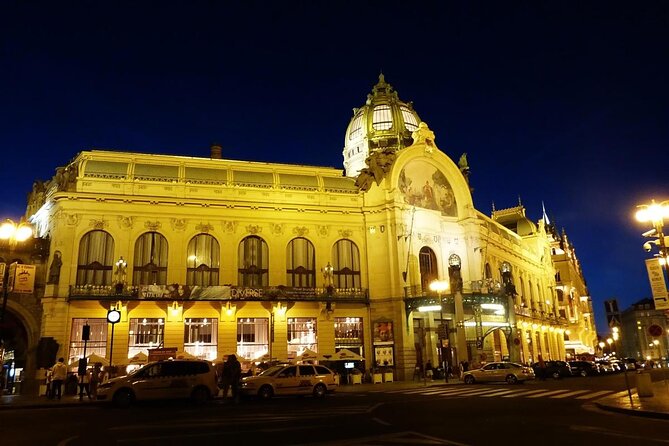
- Step inside Lucerna and Grand Hotel Europa: These interiors help explain why hotels, cafés, and restaurants became Art Nouveau showcases.
- Architecture comes with social history: You learn about the pre-war elite, early international tourists, industrial wealth, and the rise of Czech national confidence.
- Expect a scholarly but lively guide: Robert and Vadim Erent have led this experience, with humor and plenty of historical context.
- Private and small-group formats are available: That matters if you want questions answered or hope to see less obvious corners of central Prague.
Why this walk is more than a pretty-building tour
Prague is full of ornate façades, but it is easy to walk past them without understanding what you are seeing. This tour gives you a visual vocabulary. You begin noticing flowing plant forms, stylized flowers, curved lines, colored glass, decorative metalwork, and elaborate lamps instead of treating every old building as simply beautiful.
Art Nouveau appeared across Europe near the end of the 19th century. Prague adopted it with enthusiasm, especially during the years when new wealth, new transport, and new ideas were changing city life. The style suited hotels, cafés, restaurants, railway stations, and public buildings because these were places where modern life was being displayed.
The walk also places Art Nouveau beside Prague’s Cubist and Rondo-Cubist work. That comparison is valuable. Art Nouveau tends to favor organic curves and natural forms, while Cubism breaks surfaces into angles and geometric shapes. Rondo-Cubism adds rounded motifs and a distinctly Czech flavor to the geometric approach.
You are not just looking at decoration. You are seeing arguments about modernity, taste, and national identity.
More walking tours in Prague:
- Prague: 3-Hour Walking Tour of Old Town & Prague Castle
★ 4.7 · 5,696 reviews - Prague: Ghost Walking Tour Where Legends Come To Life
★ 4.4 · 5,253 reviews - Prague: Jewish Quarter Walking Tour with Admission Tickets
★ 4.7 · 3,729 reviews
Beginning at the House of the Black Madonna
The tour meets at the House of the Black Madonna, at the front doors of Grand Café Orient on Ovocný 19 in Prague 1. This is a practical starting point because the building itself introduces one of the city’s most distinctive architectural experiments.
The House of the Black Madonna is associated with Prague Cubism, so the first part of the experience sets up a useful contrast. Instead of beginning with a long list of dates, your guide can show you how sharply angled forms change the feel of a building. From there, Art Nouveau details make more sense because you have already seen an alternative vision of modern design.
The meeting point is also useful if you are unfamiliar with central Prague. You start in a prominent part of the city, then move through the streets on foot rather than spending the tour behind a coach window. Wear comfortable shoes. Three hours of walking is manageable for many people, but this is not a short photo stop followed by a ride.
The route can include passages, courtyards, cafés, and interiors that you might miss while following the main sightseeing trail. Some past tours have included university interiors, an underground chapel, Roman remains, frescos, and a student café tucked behind city streets. These details are not guaranteed as fixed stops, but they show the kind of extra material a guide may bring into the walk.
Learning to read Art Nouveau façades
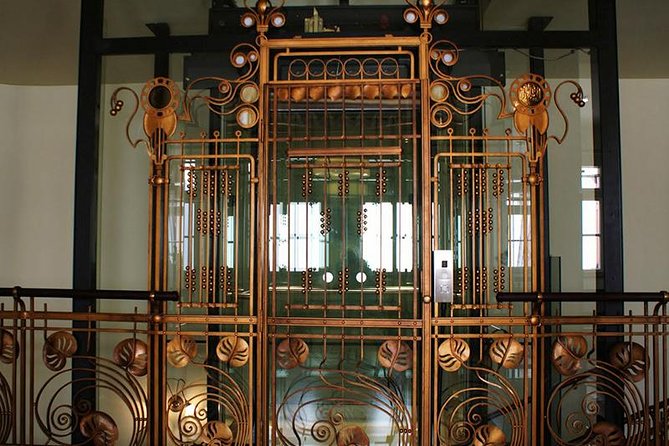
The most useful lesson is often the simplest: Art Nouveau is not just a collection of pretty curves. Your guide points out repeated design choices and explains what they mean.
Look for plant forms, especially ginkgo biloba leaves. Their appearance reflects the style’s interest in nature and its taste for forms with an exotic or oriental association. The leaves are not random decoration. They help you recognize the period and the visual language.
You may also notice female figures, flowers, flowing lines, decorative plasterwork, and carefully planned entrances. The details can be easy to overlook when traffic, crowds, or shop signs compete for your attention. A guide slows your eye down, then shows you where the architect placed emphasis.
Interiors matter just as much. Elaborate light fixtures are among the clearest Art Nouveau signatures, and the tour uses interior spaces to show how the style worked from floor to ceiling. A façade can suggest a building’s character, but a lobby, café, or bar reveals how people actually encountered the design.
This is one reason the tour works well in cold or wet weather. The walk is outdoors, but the chance to enter buildings gives you breaks from the street. A December group was able to step inside for closer looks and a little warmth, which is worth remembering if you visit Prague in winter.
Lucerna bar and the world of pre-war cafés
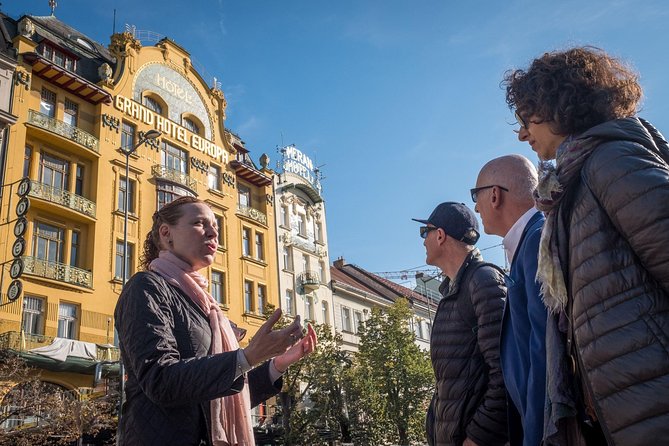
Lucerna is one of the key interior visits. It helps you understand why Art Nouveau flourished in places built for leisure and display.
Bars and cafés were not merely places to grab a drink. They were meeting points for business, politics, culture, and social life. The tour explains how Prague’s pre-war elite used these spaces, along with elegant restaurants and hotels. The buildings were designed to make modern urban life feel special.
The early 20th century brought new mobility and new spending power. Industrialization made international travel more possible for the first wave of globetrotters, and hotels needed to attract people who wanted comfort, status, and novelty. Art Nouveau was a natural fit. It made an entrance, a staircase, a lamp, or a dining room feel like part of the experience.
At Lucerna, pay attention to the relationship between function and decoration. The interior is not valuable only because it is ornate. It shows how a commercial space used design to create a sense of occasion. Your guide can also connect the building to the wider social world that made such places possible.
The main limitation is that interior access can depend on circumstances. The advertised highlights include Lucerna bar, but the exact amount of time inside each place may vary. If you are a serious photographer, keep your camera ready and ask politely if you need an extra moment. One participant found the pace good overall but wished for slightly longer photo pauses.
Same city, a completely different afternoon:
- Prague: 50-Minute Sightseeing Evening Cruise
★ 4.2 · 33,780 reviews - Prague: Medieval Dinner with Unlimited Drinks
★ 4.4 · 19,847 reviews - Prague: Skip-the-line Castle Ticket and Optional AudioGuide
★ 4.3 · 11,121 reviews - Prague: Castle Tour with Local Guide and Entry Ticket
★ 4.6 · 10,422 reviews
Grand Hotel Europa and the art of arrival
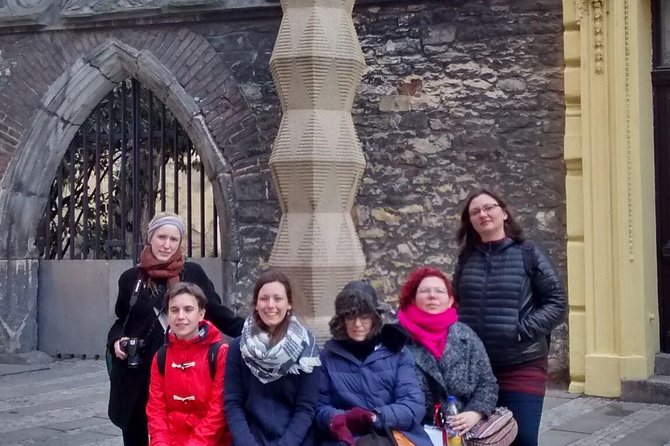
Grand Hotel Europa provides another look at Art Nouveau in a setting built to impress. Hotels were among the period’s clearest showcases because they greeted people at the moment of arrival.
A hotel entrance had to announce comfort, refinement, and modern service. Decorative walls, glass, lamps, furnishings, and signs worked together to create a complete mood. The guide helps you see this as a planned experience, not a pile of unrelated ornaments.
The hotel also links architecture to changing patterns of movement. As rail travel and industrial wealth encouraged more people to cross borders, hotels became part of an international network. Prague was presenting itself as a modern European city, and these buildings were part of that message.
You will get more from the stop if you compare it with Lucerna. One is a hotel, one is a bar and cultural meeting place, but both use decoration to shape behavior. The spaces tell you where to enter, where to pause, and how formal the occasion should feel.
The tour does not treat Art Nouveau as an isolated fashion. It shows how the style fit the ambitions of a city that wanted to be modern while also expressing a stronger Czech identity.
Cubism, Rondo-Cubism, and the Prague difference
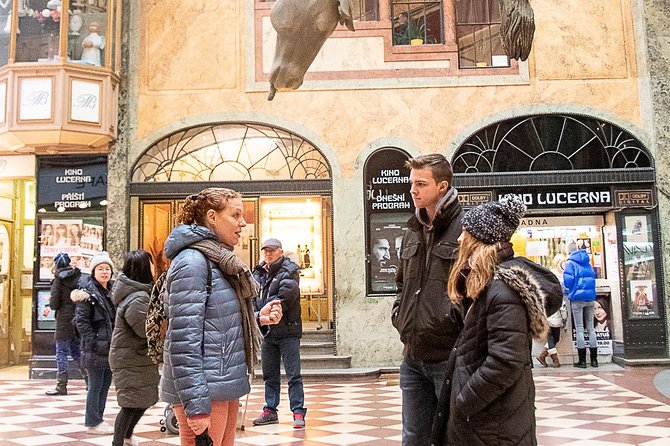
The contrast with Cubism gives the walk its sharper edge. Many architecture tours stop once they have identified Art Nouveau flourishes. This one continues into the geometric experiments that followed.
The House of the Black Madonna is the essential reference point. Its angular language asks you to think about architecture in a new way. Instead of imitating natural forms, Cubist design turns buildings, furniture, and interiors toward planes, facets, and geometry.
The Bank of the Legions adds another important comparison. Rondo-Cubism is especially useful for understanding Prague because it combines geometric ideas with rounded forms and national references. The style developed in a particular Czech setting, so it is not simply a local copy of a broader European movement.
Your guide draws connections across several centuries of Prague architecture, from earlier Gothic examples through Art Nouveau and Cubism. This larger frame helps prevent the tour from becoming a parade of isolated façades. You see styles as changing answers to changing social needs.
That wider history is also where the guides’ backgrounds matter. Robert has been praised for explaining architectural shifts clearly and with humor. Vadim Erent has led the walk as a specialist in the subject, linking individual buildings to larger patterns in Prague’s cultural and social past.
A moving classroom, not a lecture on the pavement
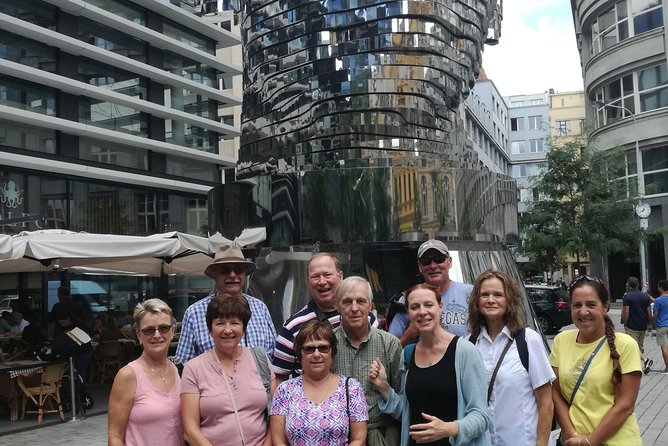
The walk is designed to keep you moving. That is good for a three-hour city tour, especially when standing still in one place becomes tiring. Instead of parking the group at every façade for a long explanation, the guide can talk while leading you from one example to the next.
Robert has been described as asking at the beginning if the group needs to be somewhere afterward. That is a useful detail. If you have a train, dinner reservation, or scheduled museum entry, say so at the start. The experience is set at three hours, but a particularly engaged group may want to continue talking.
The guide style is academic without needing to feel stiff. Past guides have included professors, doctoral students, historians, journalists, art critics, and published authors. That does not guarantee the same person for every departure, but it tells you the experience is built around interpretation rather than a memorized list of dates.
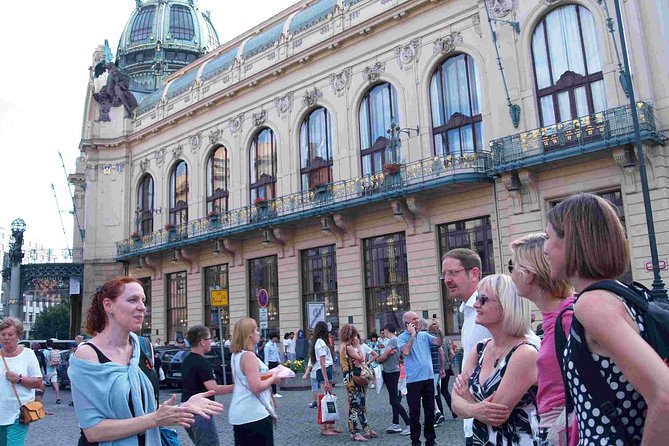
You should feel free to ask questions. The small-group or private format makes that easier than a large city walk. You can ask about a façade, a social custom, a design term, or a connection between buildings. The value increases if you take part rather than simply follow along.
The pace may not suit someone who wants long, uninterrupted photography sessions. Bring a camera, but listen first and photograph quickly when the group moves on. If you need more time, ask the guide rather than falling behind.
How the price compares with the experience
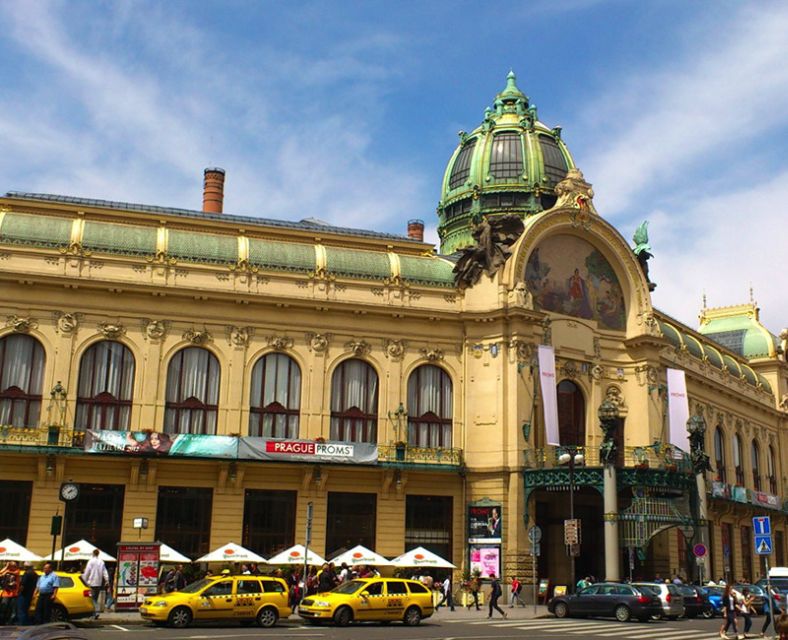
The listed price is $123 per person. That is a serious cost for a three-hour walking tour, particularly in Prague, where you can find cheaper general city walks.
The value depends on what you want from a guide. If your aim is a quick introduction to the Old Town’s major sights, this is probably more specialized than you need. You are paying for a focused subject, access to interiors, a small or private group option, and a guide with a strong background in architecture and history.
It also saves you the work of finding the buildings yourself. Several of the most interesting places are easy to miss, especially passages, back courtyards, and interiors. A good guide turns scattered details into a story about Prague’s modern development.
For a group of friends or family members who care about design, the private option may make the price easier to justify. You can ask more questions, set a comfortable pace, and spend less time waiting for strangers. For a solo visitor on a tight budget, the cost deserves more thought.
The strongest value comes when you book early in your Prague visit. The visual clues you learn can improve the rest of your sightseeing. After the walk, you will recognize Art Nouveau elements in places not included on the route, and you will be better prepared to compare them with Cubist buildings.
Who will enjoy this Prague architecture walk
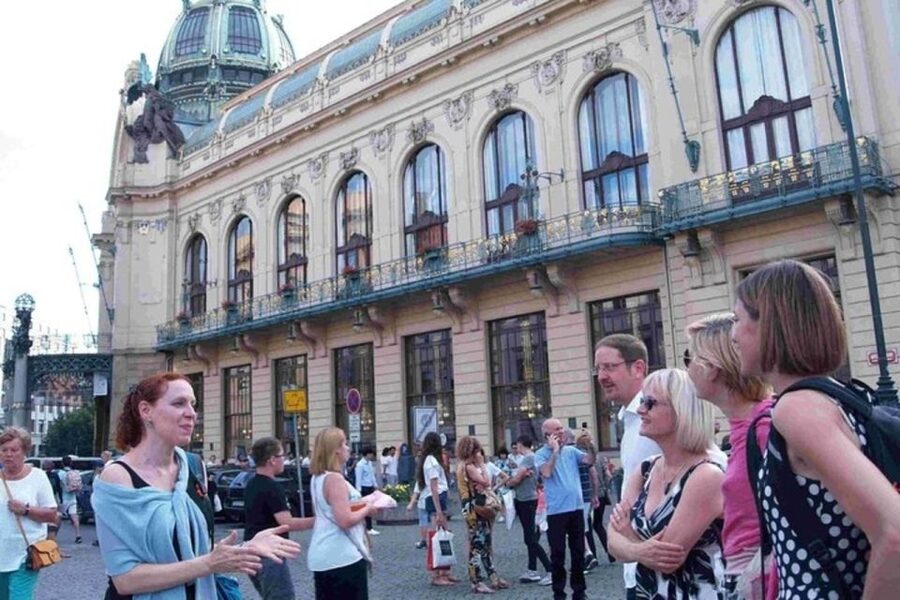
I would recommend this tour most strongly to people who like buildings but do not want a dry technical lecture. You do not need formal art training. Curiosity is enough, especially if you enjoy asking why a building looks the way it does.
It suits:
- Architecture and design fans who want more than exterior photo stops
- Visitors who have already seen Prague’s main monuments and want a more focused subject
- People interested in cafés, hotels, social life, and urban change
- Repeat visitors who want lesser-known interiors and passages
- Small groups willing to pay more for personal attention
- Anyone who enjoys a guide who connects details to broader history
It may be less suitable if you dislike walking, need a slow pace, or want a tour devoted mainly to Prague Castle, the Charles Bridge, or the city’s major political landmarks. It is also not ideal if every stop must allow extensive photography.
The experience is in English. Private and small-group formats are available. Guides have included Robert, Vadim Erent, and Bonita, though you should check the assigned guide when booking if that matters to you.
Practical advice for getting the most from the three hours
Meet at the front doors of Grand Café Orient at the House of the Black Madonna, on Ovocný 19 in Prague 1. Arrive with enough time to find the building and settle in. The starting point is central, but busy city streets can still cost you a few minutes.
Wear shoes suited to continuous city walking. The tour includes outdoor streets and indoor stops, so dress in layers. In winter, the chance to enter buildings helps, but you should still prepare for time outside.
Bring a camera with a quick-response setting. The route keeps moving, and you may not have long to frame every façade. A small notebook can also be useful because the number of buildings, terms, and historical connections may be hard to remember.
Tell the guide at the beginning if you have a hard finish time. Also mention if you want more time for photographs or questions. The guides have shown flexibility, but the best way to get that flexibility is to explain your needs early.
You can cancel up to 24 hours before the tour for a full refund, and the reserve-now, pay-later option allows you to keep your plans open without paying immediately. Check availability for the starting time because the experience lasts three hours but does not list one universal departure time.
Should you book it?
Book this walk if you want Prague to make more visual sense. The combination of Art Nouveau façades, Lucerna bar, Grand Hotel Europa, Cubist buildings, and social history gives you a sharper view of the city than a standard highlights tour.
I would especially choose it for a second day in Prague, a return visit, or a small group with a real interest in architecture. The price is high, but the private or small-group setting and specialist guide can make it worthwhile.
Skip it if you want a cheap, broad introduction or if you prefer to explore at your own slow photography pace. For everyone else, this is a thoughtful way to see Prague’s modern side, with enough unusual interiors and strong storytelling to justify three hours on foot.
FAQ
How long does the Prague Art Nouveau and Cubism Walking Tour last?
The tour lasts three hours.
How much does the tour cost?
The listed price is $123 per person.
Where does the tour meet?
It meets at the House of the Black Madonna, downstairs at the front doors of Grand Café Orient, on the square at Ovocný 19, Prague 1.
What language is the tour offered in?
The live guided tour is offered in English.
Is the tour private or shared?
Private and small-group options are available.
Who leads the tour?
Guides have included Robert, Vadim Erent, and Bonita. The guide team includes professors, doctoral students, historians, journalists, art critics, and published authors.
Which places are included in the experience?
The tour includes visits to Lucerna bar and Grand Hotel Europa, along with examples of Prague’s Art Nouveau, Cubist, and Rondo-Cubist architecture. The walk begins at the House of the Black Madonna and may include additional interiors and passages.
Can I cancel for a full refund?
Yes. You can cancel up to 24 hours in advance for a full refund.
Can I reserve now and pay later?
Yes. The reserve-now, pay-later option lets you hold a place without paying immediately.
Just added around Prague
- Prague Highlights 4 Hour Private Walking Tour★ 5.0 · 3 reviews
- VIP Prague Segway Tour Around Monastic Breweries★ 4.0 · 3 reviews
- Private Guided Tour from Prague to UNESCO Kutna Hora★ 5.0 · 3 reviews
- From Prague Day Unique Tour To Cesky Krumlov★ 4.5 · 3 reviews
- Cesky Krumlov: Insta-Perfect Walk with a Local★ 5.0 · 3 reviews
- Prague: WWII Tour with Local Historian SMALL GROUP★ 5.0 · 3 reviews
- Learn Traditional Czech Cooking from Authentic Family Recipes★ 5.0 · 3 reviews
- Prague Tour in Spanish★ 5.0 · 3 reviews
Walking Tours, compared.
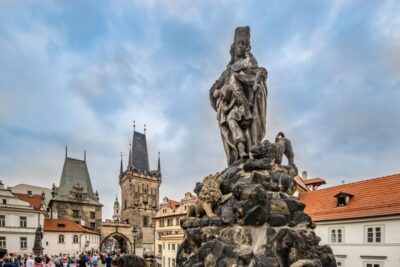
3-Hour Walking Tour of Old Town & Prague Castle
Read our review →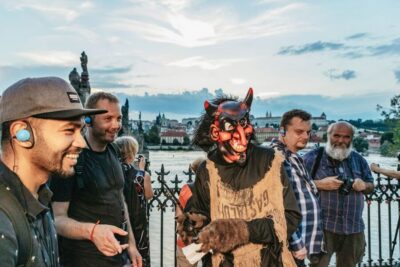
Ghost Walking Tour Where Legends Come To Life
Read our review →
Jewish Quarter Walking Tour with Admission Tickets
Read our review →
Prague Guided Walking Tour and Cruise with Authentic Czech Lunch
Read our review →
Old Town and Jewish Quarter Guided Walking Tour
Read our review →
Prague Ghost and Legend of Old Town Walking Tour
Read our review →
Prague 3-hour Afternoon Walking Tour including Prague Castle
Read our review →
Ghosts and Legends Nighttime Guided Walking Tour
Read our review →Browse the lists this tour appears in