
Reviewed · PRAGUE CASTLE TOURS
Prague Castle St. Vitus Cathedral, Royal Palace, St. George’s Basilica
Prague Castle gives you a lot in three hours: a Gothic cathedral, royal chambers, a 10th-century basilica, and a tiny lane once linked with alchemists and Franz Kafka. The tour with historian Robert Procházka adds useful context, so you are not left trying to decode centuries of stonework on your own.
I like the clear route through the castle’s main sights, and I like that the guide tells human stories, from St. Ludmila’s murder to Rudolf II’s search for gold. The main drawback is price: the $41 tour fee does not include admission, so most adults pay another 18 EUR for the buildings.
In This Review
- Key points to know before booking
- Why Prague Castle works best with a guide
- Meeting at the Pražský hrad tram stop
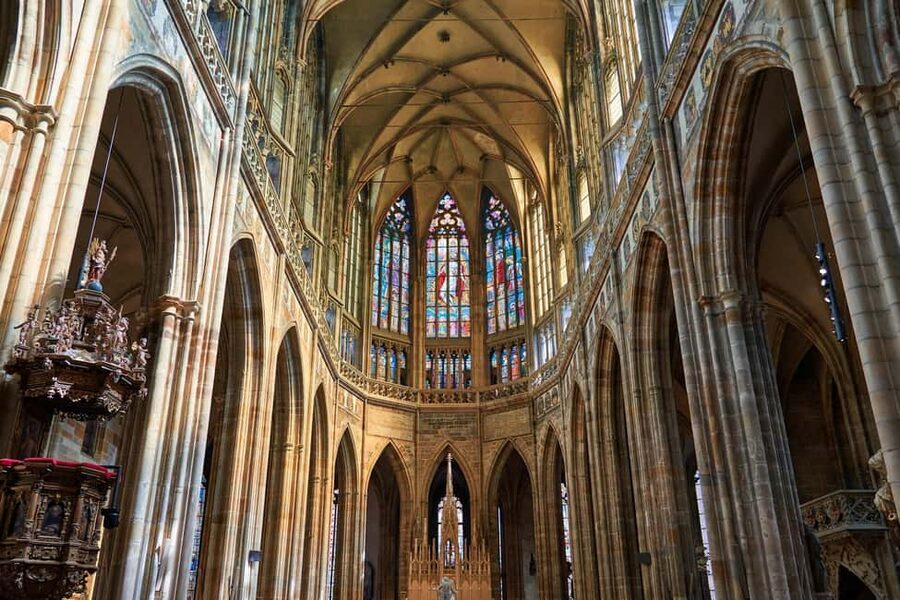
- St. Vitus Cathedral and the royal heart of Bohemia
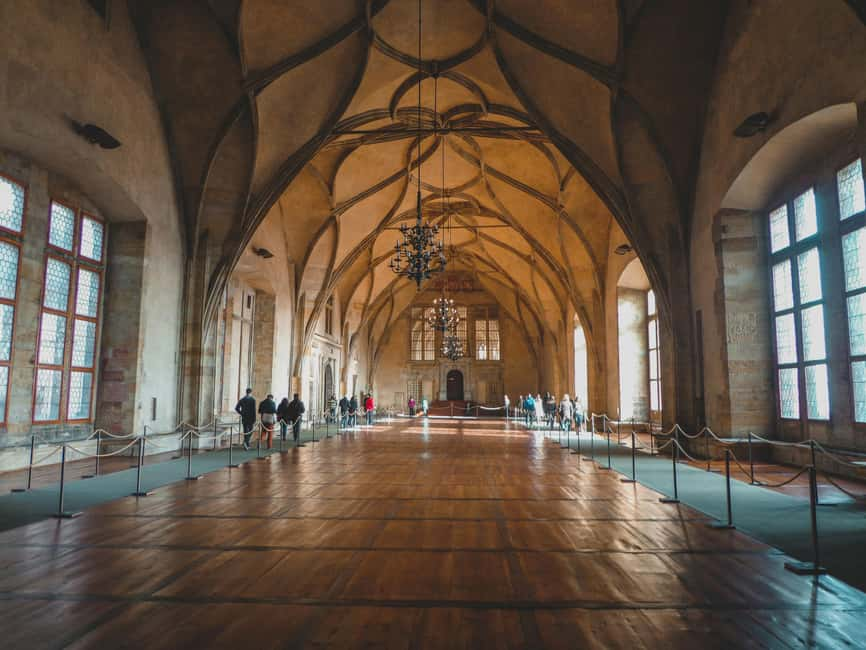
- The Old Royal Palace and Prague’s political shock
- St. George’s Basilica and the oldest mood of the visit
- Golden Lane, alchemists, and Franz Kafka
- What the castle views add to the visit
- Price, admission, and what you actually receive
- Who should book this German-language visit
- My recommendation
- FAQ
- What language is the tour conducted in?
- How long does the Prague Castle tour last?
- Where does the tour meet?
- Is admission to the castle interiors included?
- What sights are included in the guided route?
- Can I cancel the booking for a refund?
Key points to know before booking
- Three major castle interiors: St. Vitus Cathedral, the Old Royal Palace, and St. George’s Basilica are all part of the route.
- German-language guiding: Historian Robert Procházka leads the tour and explains the site in German.
- A story-filled final stop: Golden Lane brings in alchemy, Rudolf II, and Franz Kafka.
- Extra admission cost: Adults pay 18 EUR for the castle circuit, while seniors aged 65 and over pay 14 EUR.
- Easy tram arrival: Meet at the Pražský hrad stop on tram 22 or 23, heading toward Bílá hora.
- Strong fit for history-minded adults: Children under 10 are not suitable for this activity.
Why Prague Castle works best with a guide
Prague Castle is not one simple building. It is a large enclosed complex with churches, royal rooms, lanes, courtyards, and viewpoints. You can walk through it independently, but the connections between the buildings are easy to miss.
A guided visit gives you a sequence and a story. You move from the cathedral, where Bohemian kings were crowned and buried, to the old royal rooms, then to the older Romanesque basilica and the small houses of Golden Lane. Each stop has a different mood.
I especially like the emphasis on stories rather than dates alone. You hear about saints, dynastic power, religious conflict, alchemy, and literature. That makes the site easier to remember after you leave.
The tour is in German, so you should be comfortable following a sustained explanation in that language. The available information does not give a group size, so do not book this expecting a guaranteed private visit or a small-group format.
More ways to see Prague Castle:
- Prague Castle 2.5-Hour Tour Including Admission Ticket
★ 4.7 · 8,927 reviews - Prague: 3-Hour Walking Tour of Old Town & Prague Castle
★ 4.7 · 5,696 reviews - Prague: 3-Hour Old Town and Prague Castle Tour in German
★ 4.8 · 5,671 reviews
Meeting at the Pražský hrad tram stop
The meeting point is directly at the Pražský hrad tram stop, not inside the castle complex. Take tram 22 or 23 in the direction of Bílá hora. Robert Procházka waits at the stop.
This is a sensible arrival point because the castle grounds are large, and meeting at a named transit stop removes some guesswork. Give yourself enough time to reach the stop and identify the guide before the three-hour visit begins.
The information supplied gives two different descriptions of the ending point. The tour description says the guided visit ends in Golden Lane, while the meeting-point details say the activity ends back at the meeting point. I would confirm the final location when booking or at the start, especially if you have a later reservation or train to catch.
St. Vitus Cathedral and the royal heart of Bohemia
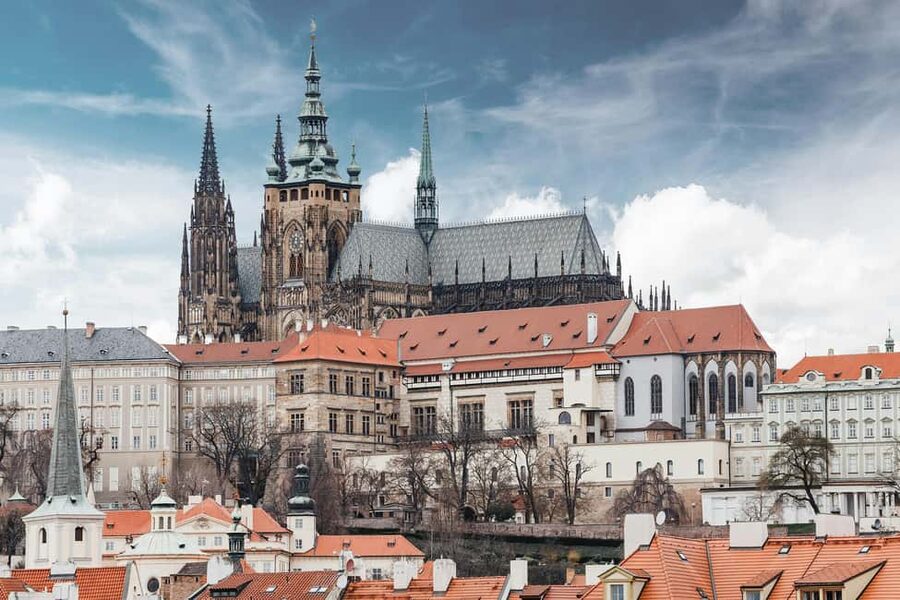
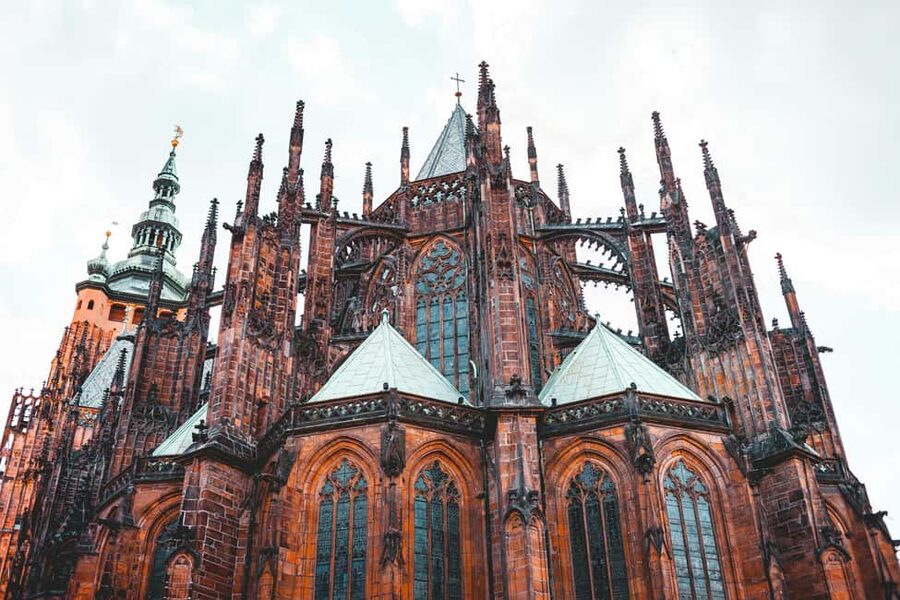
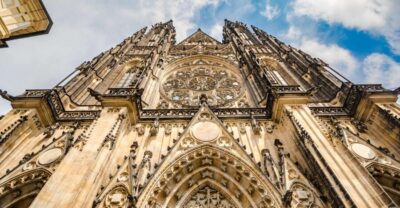
St. Vitus Cathedral is the grandest stop on the route. It is a masterpiece of 14th-century Gothic architecture, and its role is larger than that of a church. Bohemian kings were crowned here, and important national saints are buried here.
The oldest predecessor was a Romanesque rotunda founded around 925. That fact helps you read the building as a long sequence of construction, change, and religious importance rather than as one finished project.
Inside, look for the connection between royal ceremony and saintly devotion. St. Wenceslas, one of the country’s most important patron saints, rests in a Gothic shrine in the Wenceslas Chapel. The chapel is decorated with semi-precious stones, giving it a different feel from the broad Gothic spaces around it.
The route also explains the crown chamber, where the coronation regalia are kept. A spiral staircase leads from the Wenceslas Chapel toward the chamber. The tour description mentions a replica of the Bohemian crown jewels later in the Royal Palace, so expect explanation of the regalia rather than access to the actual crown jewels themselves.
You should plan to look up as well as forward. Gothic cathedrals reward attention to height, structure, and detail, but the guide’s explanation helps you understand why the cathedral mattered to rulers and ordinary believers alike.
The cathedral is also the point where the tour may feel most formal and ceremonial. If you prefer quiet personal time for photographs or reflection, remember that a guided schedule keeps you moving. Three hours covers several major sights, so this is not designed as a slow, unhurried cathedral study.
The Old Royal Palace and Prague’s political shock
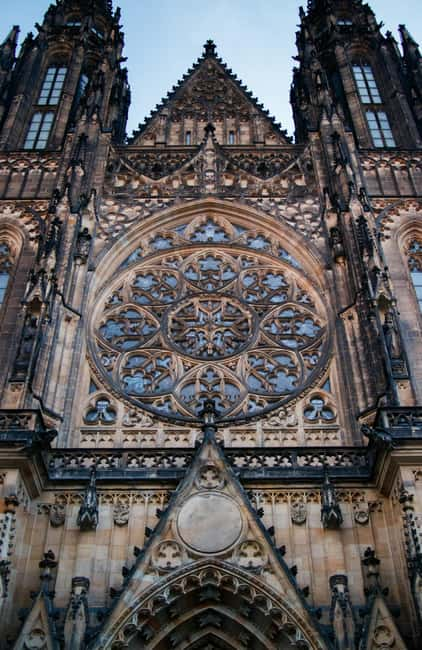
The Old Royal Palace changes the tone. St. Vitus is about worship, ceremony, and sacred kingship. The palace shows how power was administered and contested.
You will see a replica of the Bohemian crown jewels and the largest late Gothic throne room in Central Europe. The scale of the room helps explain the public side of monarchy. This was not merely a private residence. It was a setting for political business and royal display.
The palace also includes the State Chancellery, linked with the Third Defenestration of Prague. In 1618, officials were thrown from a window, an event that helped start the Thirty Years’ War. It is one of those moments when a seemingly local dispute turns into a European conflict.
That story is a good reason to take the palace with a historian. Without context, a room and a window can seem ordinary. With the political background, the site becomes a place where religious tension, government, and rebellion collided.
Do not expect the palace to feel as richly decorated as a later Baroque residence. Its importance comes from its age, function, and events. I find that useful because the tour does not treat every room as a pretty backdrop. It explains why the rooms mattered.
Same city, a completely different afternoon:
- Prague: 50-Minute Sightseeing Evening Cruise
★ 4.2 · 33,780 reviews - Prague: Medieval Dinner with Unlimited Drinks
★ 4.4 · 19,847 reviews - Prague: Skip-the-line Castle Ticket and Optional AudioGuide
★ 4.3 · 11,121 reviews - Prague: Castle Tour with Local Guide and Entry Ticket
★ 4.6 · 10,422 reviews
St. George’s Basilica and the oldest mood of the visit
St. George’s Basilica dates from the 10th century and offers a sharp contrast to the cathedral. Its earlier Romanesque character feels more compact and severe. After the height and ceremony of St. Vitus, this church brings the route back to an older period of Bohemian religious life.
The basilica houses the tomb of St. Ludmila, the grandmother of St. Wenceslas. Her story is grim. She was strangled by Viking warriors acting on behalf of her daughter-in-law.
This is the kind of tale that makes a short tour memorable, though it is not light material. Robert’s role here is important because the building alone cannot explain the family conflict, saintly status, and political meaning tied to the tomb.
The basilica is also useful for comparing architectural periods. You can see how the Romanesque style differs from the later Gothic cathedral without leaving the castle grounds. The route gives you a compact lesson in changing religious architecture.
Because the activity includes several interiors, you should wear comfortable shoes and expect a steady amount of walking. The information does not specify accessibility arrangements, so contact the provider directly if stairs or uneven surfaces are a concern.
Golden Lane, alchemists, and Franz Kafka
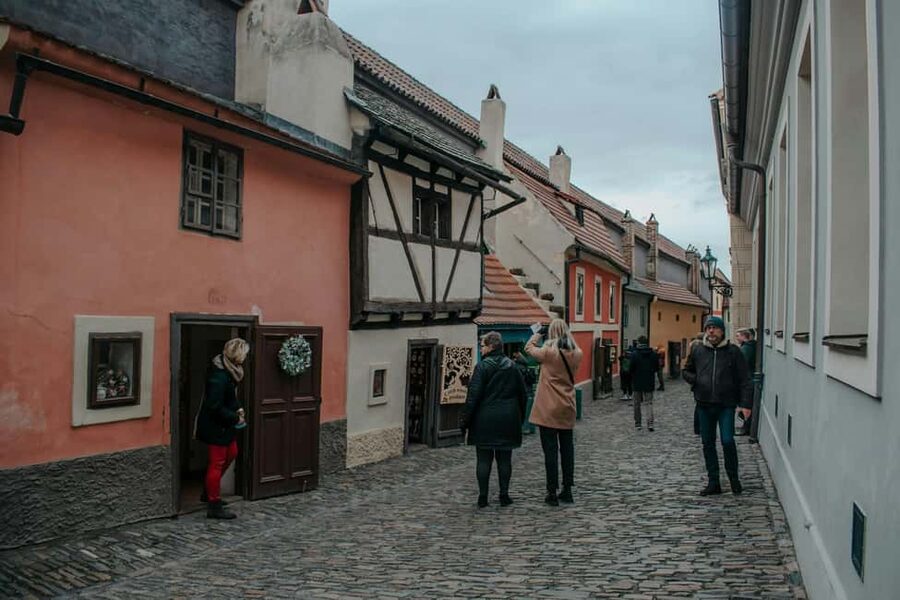
Golden Lane is the most picturesque part of the route, but its appeal comes from more than its small colored houses. The lane takes you back to the 16th century and is linked with Emperor Rudolf II’s alchemists.
According to the tour description, alchemists worked here in search of an elixir of life and tried to turn lead into gold. That gives the lane a slightly strange, storybook quality. It also shows how Prague Castle was connected not only with government and worship, but with the emperor’s interest in science, magic, and unusual experiments.
The lane is also associated with Franz Kafka, the famous Prague writer, who lived in one of the little houses. His presence adds a modern literary thread to an otherwise medieval and Renaissance setting.
Golden Lane is a fitting final stop because it is smaller and more intimate than the cathedral or throne room. You finish with narrow façades and personal stories instead of grand ceremony.
The tour description says the guided portion ends here. Another set of meeting details says the activity ends back at the original stop, so confirm which arrangement applies. Either way, Golden Lane is a practical place to continue exploring the castle grounds if you have more time.
What the castle views add to the visit
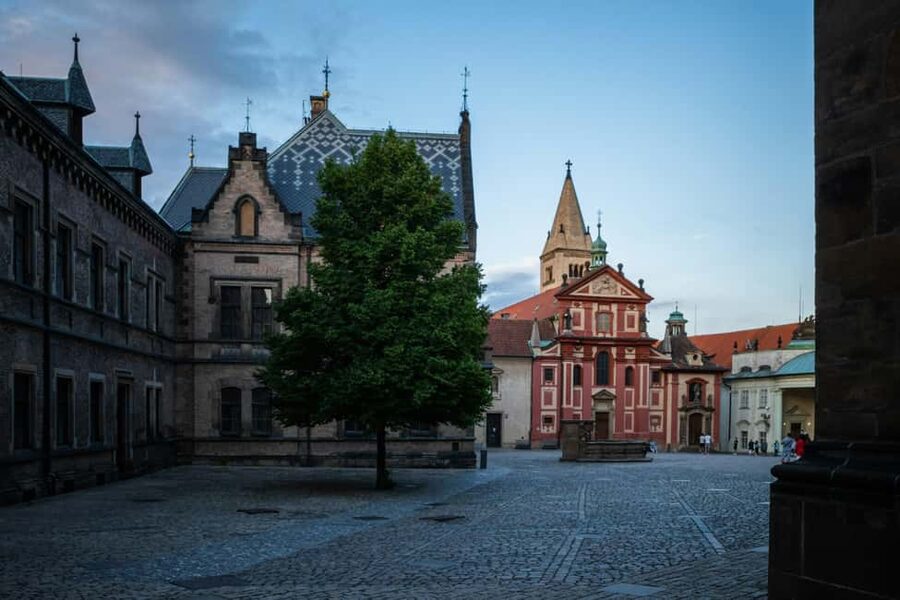
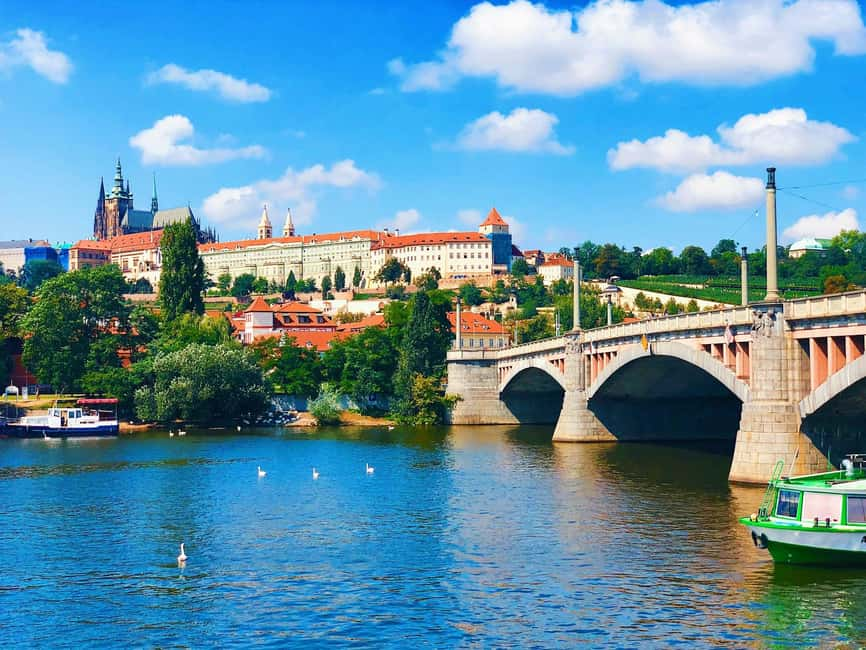
Prague Castle offers broad views over the city. You can see why the site was chosen for royal power, even before hearing the political history.
The views are not a separate sightseeing stop with a stated amount of time, so do not expect a dedicated panorama session. Still, the castle grounds give you several chances to look across Prague, and those views help orient you after spending time indoors.
I like this part of the experience because the city becomes easier to understand from above. The castle is not floating apart from Prague. It sits within the city’s story, looking down toward the streets and historic districts below.
Bring your own camera if photography matters to you. The supplied details do not specify photography rules inside the buildings, so follow instructions from the guide and the individual sites.
Price, admission, and what you actually receive
The tour costs $41 per person for the three-hour guided service. Admission is separate. Adults pay 18 EUR for St. Vitus Cathedral, the Old Royal Palace, St. George’s Basilica, and Golden Lane. Seniors aged 65 and over pay 14 EUR.
That puts the adult cost at roughly the tour price plus 18 EUR, with the final amount depending on the exchange rate. The senior price is lower because of the reduced entrance ticket, though the tour fee itself is still part of the booking.
The admission arrangement is practical. Robert accompanies you to the castle ticket office, where you can pay by card. You can also give him the amount in EUR, and he will obtain the ticket for you. The guide purchases the tickets at a counter reserved for guides, which should reduce the time spent in the general queue.
What you are paying for is the German-language historical explanation and the smoother entry process, not the admission itself. I think the value is strongest if you want context and would otherwise spend time piecing together the site on your own.
If you already know Prague Castle well, or if you prefer to read at your own pace, the added guiding fee may feel less necessary. If the castle is new to you and German is your preferred language, the cost is easier to justify.
Who should book this German-language visit
This tour suits adults and older teenagers who want a focused introduction to Prague Castle. Children under 10 are not suitable, which makes the experience less useful for families with very young children.
You should book it if you:
- Want all four main stops covered in three hours
- Prefer explanations from a historian
- Enjoy architecture from Romanesque, Gothic, Renaissance, and Baroque periods
- Want political and religious stories, not just photographs
- Are comfortable listening in German
- Prefer help with the castle admission process
You may want a different plan if you need a child-focused visit, require a tour in another language, or want a long, unstructured time inside each building. The stated duration is three hours, so the route is purposeful rather than leisurely.
The free-cancellation policy allows cancellation up to 24 hours in advance for a full refund. You can also reserve now and pay later, which helps if your Prague schedule is still shifting.
My recommendation
I would book this tour if you speak German and want Prague Castle explained as a working center of faith, monarchy, conflict, and legend. The combination of St. Vitus Cathedral, the Old Royal Palace, St. George’s Basilica, and Golden Lane gives you a strong sweep through Prague’s past.
The best reasons to choose it are Robert Procházka’s historian-led approach, the clear three-hour route, and the stories that connect the buildings. Just budget for the separate 18 EUR adult admission, and confirm the exact ending point because the supplied meeting details are not fully consistent.
FAQ
What language is the tour conducted in?
The live guided tour is conducted in German.
How long does the Prague Castle tour last?
The tour lasts three hours. Starting times depend on availability.
Where does the tour meet?
You meet Robert Procházka directly at the Pražský hrad tram stop, served by tram 22 or 23 in the direction of Bílá hora.
Is admission to the castle interiors included?
No. Admission is separate. Adults pay 18 EUR, and seniors aged 65 and over pay 14 EUR for St. Vitus Cathedral, the Old Royal Palace, St. George’s Basilica, and Golden Lane.
What sights are included in the guided route?
The route includes St. Vitus Cathedral, the Old Royal Palace, St. George’s Basilica, and Golden Lane, along with the castle grounds and their city views.
Can I cancel the booking for a refund?
Yes. You can cancel up to 24 hours in advance for a full refund. The activity also offers a reserve-now, pay-later option.
Just added around Prague
- Prague Highlights 4 Hour Private Walking Tour★ 5.0 · 3 reviews
- VIP Prague Segway Tour Around Monastic Breweries★ 4.0 · 3 reviews
- Private Guided Tour from Prague to UNESCO Kutna Hora★ 5.0 · 3 reviews
- From Prague Day Unique Tour To Cesky Krumlov★ 4.5 · 3 reviews
- Cesky Krumlov: Insta-Perfect Walk with a Local★ 5.0 · 3 reviews
- Prague: WWII Tour with Local Historian SMALL GROUP★ 5.0 · 3 reviews
- Learn Traditional Czech Cooking from Authentic Family Recipes★ 5.0 · 3 reviews
- Prague Tour in Spanish★ 5.0 · 3 reviews
Prague Castle Tours, compared.
Prague Castle 2.5-Hour Tour Including Admission Ticket
Read our review →
3-Hour Walking Tour of Old Town & Prague Castle
Read our review →
3-Hour Old Town and Prague Castle Tour in German
Read our review →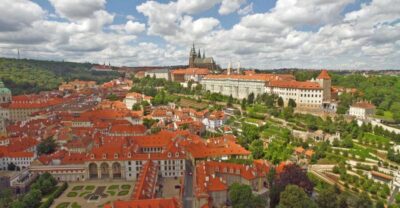
Prague Castle and Lobkowicz Palace Entry Tickets
Read our review →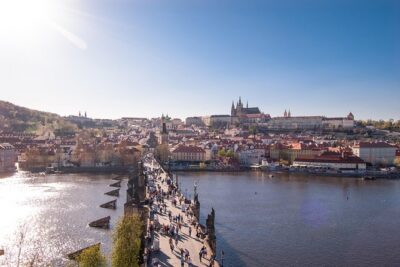
Prague 3-hour Afternoon Walking Tour including Prague Castle
Read our review →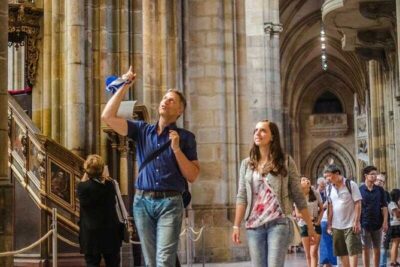
Prague Castle Tour Including Admission Ticket – 2.5 Hour
Read our review →
Prague Castle: Midday Classical Concert at Lobkowicz Palace
Read our review →
Full-Day Prague Tour with Prague Castle, Lunch and Vltava Cruise
Read our review →Browse the lists this tour appears in