
Reviewed · TEREZíN MEMORIAL DAY TRIPS
Prague: Historical Walking Tour with Focus on World War 2
The most powerful part of this Prague walk comes at the end: a visit to the crypt beneath the Church of Saints Cyril and Methodius, where resistance fighters made their last stand after the assassination of Reinhard Heydrich. It gives the war a human scale that a lecture alone cannot provide.
I like the clear focus on Czech history during World War II, rather than a broad tour of Prague’s usual sights. I also like the guide’s use of historical photographs, which helps you compare today’s streets with wartime scenes. The main drawback is pace: three hours packed with politics, dates, sites, and photographs may feel demanding if you want a light sightseeing walk.
I’d choose this tour if you already know Prague’s major landmarks and want the difficult story behind them. The subject is serious, the walking is purposeful, and the strongest moments require attention rather than quick snapshots.
In This Review
- Key points to know before booking
- Why this walk tells Prague’s war story well
- Starting near Skautský Institut
- The opening lecture: Czech history, not just Nazi history
- A hotel tied to Prague’s Nazi elite
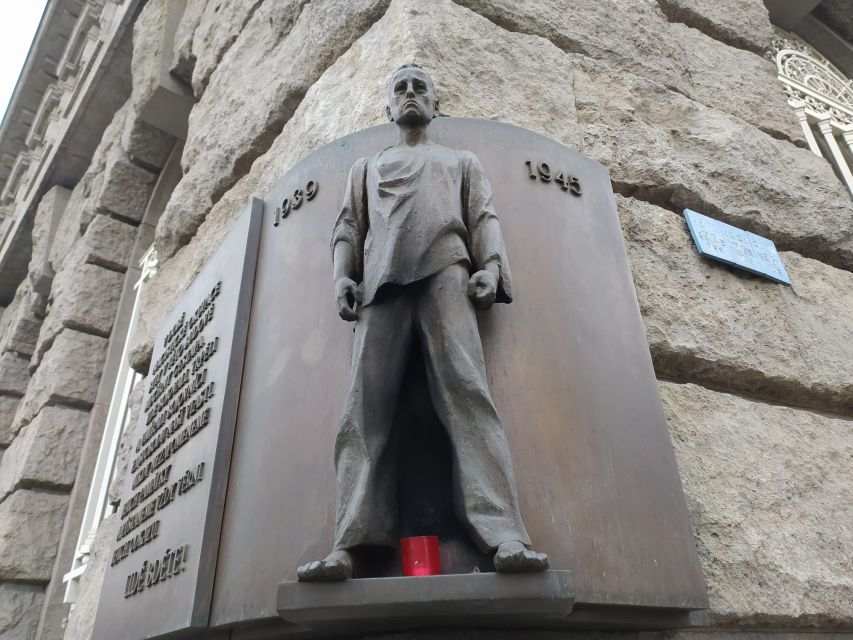
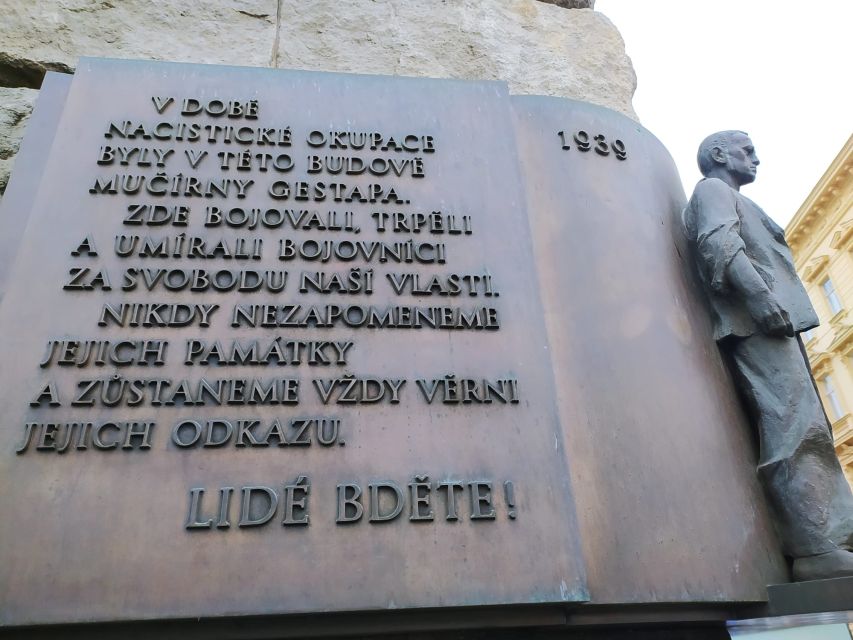
- The former Gestapo headquarters and a minute of silence
- Old Town Square during the Prague Uprising
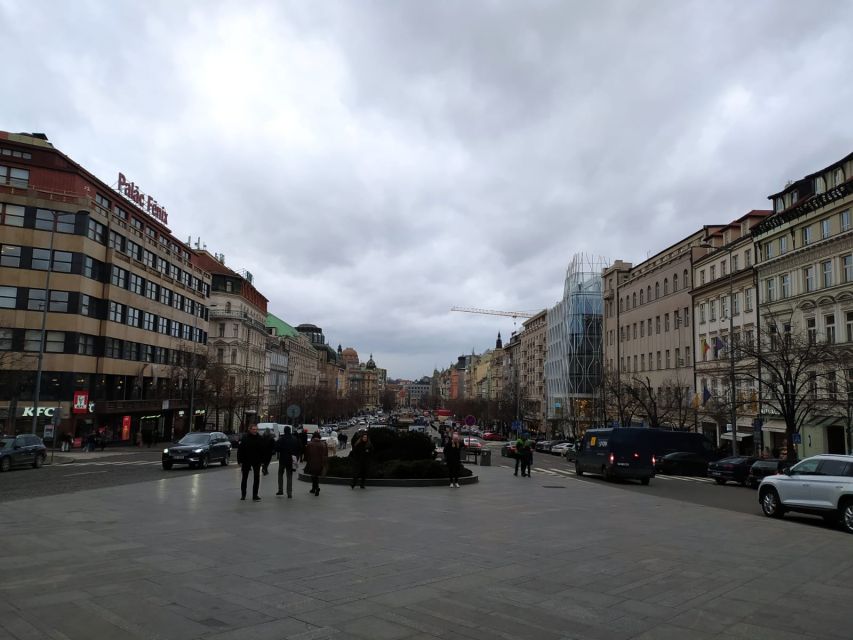
- Wenceslas Square and the changing meaning of public space
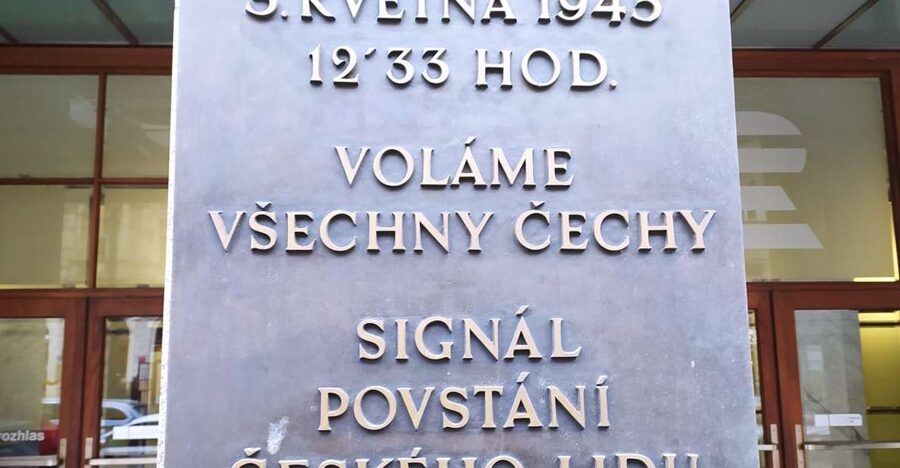
- Czech Radio headquarters and the sound of resistance
- Reinhard Heydrich and the assassination plot
- The crypt at Resslova 9a, the tour’s strongest stop
- What the $58 price delivers
- Pace, language, and the right kind of participant
- Strengths and limitations at a glance
- Should you book this Prague WWII tour?
- FAQ
- How long does the World War II walking tour last?
- What languages are available?
- Where does the tour finish?
- Where is the standard meeting point?
- What places connected with the Prague Uprising are included?
- Does the tour visit the place connected with Reinhard Heydrich’s assassination?
- Is the tour suitable for children?
Key points to know before booking
- The crypt at Resslova 9a is the emotional center of the tour, linked to the final resistance of the men involved in Heydrich’s assassination.
- The Prague Uprising sites include Old Town Square, Wenceslas Square, and the Czech Radio headquarters.
- A minute of silence at the former Gestapo headquarters provides a quiet memorial moment for victims of Nazism.
- Historical photographs and spoken commentary help connect present-day Prague with wartime events.
- The three-hour format is information-heavy, with a lecture-style introduction followed by walking and site visits.
- The tour costs $58 per person, a fair price if you value a specialist guide and a focused subject, but less attractive if you want general sightseeing.
Why this walk tells Prague’s war story well
Prague can look untouched at first glance. Its old squares, grand avenues, and Gothic towers often make the city feel removed from the violence of the 20th century. This tour corrects that impression by showing you where Nazi rule, resistance, liberation, and political conflict played out in the city center.
The experience begins with a theoretical introduction to World War II and the Czech experience. That opening matters. Without it, the later stops could seem like a string of unrelated buildings. The guide explains the political setting, the Nazi occupation, the role of Czech resistance, and the events that led to the Prague Uprising.
You should expect a talk as much as a walk. The guide uses photographs and professional commentary to add detail at each stop. This format suits you if you enjoy dates, names, military events, and political context. If you prefer to learn through short stories and plenty of free time, the amount of information may feel heavy.
The tour is offered in English, German, or Czech. A professional licensed local guide leads it, and private groups are available. One guide specifically praised in the supplied information is Petr, who has shared both historical material and personal memories of growing up in Prague. If Petr leads your departure, you may get a particularly personal sense of how Prague’s later political history affected ordinary people.
More Terezin memorial day trips:
- From Prague: Terezin Concentration Camp Guided Tour w/ Audio
★ 4.5 · 1,959 reviews - From Prague: Tour of Terezin Concentration Camp
★ 4.4 · 1,269 reviews - Prague: WWII Guided Tour & The Crypt of Operation Anthropoid
★ 4.7 · 1,030 reviews
Starting near Skautský Institut
The standard meeting point is outside the entrance door to Skautský Institut, in an archway. Look for a guide holding a paper marked Spectrum Tours. Some booking options use a different pickup point, so check the exact choice you make before setting out.
This is a central meeting area, but the tour is not a hop-on, hop-off experience. You will be walking between sites and finishing in Prague 2 at Resslova 9a. Wear comfortable shoes, and bring a passport or identity card as requested in the tour information.
The route is wheelchair accessible, although the crypt visit may make the practical experience different for each participant. The supplied information confirms accessibility, but it does not give details about every interior surface, entrance, or step. If you need precise access information, ask before booking.
The opening lecture: Czech history, not just Nazi history
The introduction sets the Czech story within the larger war. That distinction is important because a Prague World War II tour can easily become a list of German leaders and military operations. Here, the focus includes what happened to Czech society and how local resistance took shape.
The guide also explains the problemacy of the period, meaning the difficult questions around occupation, resistance, collaboration, retaliation, and memory. You should not expect a simple good-versus-bad story with every issue neatly settled. The subject calls for care, especially when discussing civilians caught between Nazi repression and resistance activity.
The photographs are useful here. A guide can point to a modern street and then show you the same setting during the war. That visual link makes the talk easier to follow, especially when several sites and events are introduced in quick succession.
The opening may be the least active portion for children or casual sightseers. The minimum age is 10, and I think that limit makes sense. Younger children may find the material too serious or too abstract, while older children with an interest in history could follow it well.
A hotel tied to Prague’s Nazi elite
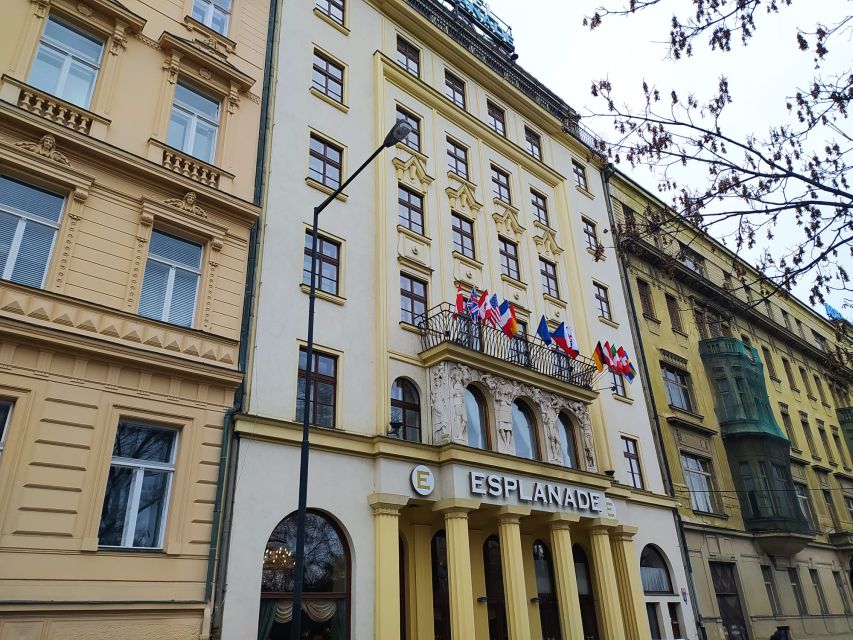
One stop concerns a hotel that was once popular with prominent Nazi figures. The hotel’s name is not specified in the tour details, but the point of the visit is clear: Prague was not merely a backdrop to events elsewhere. Important Nazi officials moved through the city, used its institutions, and occupied its public spaces.
This kind of stop is valuable because it shows how power operated in ordinary-looking places. You are not only hearing about military headquarters or battlefields. You are also seeing a hotel linked to the social world of the occupation.
Do not expect a preserved wartime interior or a museum display unless the guide tells you otherwise. The value comes from the explanation and the connection to the wider story. This is one of several places where the guide’s photographs should help you picture what the modern site cannot show.
More history walks around Prague:
- Prague: Oldtown, Medieval Underground & Dungeon History Tour
★ 4.2 · 8,244 reviews - Prague Old Town, Medieval Underground and Dungeon Historical Tour
★ 4.5 · 3,227 reviews - Prague: Communism History and Nuclear Bunker Guided Tour
★ 4.7 · 2,417 reviews - Prague: Historic City Center Bus Tour with Top Sights
★ 4.4 · 2,360 reviews
The former Gestapo headquarters and a minute of silence
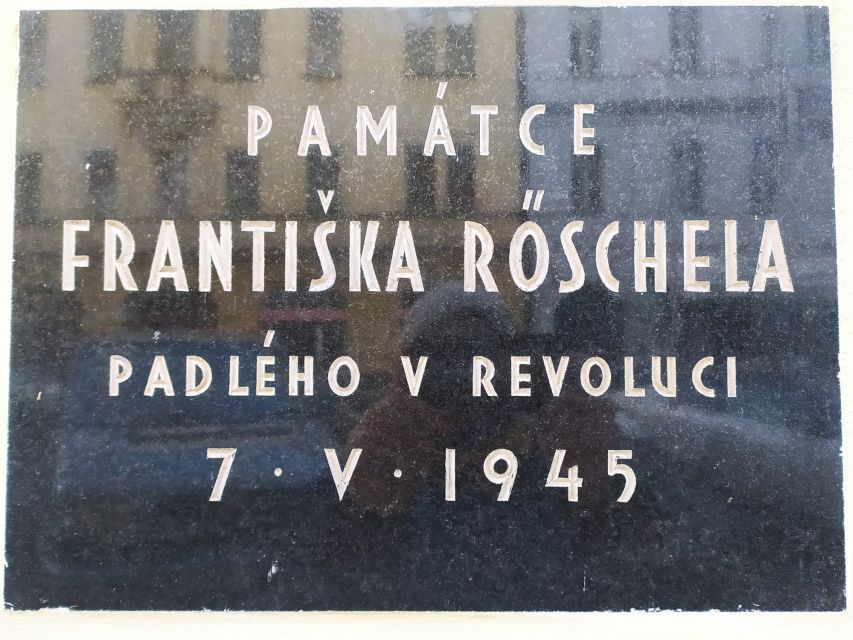
The former Gestapo headquarters is one of the tour’s most solemn stops. Here, the focus shifts from strategy and political leadership to victims of Nazism. The group holds a minute of silence at the memorial.
That pause is simple but effective. It gives you time to stop taking notes and think about the people affected by imprisonment, interrogation, persecution, and murder. Many historical walks rush from one date to the next. A moment of silence changes the rhythm and gives the site proper weight.
The former headquarters is also a reminder that repression was carried out through offices and institutions, not only on distant battlefields. You are standing in a place tied to the machinery of Nazi control, in the middle of a living city.
The mood here is serious, and the guide’s tone matters. The tour information promises professional commentary, but the quality of any historical walk depends partly on how well the guide handles such subjects. The positive comments about friendly, punctual, and passionate guiding are encouraging, while one lower rating points to limited explanation at some important sites. I would listen closely and ask questions when you need more detail.
Old Town Square during the Prague Uprising
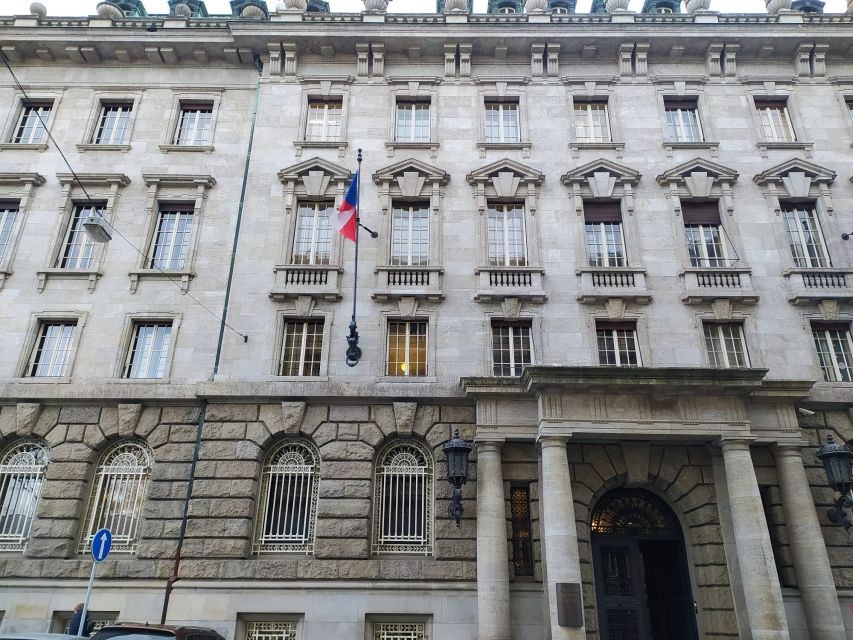
Old Town Square is one of the key sites connected with the heaviest fighting during the Prague Uprising in May 1945. Today, it is one of Prague’s most famous public spaces, filled with visitors and monumental buildings. The tour asks you to see it through a different lens.
The Prague Uprising was an attempt by Czech resistance forces and local people to challenge German control in the final days of the war. Fighting in the center of Prague was not a small afterthought to the conflict. Streets and public squares became places of armed confrontation, communication, and danger.
At Old Town Square, the guide’s photographs help you see how the wartime setting differed from the present one. You may find the contrast striking: a familiar sightseeing location becomes evidence of recent violence.
This stop works best if you allow yourself to look beyond the architecture. You will still see the square’s famous buildings, but the tour is asking you to notice how public space can change meaning. A square used for markets, ceremonies, and daily life can also become a battlefield.
Wenceslas Square and the changing meaning of public space
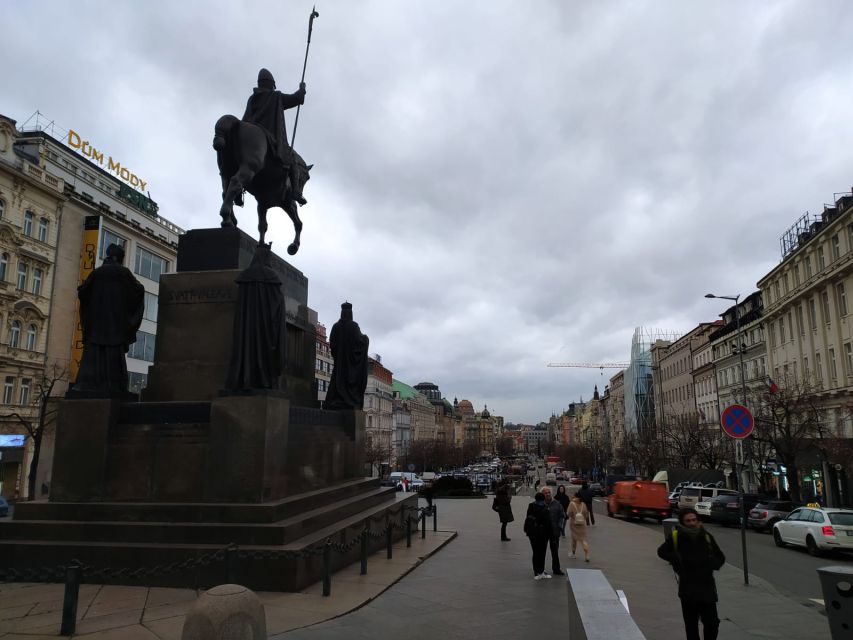
Wenceslas Square adds another major location from the May 1945 fighting. Its broad shape and central position made it important during the uprising, and the guide explains the events that took place there.
Wenceslas Square is also useful for understanding Prague’s later political history. One detailed experience description notes that the tour may include other memorials connected with resistance, including the crushed resistance to Soviet power in 1968. The exact route can vary, so you should not assume every departure includes every additional site, but the broader theme is clear: Czech resistance did not end with the defeat of Nazi Germany.
I like this wider frame. It prevents World War II from being treated as an isolated chapter. The city’s public spaces continued to carry political meaning after 1945, and the guide may connect those later events to the places you are walking through.
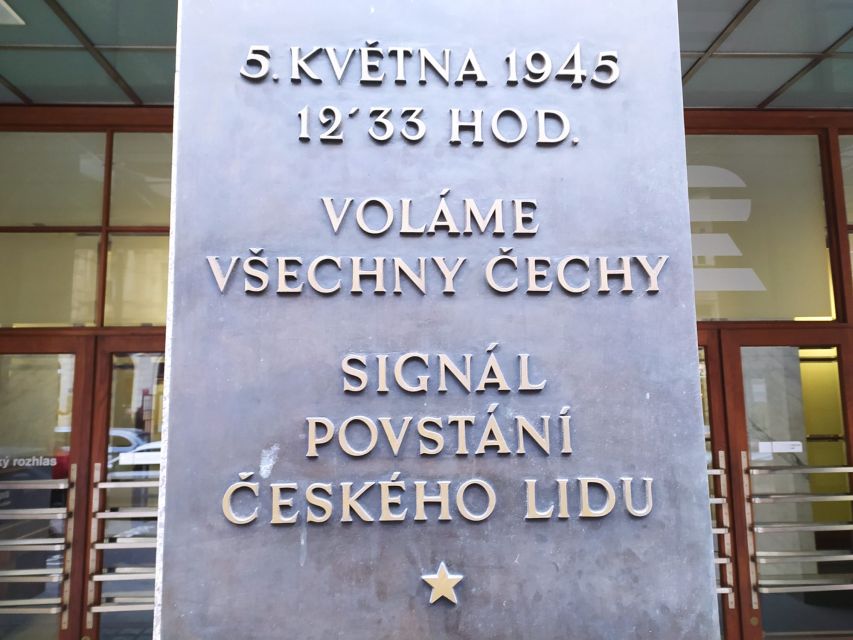
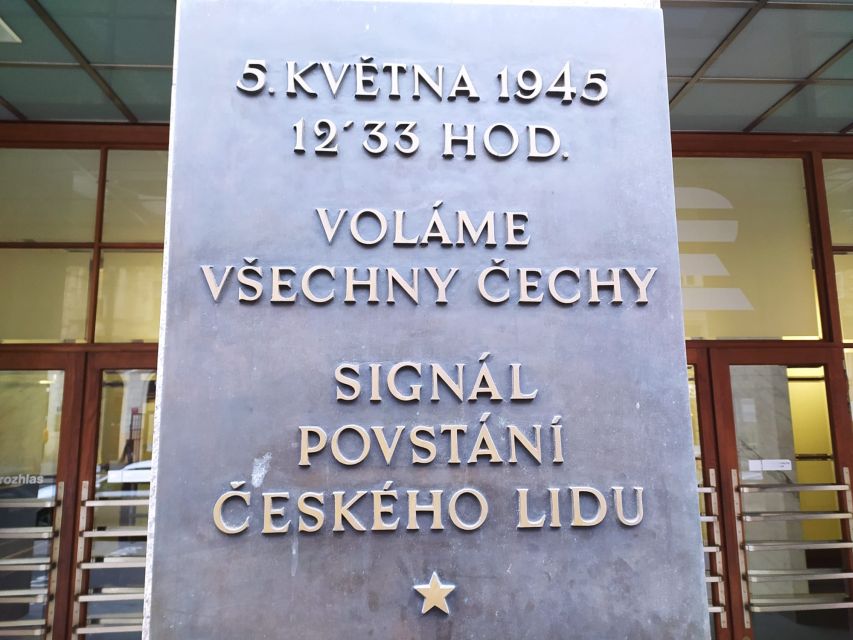
Czech Radio headquarters and the sound of resistance
The Czech Radio headquarters is another important Prague Uprising site. Radio played a major role during the fighting, helping spread information and rally resistance. The building therefore represents more than an address. It points to the struggle over communication and public morale.
This is the sort of stop where a strong guide can make a big difference. A building may look ordinary until you understand what was happening inside and why it mattered. Historical photographs can be especially helpful here, since they give you a visual record of the building and the surrounding streets during the uprising.
The route’s treatment of Czech Radio also balances the earlier focus on Nazi repression. You move from the places where occupation was enforced to a place associated with Czech voices trying to organize and resist. That shift gives the tour a clear narrative line.
Reinhard Heydrich and the assassination plot
The section on Reinhard Heydrich is likely the most detailed part of the walk. Heydrich was one of the highest-ranking Nazi figures until his death in 1942, and his role in the occupation of the Czech lands made him a central target for resistance.
The guide covers the assassination plot, its planning, and the consequences. You should expect more than a quick mention of the famous attack. The tour promises a full explanation of the assassination and the people involved, supported by photographs and commentary.
This is where the political questions become especially sharp. The assassination was a major act of resistance, but it also brought severe Nazi retaliation. A good explanation needs to show both the courage of the resistance members and the terrible cost paid by civilians and communities. The supplied description presents the subject as a difficult historical problem, not as a simple adventure tale.
I value that approach. It is easy to turn the story into a dramatic chase through Prague. The human cost should remain at the center, and the guide’s job is to connect the decision to act with what followed.
The crypt at Resslova 9a, the tour’s strongest stop
The tour finishes at Resslova 9a, where a crypt beneath a church marks the last resistance and deaths of members involved in Heydrich’s assassination. This is the most distinctive part of the experience, and for many people it will justify the specialist focus and the $58 price.
The setting is powerful because it is enclosed, personal, and tied directly to the final chapter of the story. You are not simply looking at a plaque on a street. You are entering a place associated with the last stand of the resistance fighters.
The crypt is described as incredibly impressive, but you should understand the word in the right way. This is not an entertaining spectacle. Its force comes from the physical closeness of the space and the knowledge of what happened there.
The tour ends here rather than returning to its starting point. Plan the rest of your day from the Nové Město area, not from Skautský Institut. That small detail matters if you have a timed museum visit, restaurant booking, or train connection afterward.
What the $58 price delivers
At $58 per person, this is not a bargain walk for general orientation. You are paying for a three-hour, specialist history experience led by a licensed local guide. The price makes the most sense if you would otherwise spend hours piecing together the Czech wartime story from separate museums, plaques, and guidebooks.
The value also depends on group size. A private group is available, which can make the cost more appealing for families or friends who want to ask questions and control the pace. For one person or a pair, the price is easier to justify if the guide provides the detailed explanations promised.
The strongest value comes from the combination of sites. You see the former Gestapo headquarters, the Prague Uprising locations, the Heydrich assassination sites, and the crypt in one connected route. You also receive visual material from the guide rather than relying only on what remains at each location.
Still, the tour may feel expensive if you mainly want to stroll through central Prague. Several important stops are public places, and the experience does not promise a large museum admission or a meal. Book it for interpretation, not for a long list of included extras.
Pace, language, and the right kind of participant
Three hours is enough time to build a clear story, but the amount of material can make the walk feel fast. One highly favorable account describes a passionate guide and warns that you need to be quick on your feet to keep up. That is useful advice both physically and mentally.
Comfortable shoes are essential. The route covers several central locations and finishes away from the starting point. Bring your passport or identity card, as requested, and be ready to listen while standing outdoors.
The tour runs in English, German, or Czech. If you have strong historical interests, the language you choose will shape the experience. The guide’s photographs and explanations are central, so choose the language in which you can easily follow complex political and military detail.
The tour suits adults, older children, history students, and anyone with a particular interest in Czech resistance. It is less suited to children under 10, visitors seeking general Prague highlights, or anyone who prefers a relaxed walk with long stops for coffee and photographs.
Strengths and limitations at a glance
I see five clear strengths:
- The route has a focused subject rather than a vague war theme.
- The crypt at Resslova 9a provides a memorable physical connection to the resistance story.
- The Prague Uprising sites show how central public spaces became battle zones.
- The guide’s historical photographs add evidence and visual context.
- The quiet memorial moment at the former Gestapo headquarters gives the tour respect and balance.
The main limitations are just as clear:
- The pace can be brisk.
- The opening lecture may feel academic if you want only sightseeing.
- One rating specifically points to limited explanation at some major sites, so the depth may vary by guide and departure.
- The route is serious and emotionally difficult.
- The tour finishes at Resslova 9a rather than the starting point.
The overall rating is 4.3 from 12 ratings, which suggests a generally positive experience but not a flawless one. The praise centers on punctuality, friendly service, passion, and strong historical knowledge. The criticism centers on uneven explanation at key sites. I would book with realistic expectations: this is a guide-led history lesson on foot, and the quality of the commentary is central to its value.
Should you book this Prague WWII tour?
Book it if you want the Czech side of World War II, care about the Heydrich assassination, and prefer seeing real places over reading a short summary in a museum. The crypt, former Gestapo headquarters, and Prague Uprising sites give the tour a strong sense of place.
I would especially recommend it early in a Prague stay if the subject matters to you. It may change how you see Old Town Square, Wenceslas Square, and the city center for the rest of your visit.
Skip it if you want a broad introduction to Prague, dislike lecture-style guiding, or have limited walking stamina. At $58, the tour earns its price through detail and interpretation, not through the number of attractions alone.
For the right reader, this is a serious and worthwhile three hours. Just bring good shoes, give the guide your full attention, and leave room in your schedule after the final stop at Resslova 9a.
FAQ
How long does the World War II walking tour last?
The tour lasts three hours.
What languages are available?
The tour is available in English, German, and Czech.
Where does the tour finish?
The tour finishes at Resslova 9a, 120 00 Praha 2-Nové Město, Czechia.
Where is the standard meeting point?
The meeting point is outside the entrance door to Skautský Institut, in an archway. The guide holds a paper marked Spectrum Tours.
What places connected with the Prague Uprising are included?
The route includes Old Town Square, Wenceslas Square, and the Czech Radio headquarters, all linked with the heaviest fighting during the Prague Uprising in May 1945.
Does the tour visit the place connected with Reinhard Heydrich’s assassination?
Yes. The tour covers the assassination of Reinhard Heydrich and visits the crypt beneath a church at Resslova 9a, associated with the final resistance and deaths of the resistance members involved.
Is the tour suitable for children?
The tour is not suitable for children under 10. It is wheelchair accessible, and comfortable shoes are recommended.
More Walking Tours in Prague
- Prague: 3-Hour Walking Tour of Old Town & Prague Castle
★ 4.7 · 5,696 reviews - Prague: Ghost Walking Tour Where Legends Come To Life
★ 4.4 · 5,253 reviews - Prague: Jewish Quarter Walking Tour with Admission Tickets
★ 4.7 · 3,729 reviews - Prague Guided Walking Tour and Cruise with Authentic Czech Lunch
★ 5.0 · 3,627 reviews
Just added around Prague
- Prague Highlights 4 Hour Private Walking Tour★ 5.0 · 3 reviews
- VIP Prague Segway Tour Around Monastic Breweries★ 4.0 · 3 reviews
- Private Guided Tour from Prague to UNESCO Kutna Hora★ 5.0 · 3 reviews
- From Prague Day Unique Tour To Cesky Krumlov★ 4.5 · 3 reviews
- Cesky Krumlov: Insta-Perfect Walk with a Local★ 5.0 · 3 reviews
- Prague: WWII Tour with Local Historian SMALL GROUP★ 5.0 · 3 reviews
- Learn Traditional Czech Cooking from Authentic Family Recipes★ 5.0 · 3 reviews
- Running Tour of Prague. Your private 6-9K intro★ 5.0 · 3 reviews
Terezín Memorial Day Trips, compared.
Terezin Concentration Camp Guided Tour w/ Audio
Read our review →
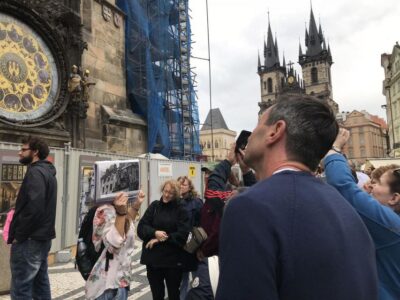
WWII Guided Tour & The Crypt of Operation Anthropoid
Read our review →
Terezin Concentration Camp Day Tour from Prague
Read our review →
WWII in Prague Tour & The Crypt of Operation Anthropoid
Read our review →
Terezin & Bohemian Switzerland from Prague: Bastei, Narnia & Café
Read our review →Browse the lists this tour appears in