
Reviewed · MUSEUMS
Prague: Museum of Torture Entry Ticket
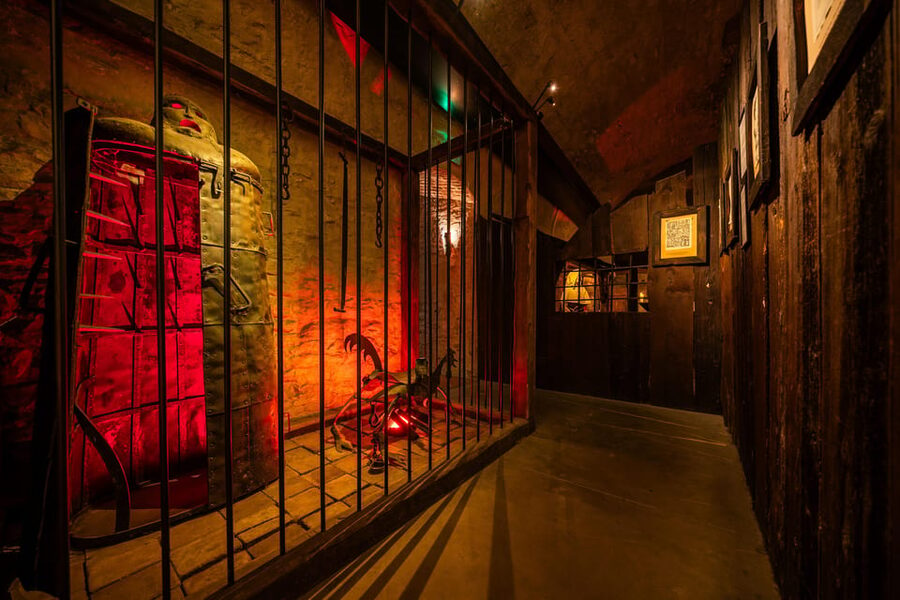
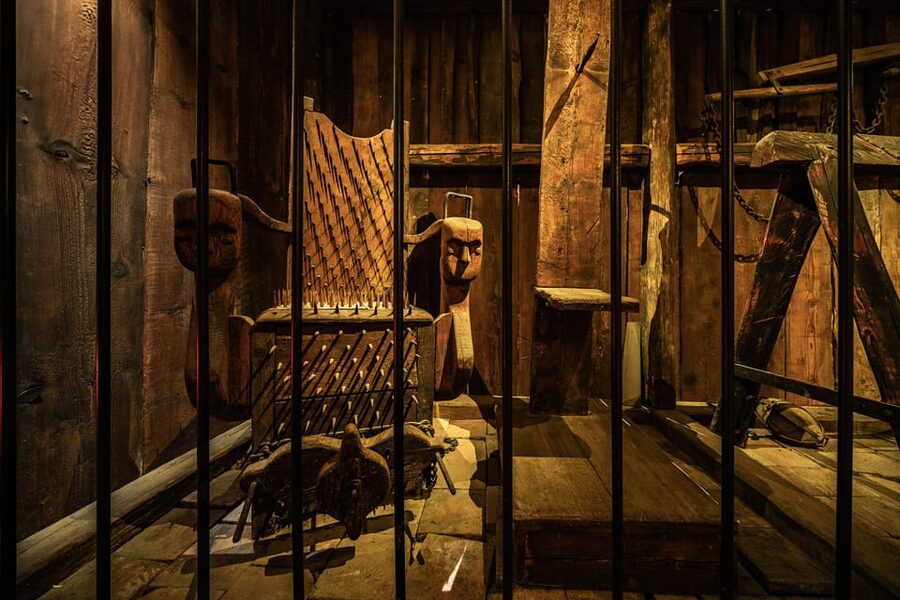
Prague’s Museum of Torture takes you below Celetná Street, into reconstructed cellar rooms filled with iron restraints, execution devices, legal documents, and grim scenes of punishment. The striking part is not simply the machinery. It is the way the exhibition connects each object to the laws and court practices that once allowed torture to extract confessions.
I like the compact 400-square-meter layout, which gives you about 100 exhibits without demanding half a day. I also like the period engravings and audiovisual effects, since they add context to objects that might otherwise feel like a row of frightening curiosities. The main caution is the graphic subject matter, along with a recent report of a strong mold smell and flaking, mold-covered walls in some cellar rooms.
In This Review
- Key points at a glance
- Entering Prague’s cellar museum on Celetná Street
- The first rooms: torture as a legal tool
- About 100 instruments in 400 square meters
- Engravings and documents add needed context
- Wax figures, sound, and audiovisual effects
- How graphic is the experience?
- The practical concern about cellar conditions
- Is $9 a fair price?
- Who should book this experience?
- Should you book Prague’s Museum of Torture?
- FAQ
- Where is the Museum of Torture located?
- What does the museum display?
- Which torture instruments can I see?
- Is the museum available in English?
- How large is the exhibition?
- Does the museum use special effects?
- How long is the ticket valid?
- Is the museum suitable for children?
- Can I cancel my booking?
Key points at a glance
- About 100 exhibits fill reconstructed cellar rooms beneath Celetná Street.
- Period engravings and legal documents explain how torture was used in judicial processes.
- Authentic, detailed replicas include the iron maiden, Spanish boot, rack, and pear.
- Wax figures, sound effects, and audiovisual scenes create a theatrical atmosphere.
- English information is available, with an English-speaking host or greeter.
- Sensitive visitors and young children should skip it because of the graphic content.
Entering Prague’s cellar museum on Celetná Street
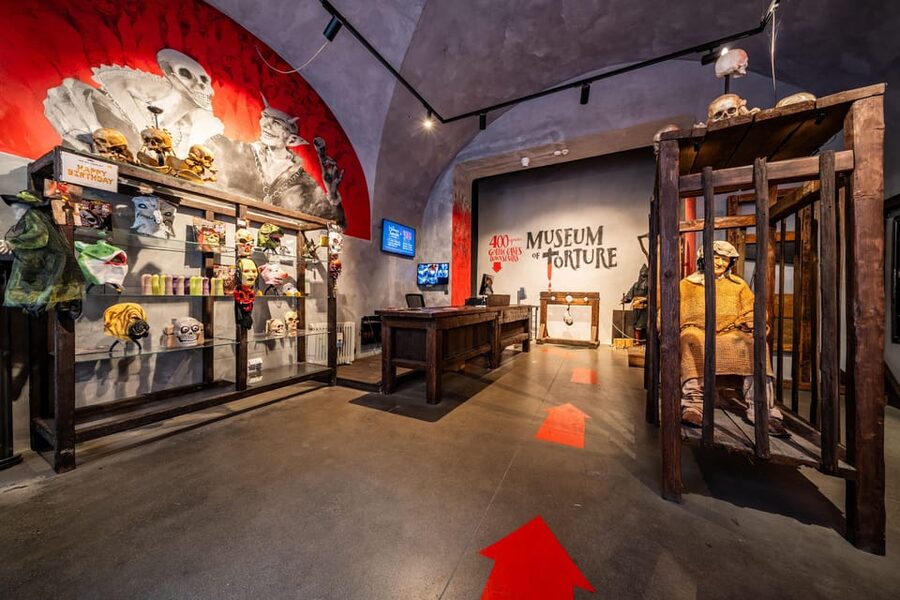
The museum sits on Celetná Street in central Prague, a handy location for anyone already exploring the historic center. You do not need to arrange transport for a separate outing, and the ticket is valid for one day, giving you flexibility around the rest of your plans.
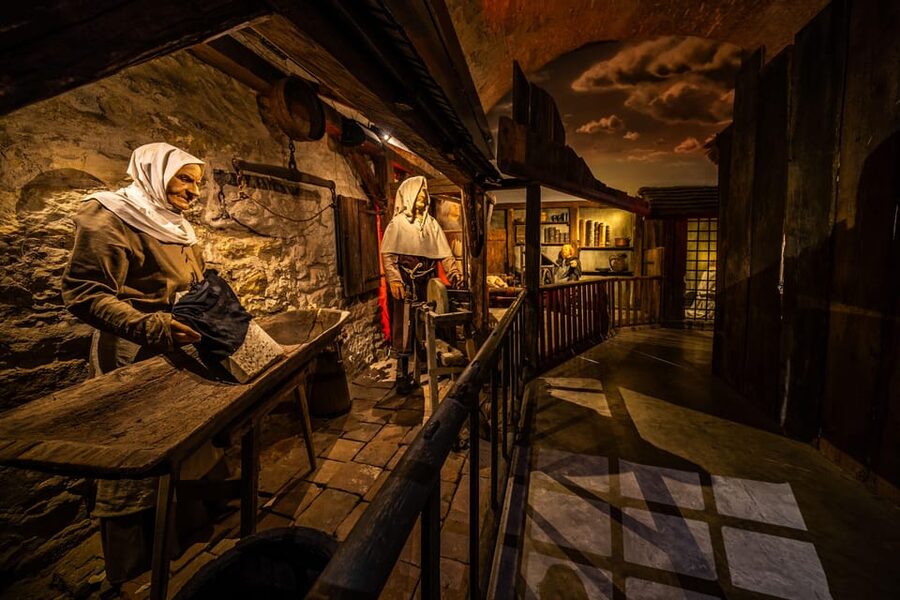
The setting does much of the early work. You enter reconstructed cellar spaces rather than a bright, modern gallery. Low rooms, dark surfaces, wax figures, and sound effects are designed to make the visit feel like a trip into the legal world of past centuries.
I would treat the atmosphere as part of the experience, not as a neutral container for the displays. Some people will find the theatrical approach effective. Others may prefer a quieter museum with more space to read and think. Here, the mood is deliberately unsettling.
The venue is presented in English, and the activity includes an English-speaking host or greeter. The supplied information does not name a specific guide, so you should not expect a personally led tour by a named historian. Much of the learning comes from the written material, documents, exhibit labels, and the way the rooms are arranged.
More museums and galleries in Prague:
- Prague: Museum of Fantastic Illusions Entry Ticket
★ 4.3 · 4,337 reviews - IAM Illusion Art Museum Entry Ticket
★ 4.2 · 1,664 reviews - Prague: Museum of Senses Admission Ticket
★ 4.0 · 1,445 reviews
The first rooms: torture as a legal tool
The most useful idea in the museum is that torture was not treated only as random cruelty. In many periods, it was tied to legal systems and used to extract confessions or punish people judged to be offenders.
That context matters. Without it, an iron device can look like a gruesome prop. With the legal background, you begin to see how courts, authorities, and accepted procedures gave torture a place in judicial processes. The museum aims to show the connection between instruments and the laws that permitted their use.
You will encounter textual information and documents that explain how torture law was applied across the centuries. The material also addresses the consequences for society. I appreciate this approach because it shifts the visit from a collection of frightening objects toward a lesson in power, evidence, punishment, and forced confession.
Do not rush through the labels. The machinery attracts the eye, but the legal explanations provide the real value. If you have only a few minutes, you may remember the devices. If you give the exhibition more time, you are more likely to understand why these objects were made and how authorities used them.
About 100 instruments in 400 square meters
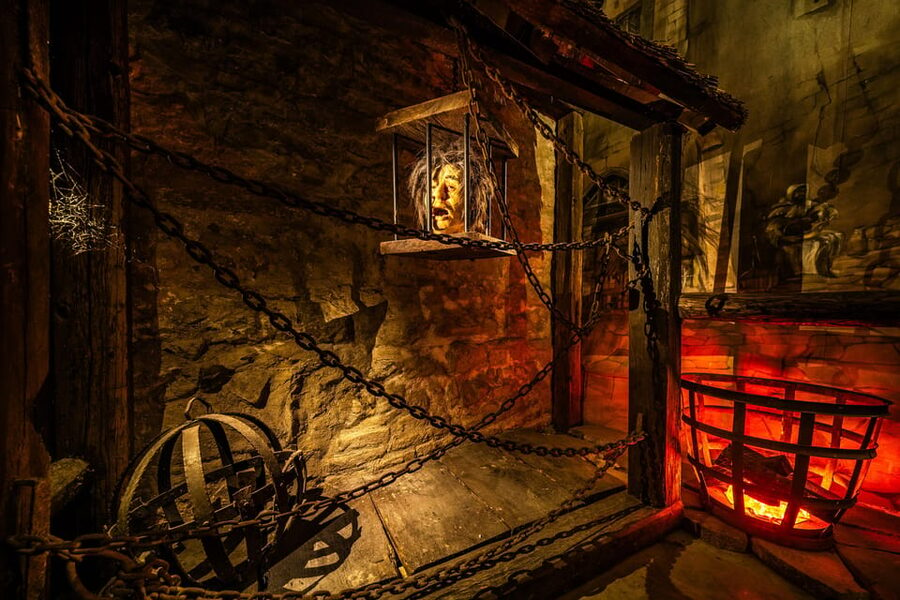
The museum displays around 100 exhibits across roughly 400 square meters. That is a manageable size for a short stop in Prague, especially if you want something unusual between major sights.
The collection includes detailed replicas of devices such as:
- The iron maiden
- The Spanish boot
- The rack
- The pear
- Other restraints and punishment instruments
These are replicas rather than a promise of original working equipment. That distinction is worth keeping in mind. The displays are built to show form and use, while the surrounding text provides the historical and legal setting.
The rack is likely to be familiar from popular images of medieval punishment, but the museum’s purpose is to show how such devices fit into a broader system. The Spanish boot and pear offer a more specific look at bodily punishment and forced testimony. The iron maiden adds the most instantly recognizable visual drama.
The exact route through the cellar rooms is not described in detail, so I would plan for a self-paced exhibition rather than a fixed performance with a published sequence. Your visit may feel quick if you focus on the main objects, or longer if you read the documents and engravings carefully.
The stated duration is one day, which describes ticket validity rather than the length of a guided tour. No exact museum visit time is provided. That makes the attraction easy to pair with other Prague plans, but you should not book it expecting a clearly defined half-day program.
Engravings and documents add needed context
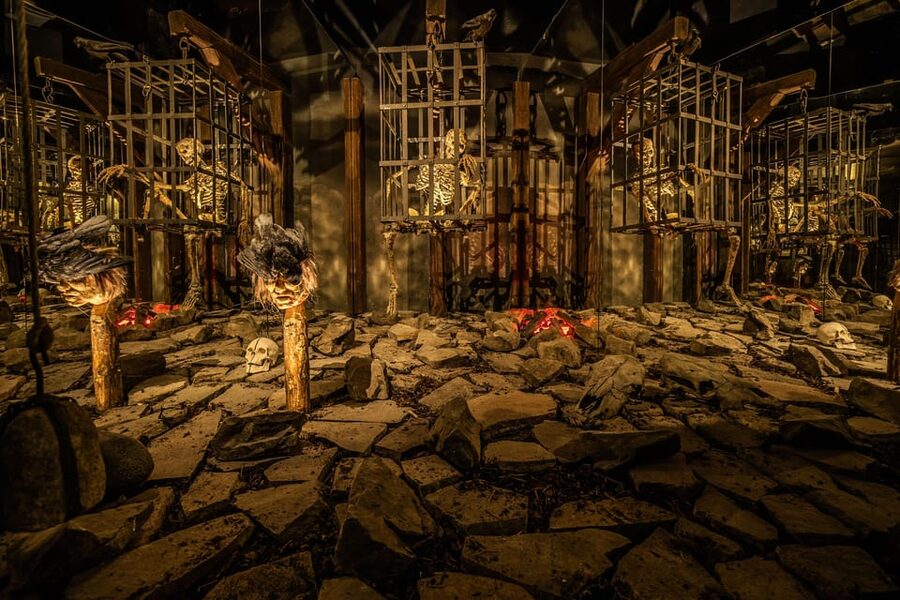
Dozens of period engravings accompany the instruments. These images help you see how torture and punishment were represented in the past, and they give the objects a visual setting beyond the dark cellar rooms.
For me, the engravings may be more useful than some of the larger replicas. A device can seem strange without scale, purpose, or evidence of use. An old illustration can show how authorities imagined a process, how bodies were positioned, or how punishment was presented to an audience.
The museum also includes documents and written explanations about torture law. These materials are important for visitors who want more than a collection of dramatic objects. They point toward the rules, court practices, and social effects behind the displays.
I would read the written material in small sections. The subject is heavy, and the exhibition already uses sound and staged scenes to create tension. Taking a slower approach can help you focus on the historical questions rather than letting the atmosphere carry the whole visit.
A few more Prague half-days to weigh up
- Prague: Skip-the-line Castle Ticket and Optional AudioGuide
★ 4.3 · 11,121 reviews - Prague: Castle Tour with Local Guide and Entry Ticket
★ 4.6 · 10,422 reviews - Prague Castle 2.5-Hour Tour Including Admission Ticket
★ 4.7 · 8,927 reviews - Prague: Old Town Hall Tower Entry Ticket
★ 4.5 · 6,749 reviews
Wax figures, sound, and audiovisual effects
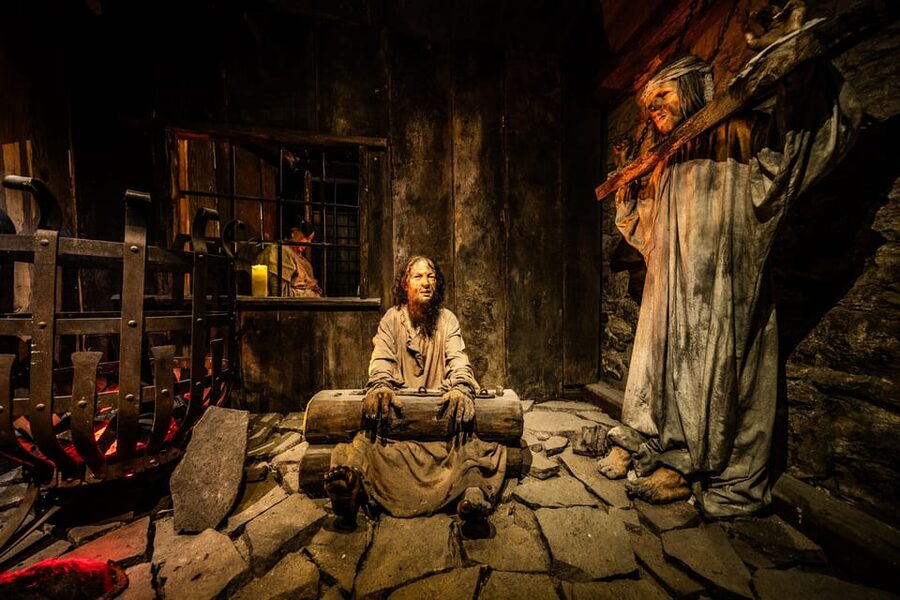
Wax figures are placed in reconstructed settings to show how certain instruments may have been used. Their purpose is clear: they give scale and human form to equipment that can otherwise seem abstract.
The exhibition also uses sound effects and two special audiovisual effects. These additions intensify the cellar tour and make the visit more theatrical. If you enjoy museums that use staging, you may find this memorable. If you prefer objects presented with minimal drama, the effects may feel heavy-handed.
I see the audiovisual elements as best used in moderation. They can help you understand a scene or sense how the rooms were meant to function. At the same time, sound can push the experience toward entertainment, which sits uneasily beside real suffering and judicial abuse.
That tension is worth considering before you buy. This is not a purely academic display, and it is not simply a haunted-house attraction either. It uses both historical explanation and horror-style atmosphere. Your reaction will depend on how comfortable you are with that mix.
How graphic is the experience?
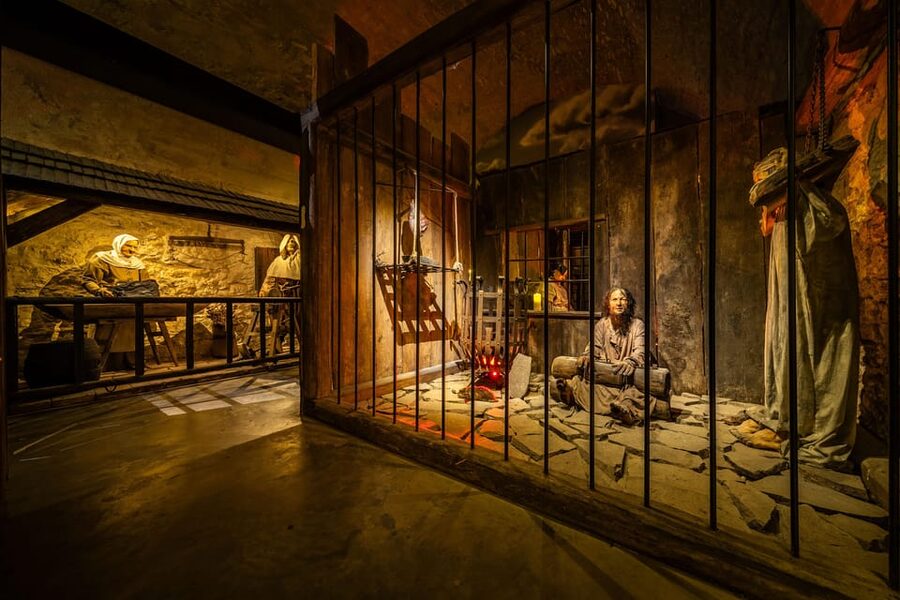
The museum is expressly not recommended for sensitive individuals or young children. That warning should guide your decision, not just serve as a formality.
The instruments, wax scenes, engravings, and sound effects all deal with bodily harm, punishment, and forced confession. Even though the objects are replicas, the subject can be upsetting. Parents should choose another Prague activity for small children, and adults who dislike graphic displays should think carefully before entering.
The museum may work well for adults interested in legal history, punishment, social control, or the darker side of European history. It can also suit people who want a short, unusual stop in central Prague and understand that the mood will be grim rather than light.
I would not treat this as a casual rainy-day attraction for a mixed family group. The central topic is too intense for that. The museum works better when everyone in your party knows what to expect and wants this kind of material.
The practical concern about cellar conditions
There is one maintenance concern you should keep in mind. A verified account dated February 10, 2026 described a strong black mold smell after several rooms, with black-painted walls reportedly affected by mold and peeling.
That is a serious issue, especially in enclosed cellar spaces. A single recent account does not prove that conditions remain the same today, and the information provided does not include a response or confirmation from the operator. Still, I would consider checking current conditions before booking if you are sensitive to mold, damp smells, or poor air quality.
This concern changes the value calculation for me. The ticket costs only $9 per person, so the financial risk is modest. But a low price does not make a strong odor or deteriorating walls acceptable. If the condition has been fixed, the museum can be a good-value stop. If not, the atmosphere may become distracting and unpleasant rather than merely eerie.
Is $9 a fair price?
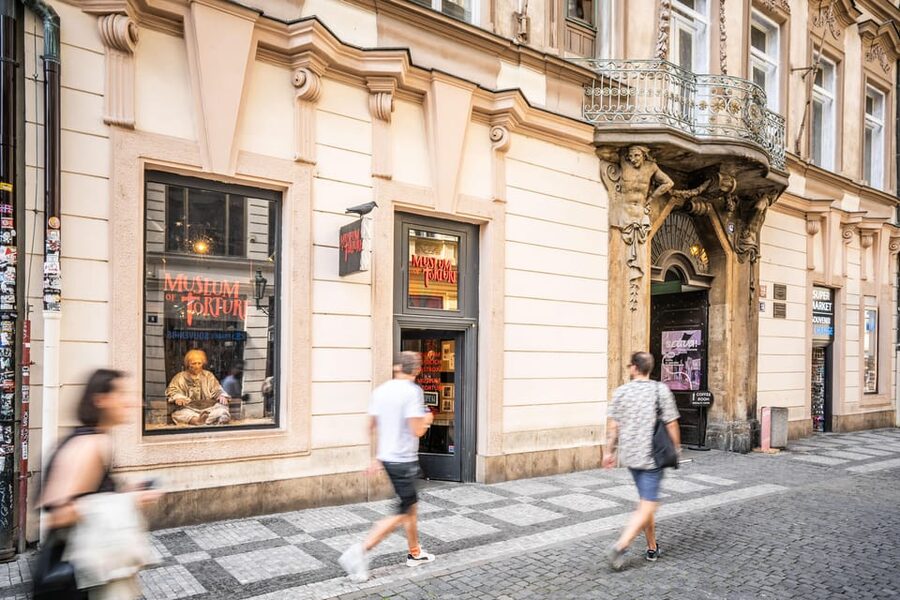
At $9 per person, the museum is priced as a short specialty attraction rather than a major all-day museum. You receive entry to the exhibition, including its cellar setting, approximately 100 exhibits, period engravings, written information, wax figures, sounds, and audiovisual effects.
The value depends on what you want from a museum. If you enjoy a focused subject and want historical explanation along with visual displays, the price is reasonable. The central location also helps, since you can fit the visit into a day of sightseeing without building your entire schedule around it.
If you are looking for original masterpieces, a large collection, or a polished national museum experience, this is not the right comparison. The appeal lies in its unusual theme, compact format, and staged environment.
The one-day validity adds flexibility. You can book it without committing to a precise visit time, subject to available starting times. The option to reserve now and pay later, plus free cancellation up to 24 hours in advance for a full refund, also reduces planning risk.
Who should book this experience?
I would recommend it to adults who are curious about the history of law and punishment and who enjoy museums with a dark, theatrical mood. It is especially suitable if you are already near Celetná Street and want a short indoor attraction with a clear subject.
It may also suit history students and visitors interested in how authorities used forced confessions. The legal documents and explanations give the displays a purpose beyond shock value.
I would skip it if you are traveling with young children, dislike graphic scenes, or want a calm art museum. I would also hesitate if you have strong sensitivity to mold or damp enclosed spaces, given the recent condition report.
The exhibition is available in English, but the experience is not described as a private tour or a long guided lecture. If you need detailed personal interpretation from a specialist, this may feel limited. If you are comfortable reading exhibit information at your own pace, it offers a more flexible visit.
Should you book Prague’s Museum of Torture?
Book it if you want a compact, unusual museum that connects disturbing instruments with the laws and court practices behind them. The $9 price is fair for the subject, central location, and mix of about 100 displays, engravings, wax scenes, and audiovisual effects.
Skip it for young children or sensitive members of your group. Also check the current condition of the cellar if mold or peeling surfaces would be a concern. My advice is simple: choose this for historical curiosity and a dark atmosphere, not for a light diversion or a polished major museum.
FAQ
Where is the Museum of Torture located?
It is located on Celetná Street in central Prague, in the Central Bohemian Region of the Czech Republic.
What does the museum display?
The museum displays around 100 torture-related exhibits, dozens of period engravings, textual information, and documents about torture law and judicial practices.
Which torture instruments can I see?
The exhibition includes detailed replicas of the iron maiden, Spanish boot, rack, pear, and other torture instruments.
Is the museum available in English?
Yes. The activity provides English information and an English-speaking host or greeter.
How large is the exhibition?
The exhibition covers about 400 square meters in reconstructed cellar spaces.
Does the museum use special effects?
Yes. The exhibition uses wax figures, sound effects, and two special audiovisual effects to create its atmosphere.
How long is the ticket valid?
The ticket is valid for one day. The exact length of the museum visit is not specified.
Is the museum suitable for children?
The exhibition is not recommended for young children because of its graphic content.
Can I cancel my booking?
Yes. You can cancel up to 24 hours in advance for a full refund. You can also reserve now and pay later.
Just added around Prague
- Prague Highlights 4 Hour Private Walking Tour★ 5.0 · 3 reviews
- VIP Prague Segway Tour Around Monastic Breweries★ 4.0 · 3 reviews
- Private Guided Tour from Prague to UNESCO Kutna Hora★ 5.0 · 3 reviews
- From Prague Day Unique Tour To Cesky Krumlov★ 4.5 · 3 reviews
- Cesky Krumlov: Insta-Perfect Walk with a Local★ 5.0 · 3 reviews
- Prague: WWII Tour with Local Historian SMALL GROUP★ 5.0 · 3 reviews
- Learn Traditional Czech Cooking from Authentic Family Recipes★ 5.0 · 3 reviews
- Prague Tour in Spanish★ 5.0 · 3 reviews
Museums, compared.


IAM Illusion Art Museum Prague Fast Pass Ticket
Read our review →

Ticket to Audiovisual Light Art at Lumia Gallery
Read our review →
Browse the lists this tour appears in