
Reviewed · WALKING TOURS
Prague Renaissance and Baroque Gardens Walking Tour
Prague’s gardens tell a surprisingly vivid story of power. Ferdinand I imported Italian architects and gardeners in the 1500s, turning the Castle grounds into a display of Renaissance taste north of the Alps. I like that this tour connects flowers, fountains, and palace walls to the ambitions of emperors and noblemen, rather than treating gardens as pretty scenery alone.
I also like the mix of famous and easily missed places: the Belvedere and Singing Fountain lead into the quieter Fig House, Orangery, Wallenstein Garden, and Vrtba Garden. Guide Miriam has received especially warm praise for an informative, relaxed approach, while Bonita Rhoads is another guide name associated with strong feedback. The main drawback is practical: steep, narrow stairs make this a poor choice for anyone with serious mobility limits unless you arrange a private, shortened route.
In This Review
- Key points at a glance
- Why Prague’s gardens are worth three hours
- Starting at Prague Castle’s Royal Gardens
- Figs, oranges, and Prague’s first exotic plants
- From the stag moat to the South Gardens
- Wallenstein Garden’s peacocks and mythic fountains
- Vrtba Garden, Prague’s compact Baroque surprise
- What $123 buys you
- The guide makes the difference
- Who should book this garden walk?
- Practical details before you go
- Should you book the Prague Renaissance and Baroque Gardens Walking Tour?
- FAQ
- How long does the Prague Renaissance and Baroque Gardens Walking Tour last?
- What language is the tour conducted in?
- Where is the meeting point?
- Are garden admission fees included in the price?
- Is the tour available as a private experience?
- Does the route include stairs?
- Can the tour be adjusted for mobility concerns?
Key points at a glance
- Ferdinand I’s Italian vision: Learn why Prague’s first great palace garden followed Renaissance ideas from Italy.
- The Belvedere and Singing Fountain: See a graceful summer palace and hear how falling water makes the 1564 fountain resonate.
- Early Central European citrus growing: Visit the Fig House and Orangery, where figs, almonds, oranges, and lemons were first grown in the region.
- Wallenstein’s dramatic garden: Look for albino peacocks, Mannerist statues, a grotto wall, and mythic fountains.
- Vrtba Garden’s rooftop view: Climb through a compact Baroque garden to a marine-themed grotto and broad views over Prague.
- A stair-heavy three hours: Expect a downhill route with some narrow and steep passages, plus two admission fees not included in the price.
Why Prague’s gardens are worth three hours
Most first-time visits to Prague focus on churches, bridges, and grand squares. That is sensible, but gardens add another layer. They show how rulers wanted nature to behave: ordered, symbolic, exotic, and expensive.
The tour begins with the medieval background. Early gardens were practical places for growing herbs used in cooking and medicine. Only a few such spaces survive, mainly around Gothic cloisters. Vineyards on Prague’s hills also reach back before the time of Charles IV, showing that cultivation around the city is far older than the palace gardens.
The change came in the 1500s. Emperor Ferdinand I wanted the kind of formal, pleasure-filled gardens associated with the Italian Renaissance. He brought Italian architects and gardeners to Bohemia and introduced a more classical style north of the Alps.
That context gives the walk a clear purpose. You are not simply moving from one leafy stop to another. You are watching Prague shift from useful medieval growing spaces to grand court gardens, then toward the theatrical style of the Baroque.
More walking tours in Prague:
- Prague: 3-Hour Walking Tour of Old Town & Prague Castle
★ 4.7 · 5,696 reviews - Prague: Ghost Walking Tour Where Legends Come To Life
★ 4.4 · 5,253 reviews - Prague: Jewish Quarter Walking Tour with Admission Tickets
★ 4.7 · 3,729 reviews
Starting at Prague Castle’s Royal Gardens
Meet your guide at the door of Bagel Lounge Malostranska. From there, the route takes you toward the gardens under Prague Castle. The exact starting time varies, so check the available departure when booking.
The Castle Gardens are the strongest opening because they reveal the scale of Ferdinand I’s project. The key building is the Belvedere Summer Palace, commissioned as a gift for Queen Anne. She died before it was finished, a sad detail that adds a human edge to an otherwise polished courtly setting.
The building was designed by the Italian architect Paola della Stella. Its elegant Renaissance form is often described as one of the finest Renaissance structures outside Italy. Look closely at the reliefs, including the image of Ferdinand presenting his wife with a flower from the Royal Gardens.
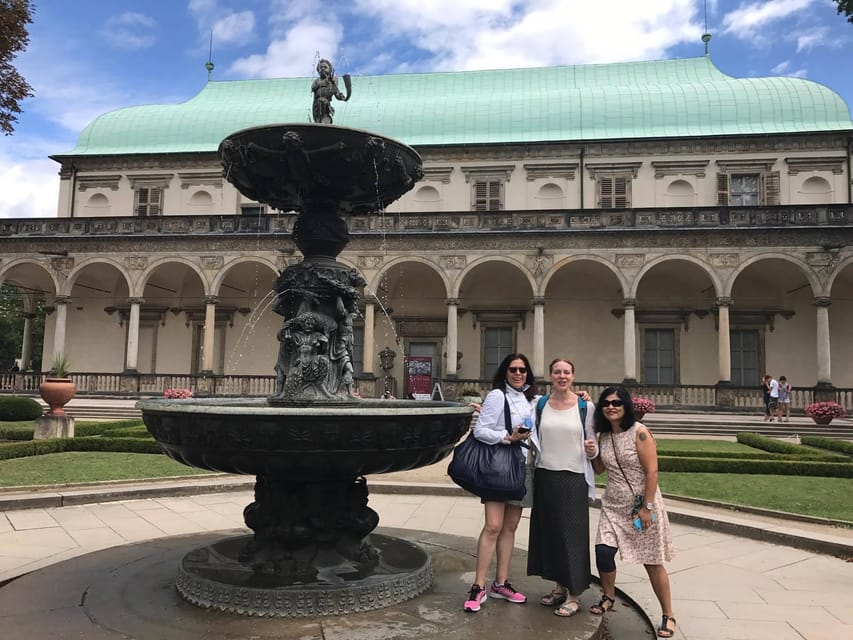
In front of the palace is a small pleasure garden known as a Giardinetto. Here you find the Singing Fountain, cast in 1564 from bell bronze. Water dropping into the bowl makes the metal resonate, giving the fountain its unusual name.
This is a good example of what the guide adds. On your own, you may admire the fountain’s shape and move along. With the story, you understand that it was designed to delight both the eye and the ear, combining technology, decoration, and royal display.
Figs, oranges, and Prague’s first exotic plants
The Fig House and Orangery bring the garden’s practical side into view. Figs, almonds, oranges, and lemons were grown here for the first time in Central Europe.
These plants were not ordinary garden choices in Prague’s climate. They signaled access to skilled gardeners, protected growing spaces, and the money needed to maintain them. The tour helps you see an orangery as more than a greenhouse. It was also a public sign of wealth and international connections.
The story continues with tulips. They were unknown in Europe before being introduced to the Royal Gardens as an exotic gift from the Sultan of Constantinople. That small detail makes the garden feel connected to a much wider world of diplomacy and trade.
You should not expect a flower-focused tour in the modern sense. The value is in the cultural story behind the plants and structures. If you want a detailed botany lesson or a tour devoted to seasonal blooms, this may not be the right choice. If you enjoy knowing why a particular plant mattered, the stop earns its place.
From the stag moat to the South Gardens
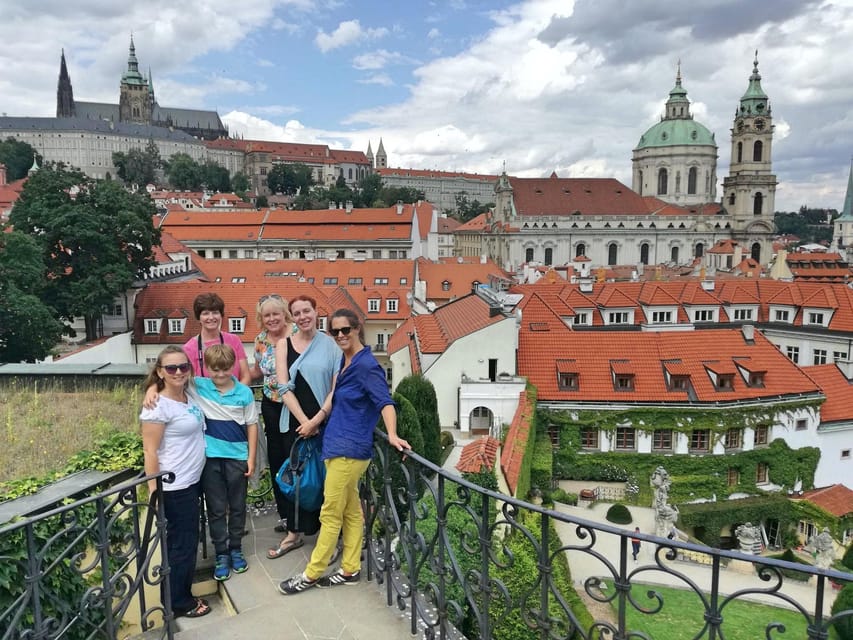
The route includes a look at the stag moat before crossing the Castle courtyard and descending the Bull Stairs. This is where the physical character of the tour becomes important.
The stairs can be narrow and steep. You will be walking downhill through several sections, so comfortable shoes are essential. The route is not described as suitable for wheelchairs, and anyone who has trouble with stairs should consider the private option. A private guide can adjust the pace, leave out certain sites, and concentrate on areas that fit your abilities.
After the Bull Stairs, the tour reaches the South Gardens, including the Garden of Paradise and the Garden on the Bulwark. These spaces show how the Castle’s outdoor areas were arranged across the slope below the palace.
The descent also changes your view of Prague. Instead of seeing the Castle only as a massive complex above the city, you experience the gardens as a series of terraces and transitions. The route gradually moves from imperial grounds to smaller noble gardens below.
This part may feel less concentrated than the Belvedere or Wallenstein Garden. Still, it helps connect the sites into one story. You are walking through the slope rather than simply being driven between unrelated attractions.
Same city, a completely different afternoon:
- Prague: 50-Minute Sightseeing Evening Cruise
★ 4.2 · 33,780 reviews - Prague: Medieval Dinner with Unlimited Drinks
★ 4.4 · 19,847 reviews - Prague: Skip-the-line Castle Ticket and Optional AudioGuide
★ 4.3 · 11,121 reviews - Prague: Castle Tour with Local Guide and Entry Ticket
★ 4.6 · 10,422 reviews
Wallenstein Garden’s peacocks and mythic fountains
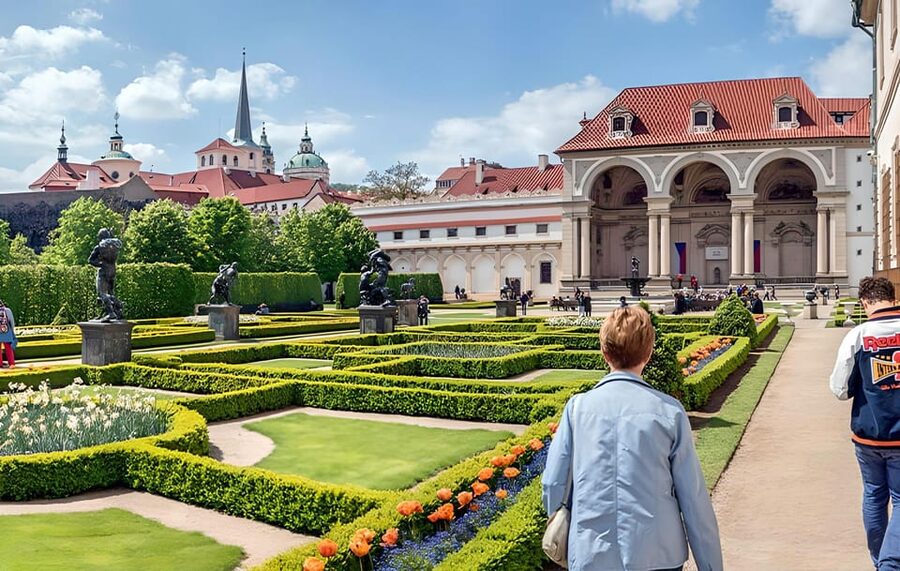
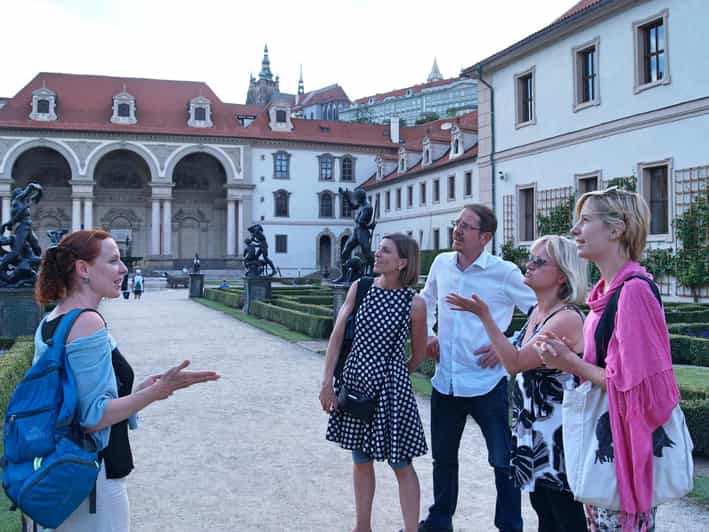
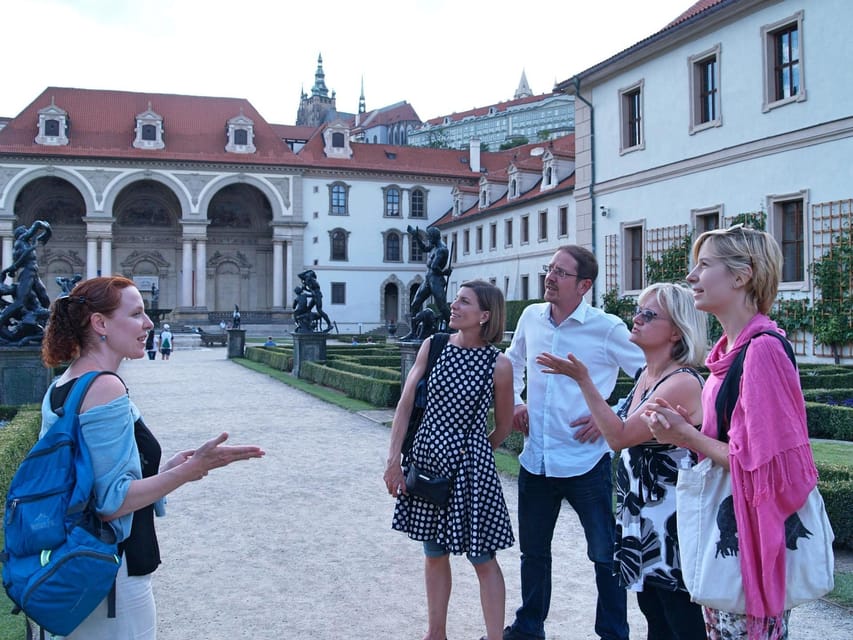
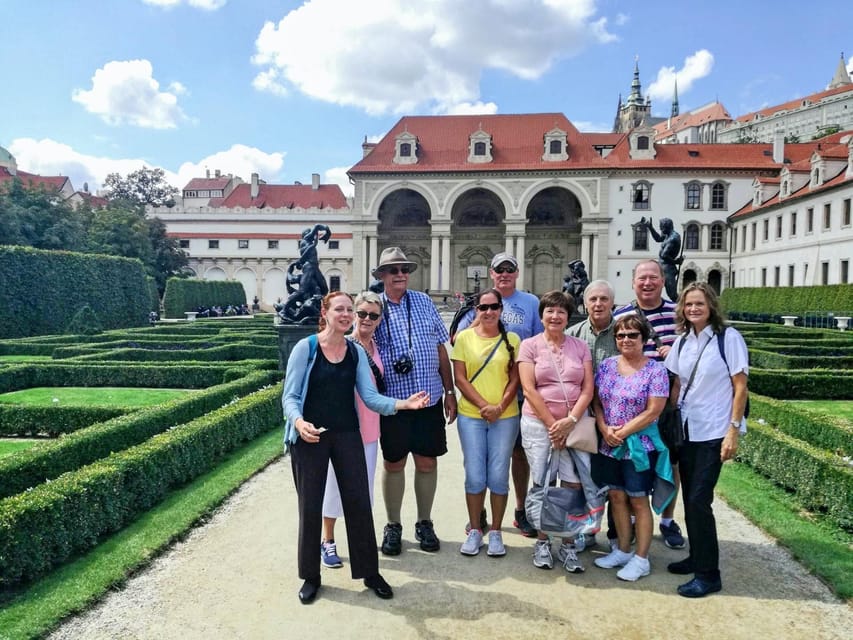
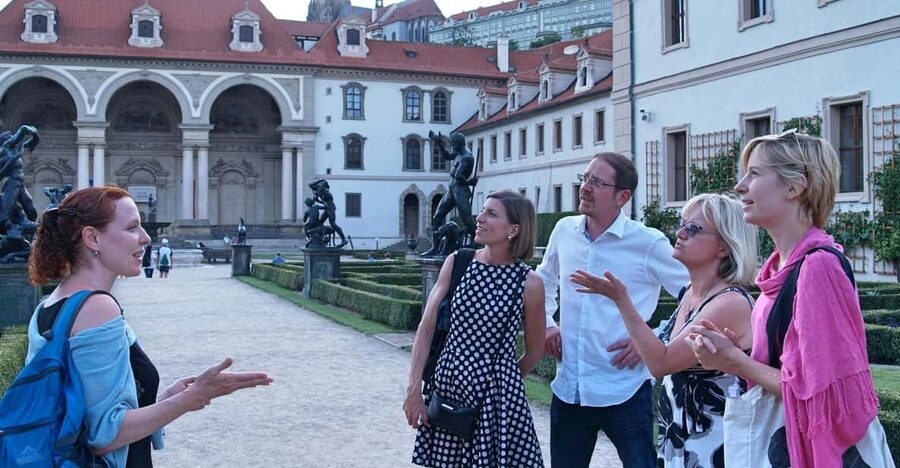
At the bottom of the hill, the Wallenstein Garden provides the tour’s grandest Baroque contrast. Its commissioner, Albrecht von Wallenstein, was a powerful and dramatic figure, and the garden reflects his ambition.
The design includes albino peacocks, Mannerist statues, a grotto wall, and fountains based on mythological themes. The effect is more theatrical than the calm classicism of the Belvedere.
This is where the guide explains the shift from Renaissance ideals to Baroque thinking. Renaissance gardens favored balance, proportion, and classical order. Baroque spaces aimed for movement, surprise, spectacle, and emotional impact.
The Wallenstein Garden makes that change easy to grasp. Statues and fountains are not merely decoration. They create a stage for power, with the nobleman at its center. The grotto wall adds an artificial sense of wildness, a constructed version of nature that feels very different from a practical herb garden.
The albino peacocks are a memorable touch, but do not make them the whole reason to visit. The garden’s real strength is the combination of design and biography. Albrecht von Wallenstein’s dramatic life gives the setting extra tension, and your guide can explain how the garden served his public image.
Vrtba Garden, Prague’s compact Baroque surprise
The final major stop is Vrtba Garden in Lesser Town, or Mala Strana. Dating from 1720, it is a walled Baroque garden that many people miss.
The garden is smaller and more enclosed than the Castle grounds or Wallenstein Garden. That difference is part of its appeal. You get a clearer sense of how an 18th-century noble garden could function as a private world tucked into the city.
The route climbs through the garden to its top courtyard. There, a marine-themed grotto provides a playful final detail. The climb also rewards you with impressive views over Prague’s rooftops and city center.
Vrtba is one of the most useful stops for understanding noble life. It is not only a place to admire formal planting and Baroque decoration. It shows how architecture, gardens, and views were combined to create a controlled setting for leisure and status.
The separate admission fee matters here. Vrtba Garden entry is not included in the tour price, and admission to the gardens under Prague Castle is also extra. Add those costs to the advertised $123 before deciding if the experience fits your budget.
What $123 buys you
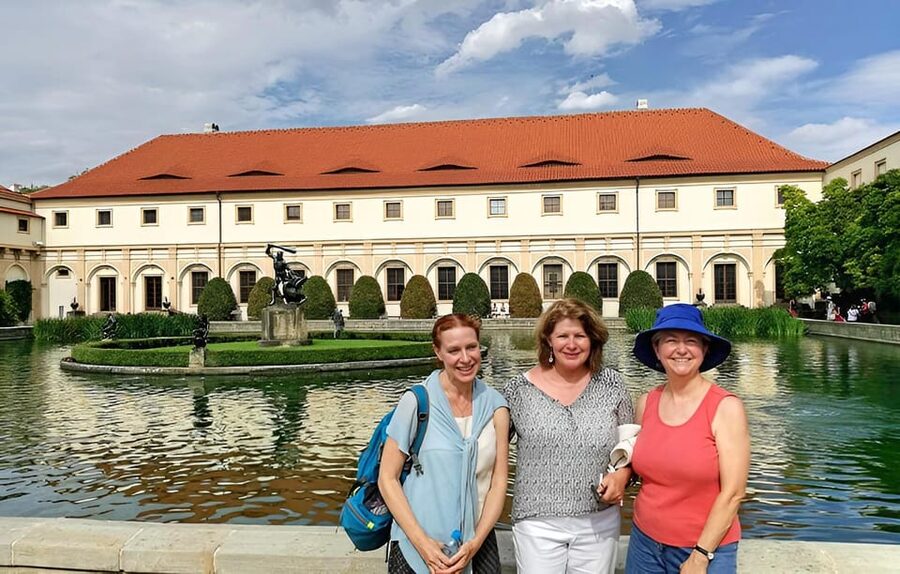
At $123 per person, this is not a cheap way to spend three hours in Prague. You are also paying the entry fees separately, so the final cost is higher than the headline price.
The value depends on how much you want from the visit. If you simply want to stroll through gardens, you can likely find pleasant public spaces in Prague for far less. If you want the political, artistic, and horticultural connections explained as you walk, the historian guide is the main reason to pay more.
A three-hour route covers several separate sites that would be easy to miss or misunderstand on your own. The guide also helps you notice details such as the Singing Fountain’s sound, the imported plants, the shift from Renaissance balance to Baroque drama, and the symbolism of Wallenstein’s garden.
Small groups and private tours are available. A small group usually offers a good balance between cost and personal attention. A private booking makes the most sense if you want a slower pace, have mobility concerns, or want the route adjusted around particular gardens.
The tour has flexible booking terms, with cancellation allowed up to 24 hours before the start for a full refund. You can also reserve without paying immediately, which helps if your Prague schedule is still changing.
The guide makes the difference
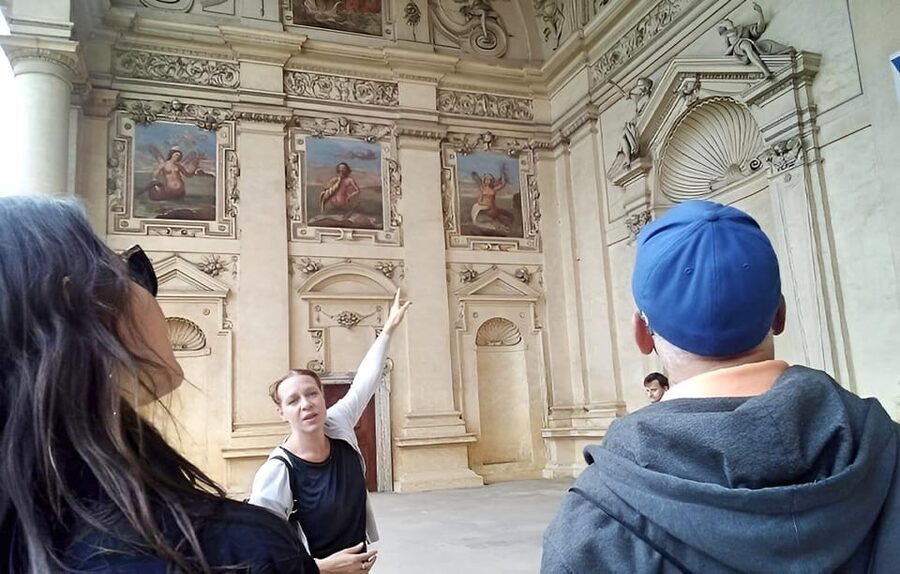
This tour depends heavily on the guide. Gardens do not provide the same instant drama as Prague Castle’s interiors, so the storytelling needs to carry the experience.
Miriam has been praised for being informative and relaxed. That combination suits this route well. You need enough historical explanation to understand the gardens, but not a lecture delivered at a breathless pace. Bonita Rhoads is another named guide connected with very strong feedback.
The tour is offered in English. Since the route includes several historical periods and architectural terms, a clear guide matters more here than on a simple photo walk.
When booking a private tour, use the chance to explain your interests and physical limits. The standard route includes stairs and a steady walk downhill, but the route can be adapted by leaving out some locations and spending more time in others.
Who should book this garden walk?
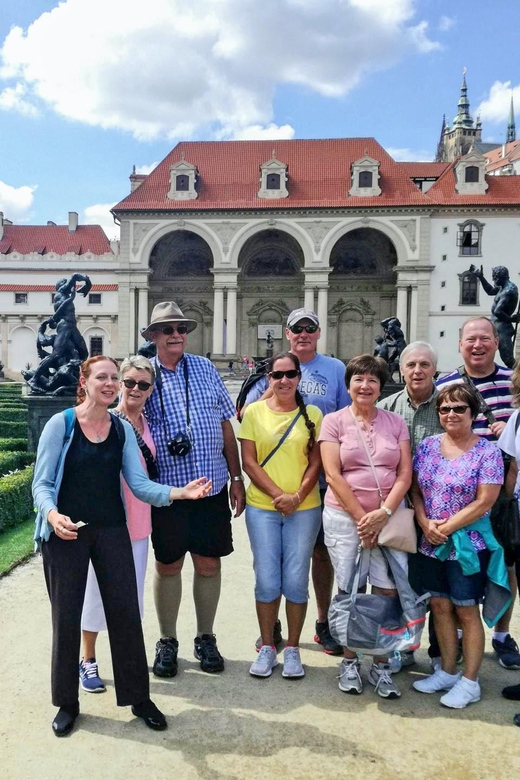
I would recommend it most strongly to you if:
- You have already seen some of Prague’s headline sights and want a quieter subject.
- You enjoy architecture, garden design, court life, and historical stories.
- You want to understand how Italian Renaissance ideas shaped Bohemia.
- You like unusual details, from tulips arriving from Constantinople to peacocks with white plumage.
- You are comfortable walking for three hours and handling steep or narrow stairs.
- You prefer a guide who explains connections rather than simply pointing out photo stops.
I would hesitate if your main goal is a relaxed, flat stroll. I would also think twice if the additional admission fees push the total beyond your comfort level.
The tour is less suited to anyone who wants a broad Prague overview. It concentrates on gardens and the people who commissioned them. That focus is its strength, but it means you will not get a full tour of the city’s churches, museums, or political history.
Practical details before you go
Plan on three hours, not including the time you may want to spend exploring the gardens afterward. Wear shoes with good grip, since the route includes stairs and sloping paths.
The meeting point is the door of Bagel Lounge Malostranska. Garden admission fees are not included, so budget for both the areas under Prague Castle and Vrtba Garden.
The tour is available as a private experience or in a small group. Private booking is especially useful if you need a tailored pace. The regular route includes walking up and down stairs that can be quite narrow or steep.
Should you book the Prague Renaissance and Baroque Gardens Walking Tour?
Book it if you want Prague explained through its gardens, not just photographed from its bridges. The Belvedere, Fig House, Orangery, Wallenstein Garden, and Vrtba Garden create a strong three-hour story about imported ideas, royal ambition, exotic plants, and Baroque spectacle.
At $123 per person plus entry fees, it is best for visitors who value a historian’s interpretation and a carefully linked route. It is not the bargain choice, and the stairs are a real consideration. For an active walker who enjoys overlooked corners and wants the stories behind Prague’s grand outdoor spaces, it offers a distinctive and worthwhile afternoon.
FAQ
How long does the Prague Renaissance and Baroque Gardens Walking Tour last?
The tour lasts three hours.
What language is the tour conducted in?
The live tour guide speaks English.
Where is the meeting point?
Meet at the door of Bagel Lounge Malostranska.
Are garden admission fees included in the price?
No. Admission to the gardens under Prague Castle and admission to Vrtba Garden are not included.
Is the tour available as a private experience?
Yes. Private and small-group options are available.
Does the route include stairs?
Yes. The regular route includes stairs that can be narrow and steep, as well as walking up and down slopes.
Can the tour be adjusted for mobility concerns?
A private tour can be tailored to your limits and personal pace. The guide may leave out some sites and focus on other areas as needed.
Just added around Prague
- VIP Prague Segway Tour Around Monastic Breweries★ 4.0 · 3 reviews
- Prague Highlights 4 Hour Private Walking Tour★ 5.0 · 3 reviews
- Private Guided Tour from Prague to UNESCO Kutna Hora★ 5.0 · 3 reviews
- From Prague Day Unique Tour To Cesky Krumlov★ 4.5 · 3 reviews
- Cesky Krumlov: Insta-Perfect Walk with a Local★ 5.0 · 3 reviews
- Prague: WWII Tour with Local Historian SMALL GROUP★ 5.0 · 3 reviews
- Learn Traditional Czech Cooking from Authentic Family Recipes★ 5.0 · 3 reviews
- Prague Tour in Spanish★ 5.0 · 3 reviews
Walking Tours, compared.

3-Hour Walking Tour of Old Town & Prague Castle
Read our review →
Ghost Walking Tour Where Legends Come To Life
Read our review →
Jewish Quarter Walking Tour with Admission Tickets
Read our review →
Prague Guided Walking Tour and Cruise with Authentic Czech Lunch
Read our review →
Old Town and Jewish Quarter Guided Walking Tour
Read our review →
Prague Ghost and Legend of Old Town Walking Tour
Read our review →
Prague 3-hour Afternoon Walking Tour including Prague Castle
Read our review →
Ghosts and Legends Nighttime Guided Walking Tour
Read our review →Browse the lists this tour appears in