
Reviewed · JEWISH QUARTER TOURS
Stories of Jewish Prague Walking Tour
Prague’s Jewish Quarter is far more than a cluster of handsome synagogues. It is a place where medieval faith, Renaissance civic life, Nazi persecution, Communist rule, and today’s Jewish community all meet within a few quiet streets. This three-hour walk gives that long story a human shape, beginning at the Old-New Synagogue and moving through Josefov with a local historian.
I especially like the small maximum of eight people, which gives you room to ask questions and keeps the pace calm. I also like the way the tour reaches beyond wartime history, with attention to Rabbi Judah Loew ben Bezalel, Mordechai Maisel, Maria Theresa, the Edict of Toleration, and Jewish life today. The main consideration is that museum and synagogue admission is extra, and one past tour ran four hours instead of three.
In This Review
- Key points to know before booking
- Starting at the Old-New Synagogue
- Walking through Prague’s Renaissance Jewish Quarter
- The cemetery and the weight of memory
- From Maria Theresa to the Edict of Toleration
- Nazi rule and the destruction of Prague’s Jews
- Communist Prague and Jewish life today
- What the small group changes
- Is $126.03 a fair price?
- How demanding is the three-hour walk?
- Who will get the most from this tour?
- Should you book Stories of Jewish Prague?
- FAQ
- Where does the Stories of Jewish Prague tour begin?
- How long does the tour last?
- What language is the tour offered in?
- How large is the group?
- Are entrance fees included?
- Are morning and afternoon departures available?
- Can I cancel for a full refund?
Key points to know before booking
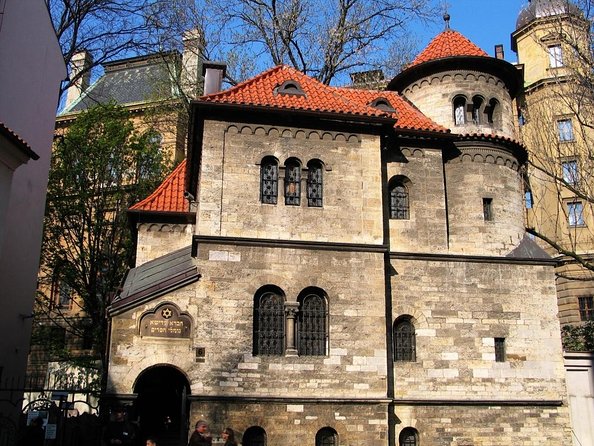
- The Old-New Synagogue anchors the walk: Begin at Europe’s longest-functioning synagogue and learn how Prague’s early Jewish community took root.
- The route covers centuries, not just the Holocaust: Medieval customs, the Renaissance golden age, imperial policy, Nazi rule, Communism, and modern Jewish life all have a place.
- Expect a small group: The maximum is eight people, and low bookings may turn the outing into a private tour.
- Past guides have included Martina, Petr, Katerina Prusova, and Bonita: Their approach has been praised for clear storytelling, warmth, humor, and strong local perspective.
- Admission costs extra: The listed fees are 600 CZK for adults and 400 CZK for students, so add that to the tour price.
- You will be on your feet: The pace is described as relaxed, but the outing involves steady walking and standing.
Starting at the Old-New Synagogue
The tour begins at Maiselova 38/15 in Josefov, Prague’s former Jewish Quarter. You meet near the Old-New Synagogue, a fitting place to start because the building connects the present city with the earliest chapters of Jewish Prague.
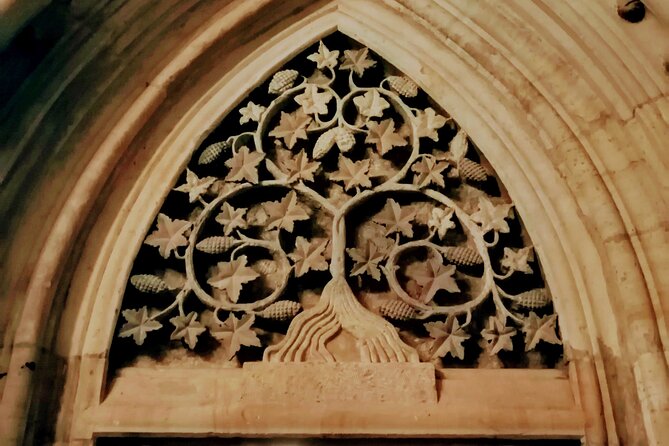
The synagogue is described as the longest-functioning synagogue in Europe. That fact alone gives the opening stop unusual weight. You are not simply looking at an old building. You are standing at a place tied to centuries of worship, community life, debate, and survival.
Your guide explains how local Jews hired Christian builders to construct the synagogue in the late 13th century. That detail helps you see medieval Prague as a working city shaped by many communities, rules, and tensions. It also gives the architecture a social setting, rather than treating it as an isolated monument.
This is a walking tour, not a synagogue service or a religious class. Still, the early part of the route includes Jewish religious and social customs from the medieval period. If you already have some background, you will likely appreciate the added setting and connections. If you know little about Jewish practice, ask questions early. One past participant felt that a guide’s limited grasp of religious ritual weakened part of the explanation, so the quality of this section can depend on who leads your group.
Admission to the Old-New Synagogue is not included in the tour price. The stated adult fee for the synagogue and Jewish Museum sites is 600 CZK, with a 400 CZK student fee. Check the current amount when you book, since one past account cited a different total.
More Jewish Quarter walks:
- Prague: Jewish Quarter Walking Tour with Admission Tickets
★ 4.7 · 3,729 reviews - Prague: Old Town and Jewish Quarter Guided Tour in German
★ 4.8 · 3,143 reviews - Prague: Old Town and Jewish Quarter Guided Walking Tour
★ 4.6 · 2,847 reviews
Walking through Prague’s Renaissance Jewish Quarter
From the synagogue, the route turns to the civic life of Jewish Prague. One important stop is the Renaissance Town Hall, built by Mordechai Maisel during what is often called the golden age of the city’s Jewish community.
Maisel was not simply a wealthy name from the past. He served as mayor of the Jewish Quarter and used his own money to pave local streets and support charity. His story gives you a useful way to understand community leadership in an era when Jewish residents faced legal and social limits. Civic improvements and charitable work were not abstract ideals. They shaped daily life in the quarter.
The guide also introduces intellectual figures such as Rabbi Judah Loew ben Bezalel, the writer and theologian associated with Prague. These stories add texture to the walk. Instead of moving from one attractive facade to another, you learn how religious thought, local government, education, charity, and neighborhood life were connected.
I like this part because it resists a common problem with historic-quarter tours. Buildings can become a backdrop for dates and names. Here, the best guides use them to explain how people lived and how the community organized itself.
The experience of Bonita, one of the guides praised in the supplied feedback, illustrates the approach you can hope for. She was described as linking political events with personal stories and present-day meaning, while keeping the conversation friendly. Martina received similar praise for combining clear explanations, humor, and enthusiasm. Guide assignments can change, but the company has used several local historians, including Petr and Katerina Prusova.
The cemetery and the weight of memory
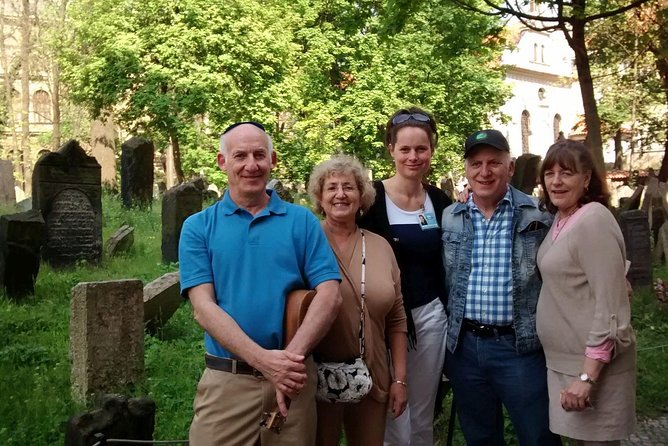
The Old Jewish Cemetery is one of the most sobering parts of the route. You may find the crowded layers of graves more affecting than the larger, more polished buildings nearby. It is a place where limited space, centuries of burial, and the long life of the Jewish community become visible at once.
This stop changes the pace of the tour. The early sections focus on construction, leadership, scholarship, and community life. The cemetery brings you closer to private grief and collective memory. Your guide helps place it within the wider story of Prague’s Jewish residents.
Access to the cemetery and the Jewish Museum sites is not part of the guide fee, according to the tour details. Some past participants toured the cemetery, synagogues, and museums during the outing, but you should budget separately for admission and confirm exactly which interior visits are planned for your departure.
The cemetery is also a reason to avoid rushing this tour between other appointments. Even if the walking pace is easy, the subject matter asks for attention. You will get more from it if you allow time to stop, listen, and look rather than treating each site as a quick photo opportunity.
From Maria Theresa to the Edict of Toleration
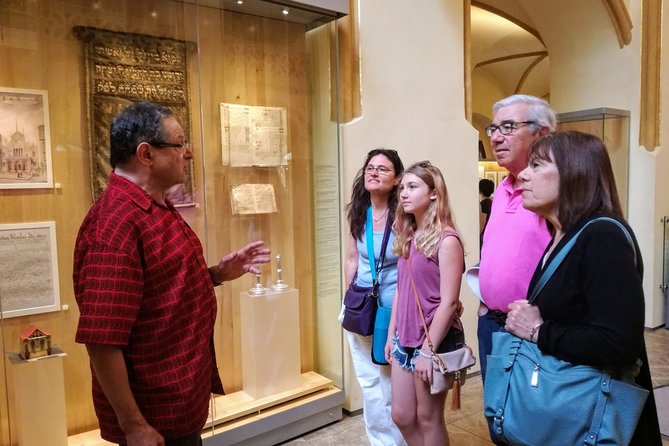
The story then moves into the difficult political shifts of the 18th century. Empress Maria Theresa expelled Prague’s Jewish community, a wrenching reminder that legal status could change by imperial order. The tour follows that event with her son’s reversal and the Edict of Toleration.
This section is valuable because it shows that Jewish life in Prague was never shaped by local culture alone. Imperial policy could close doors, reopen them, or alter the terms of daily life. A community might be deeply rooted in a city and still face sudden removal.
You will hear about the effects on the Jewish Quarter, not just the names of rulers. That local focus helps make the story easier to follow. The tour is strongest when a guide connects a decree to the people who had to respond to it.
If you prefer a light sightseeing walk, this section may feel demanding. Political history requires concentration, and some guides present material at an academic level. A past participant found one guide too verbose and felt that the explanations assumed too much prior knowledge. That is a fair caution. The tour favors substance over quick entertainment, so it suits you best if you want context and are willing to ask for clarification.
More walking tours in Prague:
- Prague: 3-Hour Walking Tour of Old Town & Prague Castle
★ 4.7 · 5,696 reviews - Prague: Ghost Walking Tour Where Legends Come To Life
★ 4.4 · 5,253 reviews - Prague Guided Walking Tour and Cruise with Authentic Czech Lunch
★ 5.0 · 3,627 reviews - Prague Ghost and Legend of Old Town Walking Tour
★ 4.5 · 2,630 reviews
Nazi rule and the destruction of Prague’s Jews
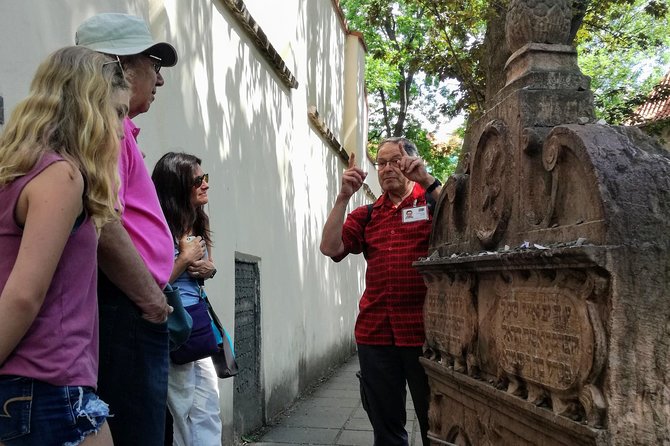
The 20th-century section turns to the local politics and ethnic tensions that preceded Nazi Germany’s invasion of Czechoslovakia. This framing matters. The story does not begin with the invasion itself. It also considers the atmosphere and political pressures that came before the catastrophe.
The tour then examines how Nazi Germany decimated Prague’s Jewish population. In the Jewish Quarter, the buildings can look orderly and preserved, but the human loss is immense. A good guide helps you hold both facts at once: the physical survival of many sites and the destruction of the people and institutions that gave them daily life.
This is likely to be the most emotionally difficult part of the walk. It is also where the personal skill of the guide matters most. Katerina Prusova was praised for bringing the history of Jews in Prague to life, while Bonita was noted for balancing individual stories with the wider political picture. Those are the qualities you want here: accuracy, restraint, and enough human detail to prevent the subject from becoming a list of numbers.
The tour does not treat the Holocaust as the only meaningful chapter. That balance is one of its strengths. You see what existed before the Nazi period, what was lost during it, and how Jewish identity and memory continued afterward.
Communist Prague and Jewish life today
The final part covers the Communist era and ends with Prague’s Jewish community today. This closing chapter helps prevent the tour from freezing Jewish Prague in the past.
Communist rule brought its own political pressures and shaped how religion, public memory, and community life could be expressed. The tour connects that period to the present, giving you a fuller sense of how Jewish Prague has changed across different governments.
Ending with today’s community is especially useful if you plan to keep exploring after the walk. You leave with more than a collection of old buildings. You have a framework for understanding why the quarter matters now, how memory is handled, and why the Jewish Museum sites remain important.
The walk may finish in Prague without hotel drop-off, so you will need to make your own way back to your accommodation. That is not a serious drawback in central Prague, but allow time if you have a timed reservation elsewhere.
What the small group changes
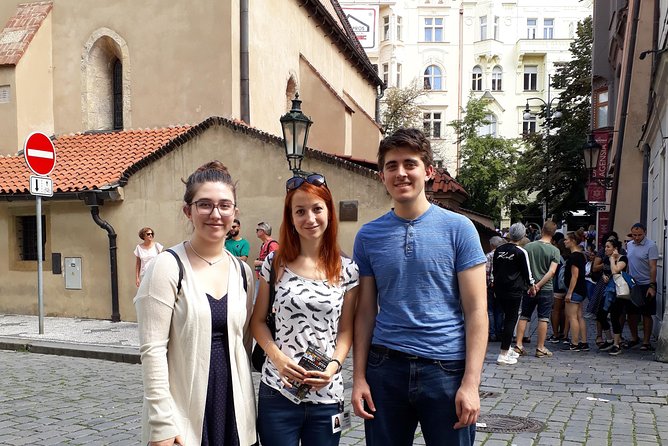
The tour accepts no more than eight people. That is a major advantage in Josefov, where narrow streets, busy museum entrances, and quiet memorial spaces can make a large group awkward.
A small group also changes the tone. You can ask about a name, custom, building, or historical event without holding up 30 people. Several past outings had only two, three, or four participants. In those cases, the tour became a private or nearly private conversation without feeling stiff.
There is one practical point to remember: a minimum of two people is required per booking. If you are alone, you may need to book with another person or confirm how the operator handles single bookings.
The tour offers morning and afternoon departures. I would choose the time that leaves you free to visit the Jewish Museum sites without watching the clock. Since the guide fee does not include food, drinks, hotel pickup, drop-off, or admission, plan your day around a three-hour walking appointment rather than expecting an all-inclusive excursion.
Is $126.03 a fair price?
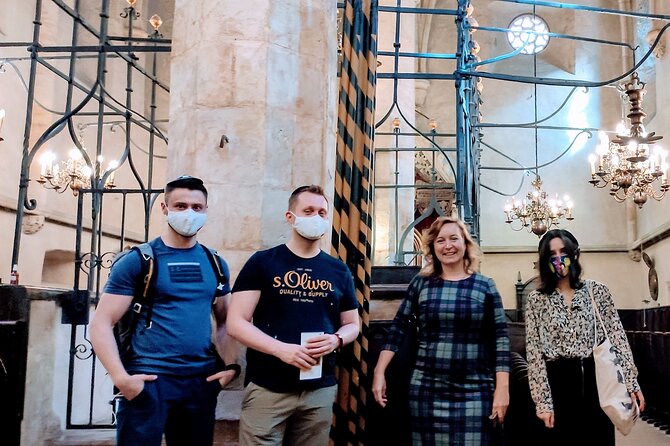
At $126.03 per person, this is not a bargain walk. The value comes from the guide, the small group, and the way the route links separate sites into one story.
If you simply want exterior views of Prague’s synagogues, you can spend less by walking Josefov on your own. You will save the guide fee, but you will also lose the explanation that connects Maisel, Rabbi Loew, Maria Theresa, the Holocaust, Communism, and the present day.
The extra admission makes the total cost higher. The stated fees are 600 CZK for adults and 400 CZK for students, though one past participant reported paying 500 CZK per person. Treat the listed price as the safer planning figure and confirm current fees before you go.
I see the tour as a good purchase for someone who wants a serious historical walk and intends to see the interiors anyway. If you are already an expert on Prague’s Jewish history, you may prefer to visit independently and spend more time at selected sites. For most first-time visitors, the guide’s organization saves time and gives the quarter a human scale.
How demanding is the three-hour walk?
The pace is generally relaxed, with walking and standing rather than strenuous activity. Most people can take part, and the route is near public transportation.
Still, do not read three hours as three hours of sitting. You will be on your feet for the entire outing, though one account described the walking as slow and manageable. Wear practical shoes and leave room for the tour to run long. One past group spent four hours with the guide instead of the scheduled three.
That extra time might be welcome if you enjoy detailed history. It could be a problem if you have a lunch booking, museum reservation, or train to catch. I would keep your next appointment flexible.
Weather may affect the experience, since parts of the tour take place outdoors. A past outing continued in wet weather and remained manageable, but bring suitable clothing if rain is forecast.
Who will get the most from this tour?
I would recommend it most strongly to you if you:
- Want the Jewish Quarter explained through people and politics, not just architecture
- Appreciate a local historian who can answer questions
- Prefer a small group to a large scheduled walk
- Are interested in Jewish Prague across many centuries
- Can give the subject matter the quiet attention it deserves
- Plan to visit the cemetery, synagogues, and Jewish Museum sites
It is less suitable if you want a fast photo walk, a casual overview, or a tour built around food and shopping. One person wished for more time in the gift shop, which says something about the focus: this is an educational history experience, not a retail outing.
The tour is also not the best match if you need a strict finish time. The usual duration is about three hours, but detailed questions and a small private group can extend the visit.
Should you book Stories of Jewish Prague?
Book it if you want Prague’s Jewish Quarter to make sense as a living community with a long, difficult, and continuing story. The strongest guides, including Martina, Petr, Katerina Prusova, and Bonita, have been praised for bringing together architecture, politics, faith, personal experience, and modern life.
I especially value the small group and the broad timeline. You begin with the medieval synagogue, pass through Renaissance civic life and imperial upheaval, confront Nazi destruction, and finish with the Communist era and Jewish Prague today. That is a lot to cover in three hours, so expect a serious walk rather than a breezy introduction.
The main cautions are clear: admission is extra, the price is fairly high, some guides may speak at an academic level, and the outing can run beyond its scheduled time. If those points fit your plans, this is a thoughtful and worthwhile way to understand Josefov. Free cancellation is available up to 24 hours before the start time, which gives you some flexibility while planning.
FAQ
Where does the Stories of Jewish Prague tour begin?
The tour begins at Maiselova 38/15, 110 00 Praha 1-Josefov, Czechia, near the Old-New Synagogue.
How long does the tour last?
The scheduled duration is approximately three hours. You should allow extra time, since one past tour lasted four hours.
What language is the tour offered in?
The tour is offered in English.
How large is the group?
The maximum group size is eight people. A minimum of two people per booking is required.
Are entrance fees included?
No. Entrance fees to the Jewish Museum and Old-New Synagogue are not included. The listed fees are 600 CZK for adults and 400 CZK for students.
Are morning and afternoon departures available?
Yes. You can choose a morning or afternoon departure and should advise your preferred time when booking.
Can I cancel for a full refund?
Yes, if you cancel at least 24 hours before the experience start time. Cancellations or changes made less than 24 hours in advance are not accepted for a refund.
Just added around Prague
- Prague Highlights 4 Hour Private Walking Tour★ 5.0 · 3 reviews
- VIP Prague Segway Tour Around Monastic Breweries★ 4.0 · 3 reviews
- Private Guided Tour from Prague to UNESCO Kutna Hora★ 5.0 · 3 reviews
- From Prague Day Unique Tour To Cesky Krumlov★ 4.5 · 3 reviews
- Cesky Krumlov: Insta-Perfect Walk with a Local★ 5.0 · 3 reviews
- Prague: WWII Tour with Local Historian SMALL GROUP★ 5.0 · 3 reviews
- Learn Traditional Czech Cooking from Authentic Family Recipes★ 5.0 · 3 reviews
- Prague Tour in Spanish★ 5.0 · 3 reviews
Jewish Quarter Tours, compared.
Jewish Quarter Walking Tour with Admission Tickets
Read our review →
Old Town and Jewish Quarter Guided Tour in German
Read our review →
Old Town and Jewish Quarter Guided Walking Tour
Read our review →
Jewish Quarter Ticket with optional Audio Guide
Read our review →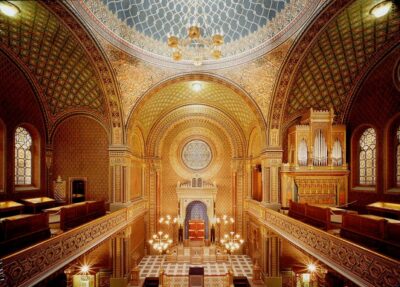
Prague’s TOP Sights – Old Town, Jewish Quarter, Charles Bridge (Tip-based tour)
Read our review →
Prague Old Town New Town and Jewish Quarter Morning Tour
Read our review →Iconic Prague Tour Old Town, Jewish Quarter and Charles Bridge
Read our review →Browse the lists this tour appears in