
Reviewed · PRAGUE FOOD TOURS
Taste, Cook and Dine Traditional Czech
Czech food makes more sense once you get your hands on it. At Good Mood Food, you taste sausages, cheeses, pickles, jams, vegetables, and fruit, then help prepare dishes such as potato-sauerkraut pancakes, bread dumplings, and seasonal fruit dumplings. The meal becomes a lesson in Czech homes, farming, and family habits, not just a plate of food.
I like the small group of no more than eight, which gives you a real chance to cook, ask questions, and talk with the hosts. I also like the relaxed rhythm: snacks and wine begin early, while the main dish is served after you have had time to cook, listen, and settle into the evening.
The main consideration is the price, $167.75 per person. That is a serious sum for a three-and-a-half-hour activity, and some of the food is prepared in advance rather than cooked entirely by you. Still, the generous menu, wine tastings, personal hosting, and cultural discussion make it a stronger value for food-focused visitors than a basic cooking lesson.
In This Review
- Key points at a glance
- Why this Prague food class feels different
- Arriving in Karlín for the three-and-a-half-hour session
- Tasting Czech snacks, wine, and fruit brandy
- Preparing a seasonal Czech starter
- Bread dumplings and the art of the Czech side dish
- The main course arrives from a Czech home kitchen
- Dessert with fruit, poppy seeds, or meringue
- What the hosts add to the evening
- Is $167.75 a fair price?
- Who should book this experience?
- Booking details worth knowing before you go
- Should you book the Czech cooking and dining experience?
- FAQ
- Where does the Czech cooking experience start?
- Where does the activity finish?
- How long does the experience last?
- What language is the class offered in?
- How many people can join the class?
- What food might I prepare?
- Can I cancel for a full refund?
Key points at a glance
- Czech food as cultural history: Learn why potatoes, preserved foods, farm produce, and dumplings became central to Czech household cooking.
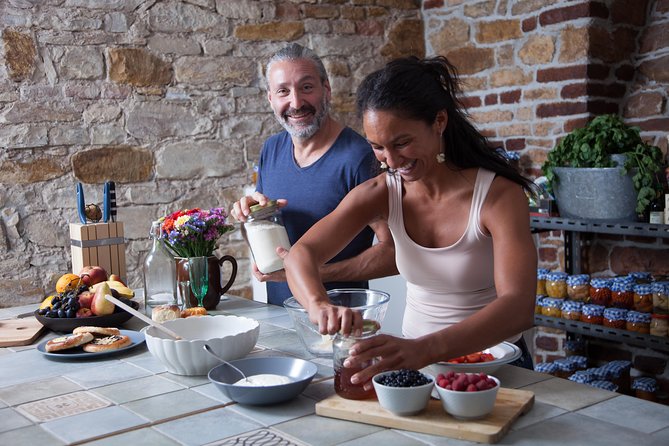
- A full tasting menu: Sample sausages, cheeses, breads, jams, pickles, seasonal produce, wine, and fruit brandy before the main meal.
- Hands-on cooking: Help prepare seasonal recipes, which may include potato-sauerkraut pancakes, quark spread, salads, bread dumplings, or dessert.
- Hosts who set a social tone: Bret leads many sessions, sometimes with his sister Svetlana, and the evening is built around conversation and shared cooking.
- Traditional main courses: The host may prepare svíčková, beef goulash, stuffed beef roll, roast duck, rabbit, or beef with mushrooms.
- Practical format: The class runs about three and a half hours in English, starts and ends at Křižíkova 70/67 in Karlín, and accepts mobile tickets.
Why this Prague food class feels different
Many food activities in Prague focus on eating a finished dish. This one asks you to slow down and understand how the dish came to be. You taste first, then cook, then sit down to a meal that connects the ingredients with Czech customs and history.
That structure matters. A potato pancake is not only a fried snack. Bread dumplings are not just a side dish to soak up sauce. Through the food, you learn what was grown locally, what could be stored through winter, and how ordinary household cooking shaped the national table.
The setting is described as a cozy historical basement space. That gives the experience a more personal feel than a large commercial kitchen, though it may not suit you if you prefer a bright, modern classroom or a fast, tightly scheduled lesson.
Bret is the main host for many sessions. On some evenings, his sister Svetlana joins him. The tone is friendly and social, with music, wine, stories, and plenty of laughter mixed into the cooking. You should expect an evening shared with other people, not a silent demonstration followed by a rushed meal.
More food tours in Prague:
- Prague Eat, Sip and Make Friends on Food Tour by Taste of Prague
★ 5.0 · 3,700 reviews - Delicious Prague Food Tour by Prague Food Tour
★ 5.0 · 617 reviews - Prague: 3-Hour Beer Tour and Traditional Czech Dinner
★ 4.5 · 599 reviews
Arriving in Karlín for the three-and-a-half-hour session
The meeting point is Křižíkova 70/67 in Prague’s Karlín district. The location is near public transportation, which makes it practical to reach without arranging a private ride. The activity returns to the same meeting point at the end, so you do not need to plan a separate pickup or figure out a distant finish.
The class lasts approximately three hours and 30 minutes. That is enough time for the experience to unfold in stages, but you should protect the whole evening rather than schedule a major attraction immediately afterward.
The opening is centered on tasting. You may encounter Czech sausages, cheeses, homemade breads, jams, pickles, seasonal vegetables, and fruit. This first spread is useful because it introduces the everyday pantry before the more familiar restaurant dishes arrive.
I appreciate this approach. If you only order goulash or svíčková in a restaurant, you get a famous dish but little sense of the ingredients around it. Here, you can compare smoked and preserved flavors, notice the role of dairy and bread, and see how seasonal produce fits into the meal.
Tasting Czech snacks, wine, and fruit brandy
The drinks are part of the lesson, not an afterthought. You taste three Czech wines, including Moravian wines, and sample Czech fruit brandy. The wine pairing adds value for anyone who wants to understand more than Czech beer culture.
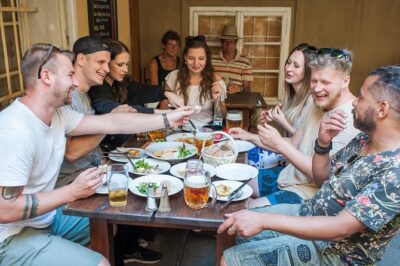
The tasting is spread across the evening. That means you can sip while preparing food and talking with the group, rather than receiving one drink at the end. It also creates a natural social rhythm. You are not simply watching a host cook. You are passing plates, discussing flavors, and getting to know the people around the table.
The cold starters are likely to be the most varied part of the menu. Homemade products, cured meats, cheeses, preserves, and fresh produce give you several small tastes instead of one large portion. If you enjoy trying unfamiliar foods, this is one of the strongest parts of the class.
A practical note: the menu includes alcohol, and the food begins early. You will want to pace yourself, particularly because the evening also includes a main course, side dish, and dessert. The experience is designed as a long meal with cooking in between, not as a quick tasting.
Preparing a seasonal Czech starter
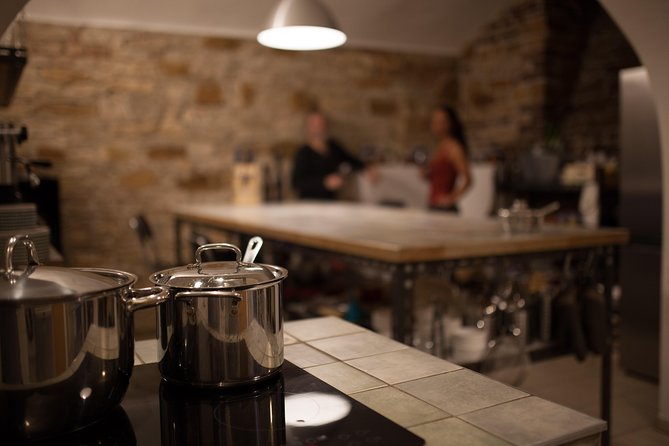
The hands-on portion changes with the season. You may prepare potato-sauerkraut pancakes, a cheese quark spread, or a carrot and kohlrabi salad. These choices show three different sides of Czech home cooking: hearty fried food, simple dairy-based spreads, and fresh vegetables.
Potato-sauerkraut pancakes offer the most active cooking. You help combine typical Czech ingredients and may get involved with shaping or flipping the pancakes. That small task is exactly the kind of thing that makes a class memorable. You are not just hearing how a dish works. You are learning how it behaves in a pan.
The quark spread is a simpler preparation, but it helps explain the importance of fresh cheese in Czech food. The carrot and kohlrabi salad adds a lighter option and highlights produce that may be less familiar to visitors from abroad.
Because the recipes depend on the season, you should not book this expecting one fixed menu. The changing selection is a benefit if you care about local ingredients, but it can be a drawback if you have your heart set on one specific recipe.
Same city, a completely different afternoon:
- Prague: 50-Minute Sightseeing Evening Cruise
★ 4.2 · 33,780 reviews - Prague: Medieval Dinner with Unlimited Drinks
★ 4.4 · 19,847 reviews - Prague: Skip-the-line Castle Ticket and Optional AudioGuide
★ 4.3 · 11,121 reviews - Prague: Castle Tour with Local Guide and Entry Ticket
★ 4.6 · 10,422 reviews
Bread dumplings and the art of the Czech side dish
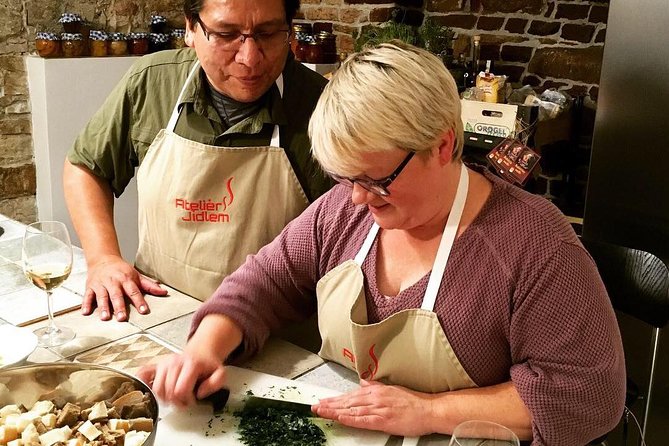
Bread dumplings are among the most useful things to learn here because they appear beside several traditional Czech main courses. You prepare them together rather than simply receiving them on the plate.
They are also a good example of how Czech cooking turns basic ingredients into something central to a meal. Bread, flour, and other simple components become a soft side dish designed to carry sauce. Once you understand that purpose, dishes such as svíčková and goulash make more sense.
The class may also include several kinds of dumplings, depending on the session and the seasonal menu. One food-focused participant particularly enjoyed learning different dumpling preparations, which suggests that the cooking is not limited to one quick demonstration.
Do not expect to leave with a professional chef’s full technical training. The value is different. You get a few traditional methods, the story behind them, and enough practical experience to recognize the dishes and perhaps try them at home.
The main course arrives from a Czech home kitchen
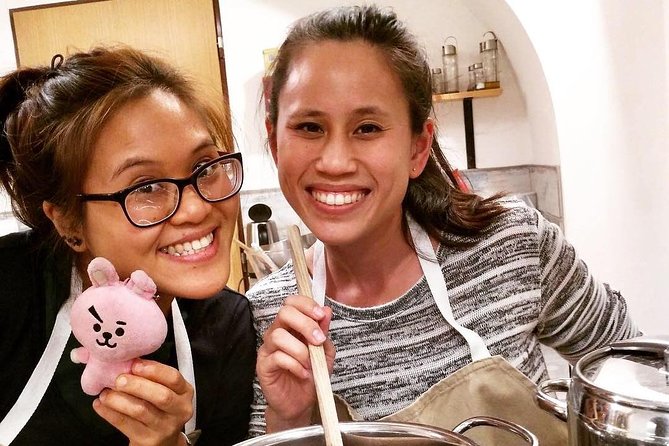
The host prepares the main dish in advance, while you assist with selected elements of the meal. This is worth knowing before you book. The activity is partly a cooking class and partly a hosted dinner, not a complete cook-from-scratch workshop.
Possible main courses include:
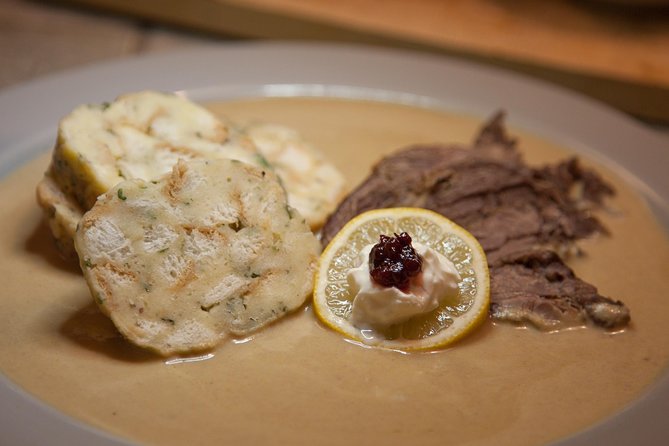
- Svíčková, beef with a vegetable cream sauce
- Beef goulash
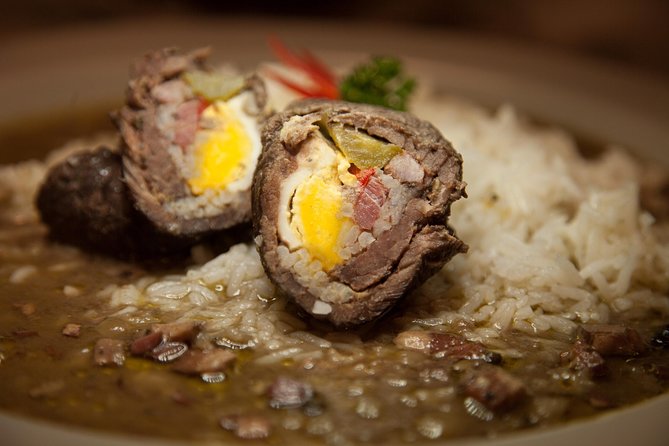
- Spanish bird, a stuffed beef roll
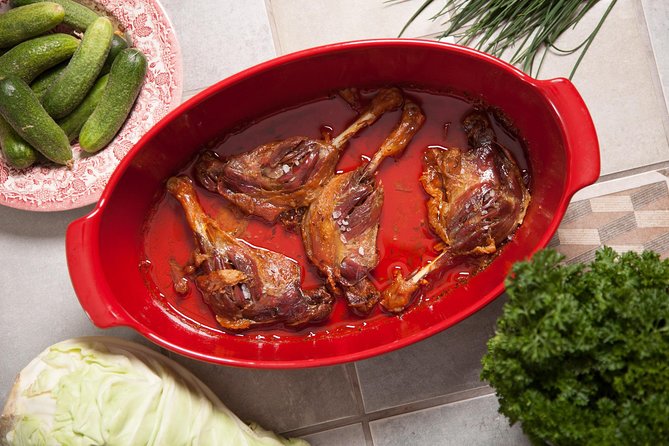
- Roasted duck
- Rabbit with vegetables
- Beef with mushrooms
This list gives you a good sense of the cooking style: slow-cooked meats, rich sauces, vegetables, and traditional accompaniments. Svíčková is especially useful for first-time visitors because it is one of the best-known Czech dishes, with a creamy vegetable sauce served alongside dumplings.
Goulash is another likely highlight. The dish is familiar across Central Europe, but local versions differ in seasoning, texture, and serving style. Here, the meal comes with context, wine, and conversation, which makes it more meaningful than ordering a generic bowl in the city center.
Since the main dish is prepared ahead, the meal can reach the table without waiting for meat to cook. That keeps the class moving and lets the host focus on explaining the dish. If your main goal is to prepare every course yourself, this format may feel limited. If you want both cooking and a substantial dinner, it works well.
Dessert with fruit, poppy seeds, or meringue
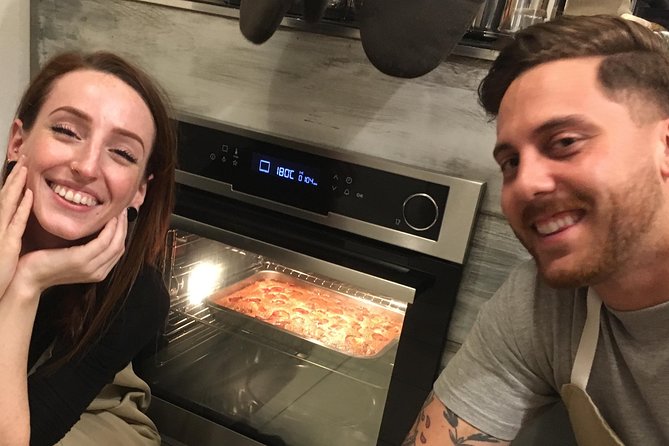
Dessert may be fruit dumplings made with fresh seasonal fruit, poppy seeds, and possibly quark. Another option is kremrole, a delicate pastry filled with sweet meringue.
Fruit dumplings offer a very different finish from the savory dishes. They are soft, filling, and closely tied to seasonal produce. Poppy seeds and quark add familiar Czech touches that you might not find in a standard tourist dessert menu.
Kremrole brings a lighter pastry style, with crisp dough and sweet meringue. The change from savory meat and dumplings to a delicate dessert helps round out the meal and gives you another glimpse of Czech home baking.
The dessert is not just a final bite. It completes the progression from preserved foods and hearty staples to fruit and pastry. You leave having tasted a broader range of Czech cooking than you would during a single restaurant dinner.
What the hosts add to the evening
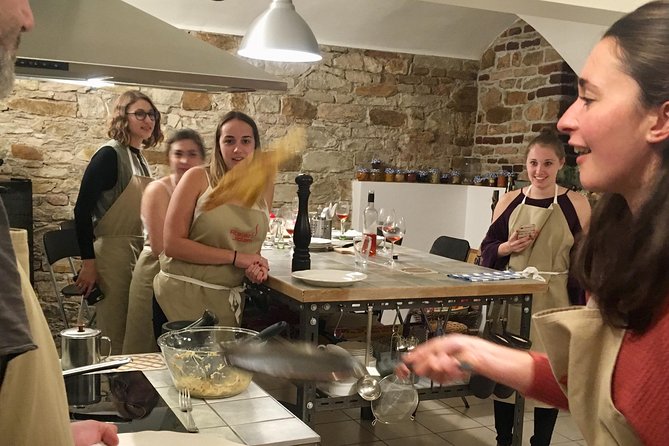
The hosts are central to the experience. Bret is repeatedly praised for being funny, welcoming, and good at drawing people into the preparation. Svetlana may join him, adding a family touch to the meal.
You should expect stories about Czech history, ingredients, food traditions, and the role of cooking in daily life. The lesson is not presented as a formal lecture. Information comes while you grate cheese, flip a pancake, prepare dumplings, or sample wine.
That informal style works especially well for solo visitors and couples. A small group gives you a chance to talk with other people, and the cooking provides an easy subject when conversation needs a nudge. The class can feel like dinner with new friends, though that also means the social quality depends partly on the group assembled that evening.
The hosts have also handled private bookings. One participant had not realized the reservation was private but enjoyed the personal time with Bret. If you are seeking a very intimate session, check the booking details carefully so you know what kind of group arrangement you have selected.
Is $167.75 a fair price?
At $167.75 per person, this is not a budget meal. You are paying for a three-and-a-half-hour experience that combines a cooking class, a broad tasting menu, a full traditional dinner, dessert, several wines, fruit brandy, and personal hosting.
The price makes the most sense if you value cultural context and interaction. A standard restaurant meal may cost less, but it will not give you the same chance to prepare Czech food, ask questions about ingredients, and learn why these dishes matter.
The value is also stronger for people who would otherwise book separate food tours, tastings, or cooking activities. You receive several parts in one evening, with the convenience of a single location and a return to the same meeting point.
I would not choose it solely for the amount of food. Choose it because you want a social evening built around Czech cooking. If your priority is a low-cost dinner or advanced culinary training, spend your money elsewhere.
Who should book this experience?
This class suits you best if you enjoy food, conversation, and local customs. It is a particularly good match for:
- Solo visitors who want a friendly evening activity
- Couples and families who enjoy cooking together
- Food-focused people who like tasting several small items
- First-time visitors seeking context for Czech dishes
- Anyone interested in Moravian wine and Czech fruit brandy
- People who prefer small groups to large organized tours
It may be less suitable if you dislike alcohol, need a fixed menu, or want to cook every course from start to finish. The menu changes by season, and the host prepares the main dish before you arrive.
The experience is offered in English, and the maximum group size is eight. That combination gives you a useful balance: enough people for conversation, but not so many that you become an observer at the back of the room.
Booking details worth knowing before you go
You receive confirmation at booking, and a mobile ticket is accepted. The activity is offered in English and takes place near public transportation at Křižíkova 70/67 in Karlín.
It is often booked well ahead, with an average booking lead time of about 50 days. If this is important to your Prague plans, reserve early rather than waiting until the last few days.
Free cancellation is available if you cancel at least 24 hours before the local start time. Changes or cancellations inside that window are not accepted for a refund. The experience also requires a minimum number of participants, so a cancellation by the provider would bring an alternative date or a full refund.
Should you book the Czech cooking and dining experience?
I would book it if you want one evening that combines food, stories, wine, and real participation. The strongest features are the small group, the wide range of tastings, the chance to make dumplings and seasonal dishes, and Bret’s warm hosting style.
At $167.75, the price demands more than a simple meal. You should view it as a cultural evening with dinner included. Book it early, arrive ready to eat and talk, and expect a menu that changes with the season.
If you want a polished restaurant meal, choose a restaurant. If you want to understand Czech food by tasting, cooking, and sharing it with other people, this is one of Prague’s more rewarding food activities.
FAQ
Where does the Czech cooking experience start?
It starts at Křižíkova 70/67, 186 00 Praha 8-Karlín, Czechia.
Where does the activity finish?
The experience ends back at the meeting point.
How long does the experience last?
It lasts approximately three hours and 30 minutes.
What language is the class offered in?
The experience is offered in English.
How many people can join the class?
The maximum group size is eight people.
What food might I prepare?
Depending on the season, you might prepare bread or bread dumplings with a spread, potato-sauerkraut pancakes, a quark spread, carrot and kohlrabi salad, or a cake or dessert. The exact menu can vary.
Can I cancel for a full refund?
Yes. You must cancel at least 24 hours before the experience start time for a full refund. Cancellations or changes made less than 24 hours in advance are not accepted for a refund.
Just added around Prague
- Prague Highlights 4 Hour Private Walking Tour★ 5.0 · 3 reviews
- VIP Prague Segway Tour Around Monastic Breweries★ 4.0 · 3 reviews
- Private Guided Tour from Prague to UNESCO Kutna Hora★ 5.0 · 3 reviews
- From Prague Day Unique Tour To Cesky Krumlov★ 4.5 · 3 reviews
- Cesky Krumlov: Insta-Perfect Walk with a Local★ 5.0 · 3 reviews
- Prague: WWII Tour with Local Historian SMALL GROUP★ 5.0 · 3 reviews
- Learn Traditional Czech Cooking from Authentic Family Recipes★ 5.0 · 3 reviews
- Ebike tour in Prague – Express Tour★ 5.0 · 3 reviews
Prague Food Tours, compared.
Prague Eat, Sip and Make Friends on Food Tour by Taste of Prague
Read our review →
Delicious Prague Food Tour by Prague Food Tour
Read our review →
Prague Food Tour with 10 Tastings of Authentic Czech Classics
Read our review →

Prague by Night: Drinks & Food Tour with Eating Europe
Read our review →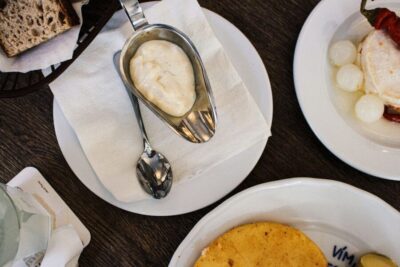
One Prague Tour: The Castle Side with local Food & Beer ️
Read our review →Browse the lists this tour appears in