
Reviewed · PRAGUE
Vyšehrad Castle: Casemates and Gorlice
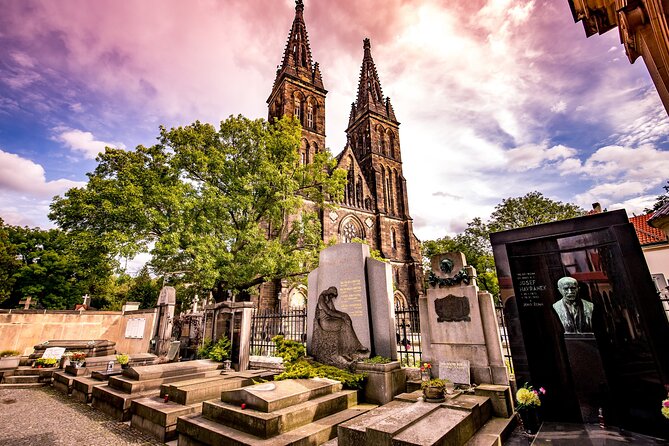
Vyšehrad’s Gorlice casemates give this Prague tour its best surprise. Below the old fortress walls, you’ll see original Baroque statues from Charles Bridge in a shadowy underground space. Above ground, a park, old churches, a famous cemetery, and broad views over Prague make this a thoughtful break from the city center.
I like the tour for two clear reasons: it reaches a quieter part of Prague, and it joins several worthwhile sights in one walk. The graves of Antonín Dvořák, Bedřich Smetana, Alfons Mucha, and Karel Čapek add a human touch to the history. The main drawback is some confusion over the starting point, museum admission, and metro tickets, so read the meeting instructions carefully.
The route is a good match for history and architecture fans who want more than Prague’s busiest squares. It is also a solid choice if you like walking at an easy pace, stopping for views, and hearing how art, religion, music, and military history meet in one place.
In This Review
- Key points to know before you book
- Starting at the National Museum in Wenceslas Square
- Entering Vyšehrad’s Baroque fortress
- St. Martin’s Chapel and the older layers of Vyšehrad
- Saints Peter and Paul Church and its Art Nouveau decoration
- Walking through the cemetery of Czech culture
- The views from Vyšehrad’s high ground
- Entering Gorlice and the underground casemates
- What the two-and-a-half-hour format feels like
- Is $45.66 a fair price?
- Who should book this walk?
- Practical details that can affect your day
- Should you book Vyšehrad Castle: Casemates and Gorlice?
- FAQ
- Where does the tour start?
- What time does the tour begin?
- Where does the tour end?
- How long does the experience last?
- Is the tour offered in English?
- Is admission to the National Museum included?
- Is the metro ride included?
- What can I see at Vyšehrad?
- How many people can join the tour?
- Can I cancel for a full refund?
Key points to know before you book
- The tour starts at the National Museum: Meet at 2:00 pm in front of the entrance at the top of Wenceslas Square.
- A short metro ride connects the city center with Vyšehrad: Bring your own metro ticket, since one customer reported paying for their own transport.
- The Collegiate Church of Saints Peter and Paul is a major stop: Its neo-Gothic interior includes Art Nouveau frescoes.
- The cemetery is part of the guided walk: You’ll see the graves of major Czech artists, writers, and composers.
- Gorlice is the underground highlight: The casemates hold original Baroque statues connected with Charles Bridge.
- The group can include up to 20 people: That is small enough for a personal feel, though not the same as a private tour.
Starting at the National Museum in Wenceslas Square
Your meeting point is in front of the National Museum, at Václavské náměstí 68, at the upper end of Wenceslas Square. This is a central and easy-to-recognize location, but the square is large, so give yourself a little time to find the correct entrance.
The tour begins at 2:00 pm. The first part lasts about 30 minutes and includes the short ride toward Vyšehrad. The stated route does not include admission to the National Museum itself. Treat the museum as a meeting landmark, not as a planned museum visit.
There has been some confusion about this point. A customer reported that the experience appeared to include a museum ticket, but no ticket was provided. The practical answer is simple: do not expect time inside the National Museum unless the operator confirms it directly before you book.
The metro ride matters because Vyšehrad is away from the usual Old Town and Castle routes. You leave the most familiar tourist streets and reach a part of Prague that feels calmer and more open. You’ll need to handle your own metro fare, based on the information supplied by a previous customer.
This transfer is not a major part of the experience, but it helps explain the tour’s shape. You meet in central Prague, then spend most of the afternoon walking through the fortress grounds and its monuments.
Other Prague outings people book alongside this one:
- Prague: 50-Minute Sightseeing Evening Cruise
★ 4.2 · 33,780 reviews - Prague: Medieval Dinner with Unlimited Drinks
★ 4.4 · 19,847 reviews - Prague: Skip-the-line Castle Ticket and Optional AudioGuide
★ 4.3 · 11,121 reviews
Entering Vyšehrad’s Baroque fortress
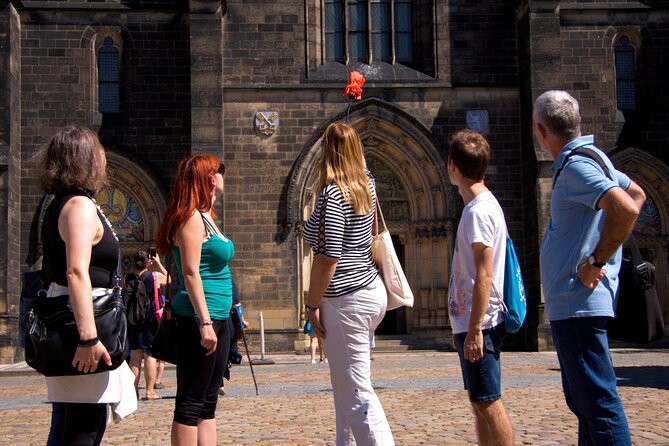
Vyšehrad is a fortified historic site on a high point above the Vltava River. Once you pass through the gates, the mood changes. Instead of tight lanes and crowded public squares, you find spacious parkland, old walls, churches, paths, and views across Prague.
The tour leads you through the Vyšehrad National Cultural Monument. The name sounds formal, but the pleasure is quite direct: you walk, listen, stop for photographs, and let the different parts of the site build a picture of Prague’s past.
The grounds contain more than one period of architecture. Military walls reflect the fortress era, while churches and chapels point to Vyšehrad’s religious importance. The open setting also gives your guide room to explain the site without the constant noise and foot traffic found in the center.
I like this part because it does not force every sight into a rushed checklist. The route allows time to look around, take in the city views, and notice small details in the grounds. If you want a tour built around Prague’s most famous postcard locations, this is not that. If you want a slower walk with more room to think, it makes good sense.
St. Martin’s Chapel and the older layers of Vyšehrad
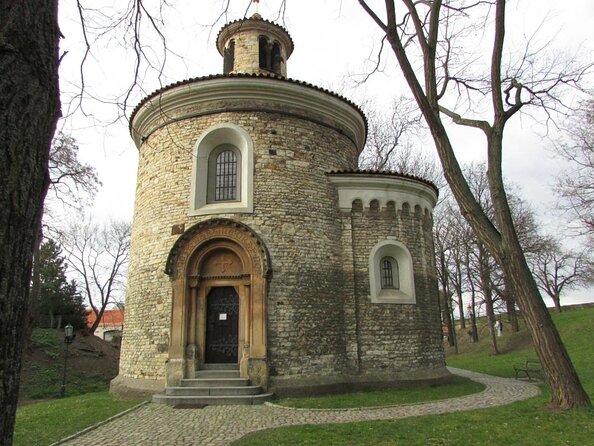
One early stop is the Romanesque Chapel of St. Martin, dating from the late 11th century. It is a useful reminder that Vyšehrad is not simply a Baroque fortification. Its story reaches much farther back.
The chapel gives the tour a strong architectural contrast. Later fortress work and church renovations can seem more impressive at first glance, but the Romanesque structure connects you with an earlier Prague, when buildings were smaller, heavier, and shaped by different methods and religious needs.
The information provided does not promise interior access to every building on the route, so you should think of St. Martin’s as a sight explained during the walk rather than assume you will have a long indoor visit. The value comes from seeing it in context, alongside the later structures around it.
Your guide’s explanation matters here. Without context, an old chapel can look like one more stone building. With a little background, it becomes a marker of how long Vyšehrad has mattered to the city.
Saints Peter and Paul Church and its Art Nouveau decoration
The Collegiate Church of Saints Peter and Paul is attached to Vyšehrad’s Royal Collegiate Chapter. Its appearance today comes largely from a major neo-Gothic rebuilding in the late 19th century.
The exterior and interior give you another useful contrast. The church uses the vertical lines and pointed forms associated with neo-Gothic design, but the decoration also includes Art Nouveau frescoes. That mix makes it more than a standard church stop.
You’ll want to slow down inside and look upward and around the walls. The frescoes add color and a softer decorative style to the strong neo-Gothic structure. This is one of the places where an informed guide can help you understand what changed, what was rebuilt, and why the church looks the way it does now.
The tour’s overall appeal comes from these shifts in style. You move from Romanesque architecture to a later neo-Gothic church, then from religious buildings to military walls and underground casemates. For architecture lovers, that variety gives the walk real substance.
Admission to the Vyšehrad portion is included. The tour description specifically includes entry to the fortress attraction and casemates, while the National Museum is not part of the scheduled sightseeing.
Same city, a completely different afternoon:
- Prague: Castle Tour with Local Guide and Entry Ticket
★ 4.6 · 10,422 reviews - Prague Castle 2.5-Hour Tour Including Admission Ticket
★ 4.7 · 8,927 reviews - Prague: Oldtown, Medieval Underground & Dungeon History Tour
★ 4.2 · 8,244 reviews - Prague: Vltava River Night Cruise with Buffet
★ 4.3 · 7,338 reviews
Walking through the cemetery of Czech culture
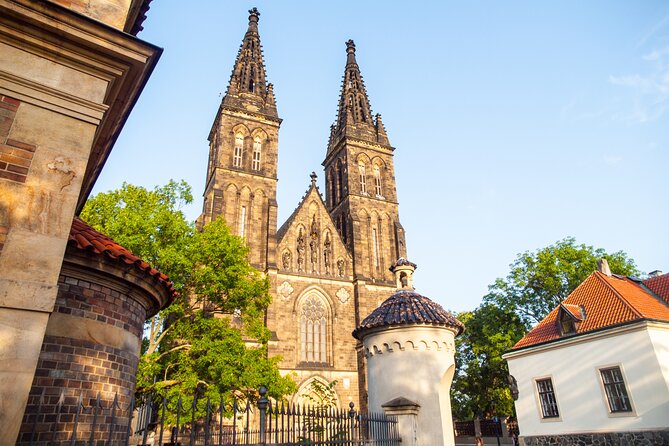
The adjoining cemetery is one of the strongest parts of the route. It is the final resting place of important Czech artists, musicians, writers, and cultural figures.
You can see the graves of Antonín Dvořák and Bedřich Smetana, two major Czech composers. You’ll also find Alfons Mucha, known for his Art Nouveau work, and Karel Čapek, an important Czech writer.
The cemetery is not just a list of famous names. It gives your guide a chance to explain who these people were and what made their work important. That personal detail helps turn a formal monument into a place with human stories.
I especially like this stop for visitors who want to connect Prague’s buildings with its creative life. Much of the city’s history is told through castles, churches, and rulers. Here, the focus shifts to composers, painters, and writers who shaped Czech culture in a different way.
You should also expect a respectful pace. This is a cemetery, not a quick photo stop. The route calls for slowing down and paying attention, which may appeal to you if you enjoy cultural history. It may feel less engaging if you prefer tours built around dramatic interiors and constant movement.
The views from Vyšehrad’s high ground
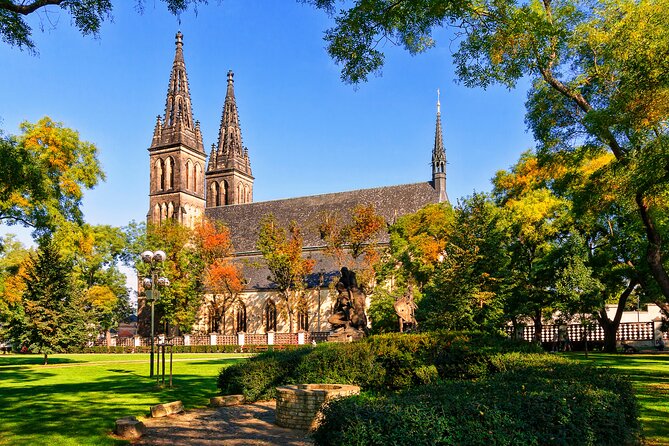
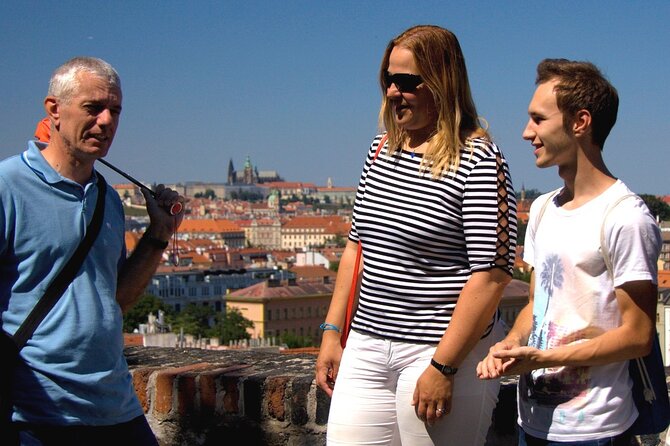
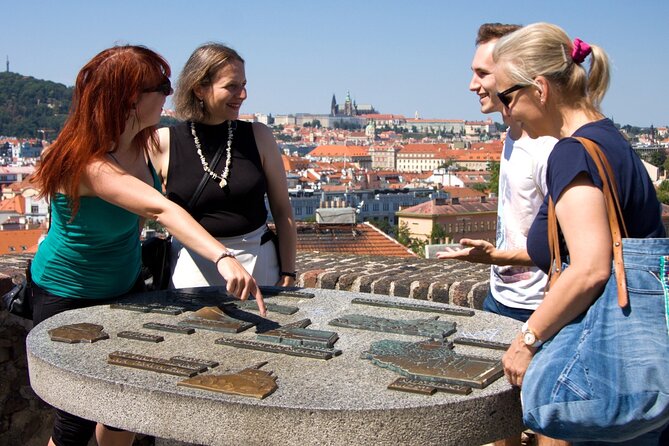
Vyšehrad’s position gives you fine views of Prague. The tour includes time to enjoy them, and this is one of the best reasons to visit the site rather than study it only in a history book.
The supplied information does not specify exactly which parts of the city you will see from each viewpoint, so your guide’s route and the day’s visibility will shape the experience. Still, the elevated setting gives you a broader sense of Prague than you get from a narrow Old Town street.
The views also help explain the fort’s importance. Vyšehrad was not placed randomly. Its height and defensive walls made it a useful military position, while its churches and chapter added religious weight.
Bring a camera if you enjoy city panoramas, but do not treat this as a dedicated viewpoint tour. The views are one part of a larger walk that includes architecture, graves, and military history.
Entering Gorlice and the underground casemates
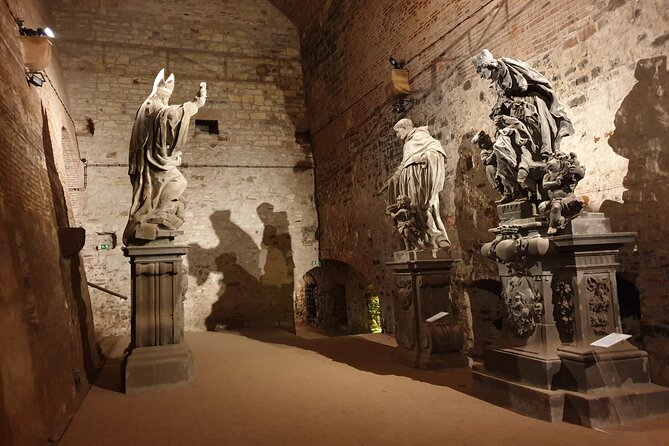
The most unusual stop comes underground. The casemates run inside Vyšehrad’s fortress walls and lead to Gorlice, a large space that houses original Baroque statues from Charles Bridge.
This is where the tour leaves ordinary sightseeing behind. You are no longer looking at a church facade or cemetery monument. You are inside the defensive structure, seeing how fortress walls were used and maintained from within.
The statues are a striking feature. They connect two Prague landmarks that are often visited separately: Vyšehrad’s fortifications and Charles Bridge. Seeing the original Baroque works here gives you a different understanding of the bridge statues you encounter in the city.
One customer specifically noted that the glass sculptures in the casemates and Gorlice were beautiful. The tour information describes the space as housing original Baroque statues, so the exact display details may vary, but you should expect an underground setting with sculpture as its main focus.
This section may not suit you if you dislike enclosed spaces. The information does not state that the casemates are difficult for people with limited mobility, so ask the operator directly if that is important for you. The general activity is on foot, and most people can participate.
What the two-and-a-half-hour format feels like
The full experience lasts about two hours and 30 minutes. Roughly 30 minutes cover the meeting and transfer from the National Museum area, while about two hours are devoted to Vyšehrad.
That is a useful length for this subject. You get enough time for the church, chapel, cemetery, views, and casemates without giving up an entire day in Prague. At the same time, the route involves steady walking and several outdoor stops, so comfortable shoes are a sensible choice.
The group size can reach 20 people. That is not an intimate private walk, but it is still limited enough that the guide should be able to keep the group together and explain the main sights. The quality of your experience will partly depend on the guide’s speaking style and how much time is available at each stop.
The tour is offered in English. If you want a full explanation of the site rather than a self-guided stroll, that language option keeps the experience straightforward for English-speaking visitors.
Is $45.66 a fair price?
At $45.66 per person, this is not the cheapest way to see Vyšehrad. The value depends on how much you want from the visit.
You are paying for an English-guided walk, admission to the Vyšehrad section, access to the casemates and Gorlice, and a structured route through several important sites. You are also getting background on the cemetery figures, church design, fortress history, and the Baroque statues.
The price makes more sense if you would otherwise wander through Vyšehrad without knowing what you are seeing. The chapel, church, cemetery, and fortress walls each have a story, but those stories are not always obvious on your own.
The value is weaker if you already have detailed knowledge of Vyšehrad or prefer to explore at your own pace. You also need to account for your own metro ticket. The National Museum is used as the meeting point, but its admission is not part of the scheduled route.
The experience has a 4.2 rating from 12 reviews, which suggests a generally positive response but not a perfect record. The strongest praise centers on the beautiful grounds, the history, the underground casemates, and the professional guiding. The main criticism concerns unclear inclusions, not the core sights themselves.
Who should book this walk?
I would choose this tour if you have already seen Prague’s busiest central sights or want an alternative to them. Vyšehrad gives you a different side of the city, with more open space and fewer familiar tourist scenes.
It fits history buffs, architecture lovers, cemetery enthusiasts, and anyone interested in Czech music, art, and literature. The combination of Dvořák, Smetana, Mucha, and Čapek gives the tour a strong cultural focus.
It also suits visitors who enjoy walking and want a guide to connect separate sights. The route is not built around shopping, food, or nightlife. It is a serious sightseeing experience, though the underground statues add a welcome sense of discovery.
Families and general sightseers may enjoy it too, especially if older children can handle a two-hour walking route. The supplied information says most people can participate, but it does not give specific details about strollers, wheelchairs, or the exact conditions inside the casemates. Ask before booking if those details affect your plans.
Practical details that can affect your day
You receive confirmation when you book, and the tour operates near public transportation. The start is in central Prague, but the end is at Vyšehrad in Prague 2, so plan to continue your day from there rather than return to Wenceslas Square with the group.
The tour ends at Vyšehrad, 128 00 Prague 2. That location can work well if you want to keep exploring the area afterward, but the information provided does not include a return transfer.
Free cancellation is available if you cancel at least 24 hours before the local start time. Cancellations or changes made within 24 hours do not qualify for a refund.
The operator is Fun in Prague, s.r.o. The experience is usually booked about 30 days in advance, so reserving ahead is sensible if your Prague dates are fixed.
Should you book Vyšehrad Castle: Casemates and Gorlice?
Book it if you want a guided, history-focused walk away from Prague’s most crowded sights. The strongest reasons are the Czech cultural figures in the cemetery, the varied architecture, and the unusual Gorlice casemates with their Baroque statues.
Skip it if your priority is the National Museum, a private guide, or a completely self-directed visit. Also check the transport and admission details before paying, since the metro fare and museum ticket have caused confusion.
For most visitors with half a day to spare, this is a worthwhile way to see a quieter, more layered part of Prague. It gives you churches, graves, fortress walls, underground sculpture, and city views in one manageable outing.
FAQ
Where does the tour start?
The tour starts in front of the entrance to the National Museum at Václavské náměstí 68, at the top of Wenceslas Square in Prague.
What time does the tour begin?
The start time is 2:00 pm.
Where does the tour end?
The tour ends at Vyšehrad, 128 00 Prague 2.
How long does the experience last?
The total duration is about two hours and 30 minutes. The transfer and meeting portion takes about 30 minutes, followed by roughly two hours at Vyšehrad.
Is the tour offered in English?
Yes. The experience is offered in English.
Is admission to the National Museum included?
The National Museum is the meeting point, but admission to the museum is not included in the stated route. A previous customer reported confusion about this, so confirm directly with the operator if you want to visit the museum.
Is the metro ride included?
The route includes a short metro ride from the National Museum area to Vyšehrad. A previous customer reported using their own metro ticket, so plan to have your own ticket available.
What can I see at Vyšehrad?
You can see the Romanesque Chapel of St. Martin, the Collegiate Church of Saints Peter and Paul, the adjoining cemetery, fortress grounds, city views, and the Gorlice casemates.
How many people can join the tour?
The maximum group size is 20 people.
Can I cancel for a full refund?
Yes, if you cancel at least 24 hours before the experience’s start time. Cancellations and changes made less than 24 hours before the start are not refunded.
Just added around Prague
- Prague Highlights 4 Hour Private Walking Tour★ 5.0 · 3 reviews
- VIP Prague Segway Tour Around Monastic Breweries★ 4.0 · 3 reviews
- Private Guided Tour from Prague to UNESCO Kutna Hora★ 5.0 · 3 reviews
- From Prague Day Unique Tour To Cesky Krumlov★ 4.5 · 3 reviews
- Cesky Krumlov: Insta-Perfect Walk with a Local★ 5.0 · 3 reviews
- Prague: WWII Tour with Local Historian SMALL GROUP★ 5.0 · 3 reviews
- Learn Traditional Czech Cooking from Authentic Family Recipes★ 5.0 · 3 reviews
- Prague Tour in Spanish★ 5.0 · 3 reviews