
Reviewed · TEREZíN MEMORIAL DAY TRIPS
WWII/WW2 Prague with a Local Historian Semi Private Tour
Prague’s WWII story comes into sharp focus on this small-group walk, which links ordinary city streets to occupation, resistance, rescue, liberation, and loss. You’ll hear about Nicholas Winton at the main railway station, Operation Anthropoid at the church where the assassins made their last stand, and the 1945 bombing near today’s Dancing House.
I like the maximum group size of six, which gives Hana room to answer questions and adjust the story to your interests. I also like the personal research behind the Winton section, including interviews with some of the children he helped rescue. The one drawback is that this is a serious, outdoor walking tour, and the route requires public transport that costs €1.30 per person.
In This Review
- Key points to know before booking
- Why Prague’s WWII story works best on foot
- Wenceslas Square and the first days of occupation
- Liberation, Patton, and the Prague Uprising
- Nicholas Winton at Praha hlavní nádraží
- The church and crypt of Operation Anthropoid
- The 1945 bombing near the Dancing House
- Petschkův palác and the Gestapo
- What Hana adds to the experience
- Price, group size, and what you receive
- Who should book this WWII Prague walk
- Should you book it?
- FAQ
- How long does the WWII Prague tour last?
- What is the price per person?
- What language is the tour offered in?
- How many people can join the tour?
- Where does the tour begin?
- Where does the tour end?
- Is public transportation included?
- Can I cancel for a full refund?
Key points to know before booking
- Six stops across central Prague: The route begins at Wenceslas Square and ends at the Dancing House.
- Hana is the main guide: She explains the city’s wartime past in clear, personal terms and welcomes questions.
- Operation Anthropoid is the emotional center: You visit the church and crypt linked to the assassination of Reinhard Heydrich.
- Nicholas Winton gets a full stop: At Praha hlavní nádraží, you hear the story of the 669 children saved through train transports.
- The tour lasts about two and a half hours: Much of it takes place outdoors, with one public transport ride costing €1.30.
- The price is $62.47 per person: That is fair for a highly focused, semi-private history tour with fees and taxes included.
Why Prague’s WWII story works best on foot
A book can explain the Nazi occupation of Czechoslovakia. A map can show where the Prague Uprising happened. But standing in the actual places gives the subject more weight.
This tour moves through central Prague in a way that connects political decisions with human stories. You begin at Wenceslas Square, a broad urban stage where occupation and public resistance played out. You continue to the National Theater Opera area for the end of the war, then shift to the main railway station for the story of Nicholas Winton.
The route becomes darker and more focused at the National Memorial to the Heroes of the Heydrich Terror. Here, bullet holes and the church interior make Operation Anthropoid more than a chapter in a history book. The final stops bring in the American bombing of Prague and the Gestapo headquarters at Petschkův palác.
I find that progression useful. It does not treat WWII as one single military event. Instead, you see how occupation touched public squares, railway platforms, churches, government power, and residential Prague.
More Terezin memorial day trips:
- From Prague: Terezin Concentration Camp Guided Tour w/ Audio
★ 4.5 · 1,959 reviews - From Prague: Tour of Terezin Concentration Camp
★ 4.4 · 1,269 reviews - Prague: WWII Guided Tour & The Crypt of Operation Anthropoid
★ 4.7 · 1,030 reviews
Wenceslas Square and the first days of occupation
The tour starts by the statue of Saint Wenceslas at Wenceslas Square. This is a practical meeting point in central Prague, easy to reach by public transport and surrounded by major city sights.
The first 25 minutes focus on the beginning of the Nazi occupation. Hana uses the square and its surrounding streets to explain how the takeover affected Prague and the Czech population. This opening gives you the political setting before the tour moves into individual stories.
Wenceslas Square is large and open, so the guide can point out how the area functioned as a public gathering place. The value here is not an interior visit or a ticketed attraction. It is the link between a familiar modern city center and the events that took place there.
You should expect a talk rather than a formal museum presentation. That suits the location. The square itself is free, and Hana can set the wartime scene without asking you to absorb a dense lecture indoors.
Liberation, Patton, and the Prague Uprising
The next stop is near Prague’s National Theater Opera. The roughly 20-minute section turns to the liberation of Czechoslovakia in 1945 and the final turmoil of the war.
You hear about the advance of the US Army under General George S. Patton in western Bohemia, along with the dramatic Prague Uprising. The guide draws on historical research and firsthand testimony, which helps keep the focus on what the end of Nazi rule meant on the ground.
This part also adds an important point of balance. The end of the war was not a simple, tidy arrival of freedom. Different armies advanced through different parts of the country, and Prague itself faced a tense uprising during the final days of German occupation.
The stop lasts only about 20 minutes, so do not expect a full military campaign lecture. Its purpose is to connect Prague with the wider liberation of Czechoslovakia and prepare you for the more personal stories later in the walk.
Nicholas Winton at Praha hlavní nádraží
For many people, the railway station stop is the most affecting part of the tour. At Praha hlavní nádraží, you learn about Nicholas Winton, who helped arrange train transports that rescued 669 children, mainly Jewish children.
The story has gained a wider audience through the film One Life, but the station visit gives it a real Prague setting. You are not only hearing about a famous act of rescue. You are visiting a place connected to the children, the trains, and the difficult decisions behind their escape.
The tour provider’s research includes interviews with some of the children Winton rescued. That personal connection sets this section apart from a standard overview. Hana can explain the story in human terms, rather than leaving it as a number or a familiar film reference.
Allow about 30 minutes here. Praha hlavní nádraží is an active railway station, so the atmosphere is different from a quiet memorial. That can make the stop feel more immediate, but it also means you should stay close to the guide and listen carefully amid normal station activity.
I especially like this part for visitors who want a story of courage that is not limited to battlefields. It also gives families and younger history fans a clear way into the subject.
A few more Prague half-days to weigh up
- Prague Old Town: Private Tour
★ 5.0 · 1,223 reviews - Prague Airport Private Arrival Transfer
★ 4.5 · 991 reviews - Prague Airport Private Departure Transfer
★ 4.5 · 780 reviews - Discover Prague Private Tour – 3 hours
★ 5.0 · 705 reviews
The church and crypt of Operation Anthropoid
The most powerful stop is the National Memorial to the Heroes of the Heydrich Terror. The tour spends about 45 minutes focusing on Operation Anthropoid and the assassination of Reinhard Heydrich, one of the highest-ranking Nazi leaders and a major figure in the Holocaust.
The memorial preserves bullet holes and the church where members of the resistance hid after the assassination. You see the setting of their final defense and learn how the operation unfolded.
This is the section that benefits most from a guide. Without context, a church and a few damaged walls can be difficult to read. Hana explains the decisions, risks, and human cost connected to the resistance fighters and the people who helped them.
The church and crypt are not presented as a dramatic action set. The tone is serious and respectful. You should be ready for difficult material, including the consequences of resistance under Nazi rule.
The physical evidence matters. Bullet holes are not abstract. They show the violence that reached this place, and the confined church setting helps you understand how limited the resistance fighters’ options became.
If Operation Anthropoid is the main reason you want this tour, this stop alone gives it strong value. You get the location, the memorial, and a guide who can place the assassination within the wider occupation and resistance story.
The 1945 bombing near the Dancing House
The route continues toward the Dancing House, where the tour discusses the American bombing of Prague in 1945. This section lasts about 15 minutes and serves as a reminder that the war remained dangerous even as liberation approached.
The Dancing House itself is a modern landmark, so the contrast is striking. You are looking at a building associated with present-day Prague while hearing about destruction from the final year of the war.
Because the stop is short and outdoors, treat it as a focused story rather than a major sightseeing visit. The point is to understand what happened in this part of Prague and how the bombing fits into the confused closing months of the conflict.
The tour ends at the Dancing House. That makes the route useful if you plan to continue along the river or explore Prague 2 after the walk. You do not finish where you started, so plan your next stop from the ending point rather than assuming you will return to Wenceslas Square.
Petschkův palác and the Gestapo
The final subject is Petschkův palác, the former Gestapo headquarters. The stop takes about 15 minutes and adds another layer to the tour’s picture of occupation.
Here, the focus shifts from open public spaces and acts of rescue to the machinery of repression. A headquarters building can look ordinary from the outside, which is precisely why a local guide helps. Hana explains what the building represented and how it fits into the experience of people living under Nazi control.
This stop is brief, but it gives the tour a useful architectural anchor. You see where power was exercised, interrogations took place, and fear became part of daily life. It also balances the heroic stories of resistance and rescue with the institutions that made occupation so brutal.
What Hana adds to the experience
The guide can make or break a history walk. Here, Hana is repeatedly described as warm, personable, and easy to engage with. More important, she has a strong command of Prague and Czech history and can answer questions beyond the basic WWII timeline.
That local perspective matters. You can ask about Czech life during the occupation, the city’s wartime experience, or the country’s later history. The tour is not limited to memorized dates. It leaves room for conversation.
Hana also tailors the experience to the interests of the group. If you have read about Operation Anthropoid, watched One Life, or want more detail on the Prague Uprising, tell her early. A group capped at six makes that kind of exchange practical.
Jiří Klůc is also connected with the tour’s historical content. His accounts center on Wenceslas Square and its historic surroundings, adding another local historian’s research to the route.
One useful extra is the offer of further recommendations for historical reading, films, food, and places to visit. That helps you continue the subject after the walk rather than treating the tour as an isolated activity.
Price, group size, and what you receive
At $62.47 per person, this is not the cheapest walking tour in Prague. It is also not priced like a large group city walk. The maximum of six gives you a semi-private format, and all fees and taxes are included.
The value depends on your interests. If you want only a general introduction to Prague, you can find less expensive options. If you want a focused WWII route with a local guide, a small group, and access to the church memorial, the price is reasonable.
The tour lasts about two hours and 30 minutes. That is long enough to cover six locations without taking up a full day, though the number of stops means some sections are necessarily short.
Public transportation is not included. Budget €1.30 per person for the ride used during the route. Wear comfortable shoes and expect to spend much of the time outside. The experience requires good weather, and poor conditions can lead to a rescheduled date or a full refund.
Free cancellation is available up to 24 hours before the start time. If you cancel later, the payment is not refunded, and changes are not accepted inside that 24-hour window.
Who should book this WWII Prague walk
I would choose this tour if you have a serious interest in WWII, the Holocaust, resistance movements, or modern Czech history. It is also a good fit if you have already seen Prague’s major old-town sights and want a different way to understand the city.
The route suits solo visitors, couples, families, and small groups. The personal stories make it accessible even if you do not already know the dates and names. At the same time, people who have read about Operation Anthropoid should find enough detail to make the locations worthwhile.
You may want another type of activity if you prefer grand architecture, food, or light sightseeing. This is a sober history walk. The material includes occupation, assassination, repression, bombing, and death. Hana’s warmth keeps the experience approachable, but she does not turn it into entertainment.
The walking format also matters. Most people can participate, and the route is near public transportation, but you should be comfortable moving between stops and standing outdoors. Service animals are allowed.
Should you book it?
Book this tour if you want Prague’s WWII past explained through real locations and individual lives. The strongest reasons are the six-person group, Hana’s personal and local approach, the Winton stop at the railway station, and the 45-minute visit connected to Operation Anthropoid.
Skip it if you want a broad sightseeing tour or dislike emotionally heavy subjects. For history-minded visitors, though, the $62.47 price buys more than a list of dates. It gives you a focused route through Prague’s occupation, resistance, rescue, and liberation, with enough time for questions and context.
FAQ
How long does the WWII Prague tour last?
The tour lasts approximately two hours and 30 minutes.
What is the price per person?
The listed price is $62.47 per person.
What language is the tour offered in?
The tour is offered in English.
How many people can join the tour?
The maximum group size is six travelers.
Where does the tour begin?
The meeting point is by the Statue of Saint Wenceslas at Václavské náměstí, 110 00 Praha 1-Nové Město, Czechia.
Where does the tour end?
The tour ends at the Dancing House at Jiráskovo nám. 1981/6, 120 00 Praha 2-Nové Město, Czechia.
Is public transportation included?
Public transportation is not included. The stated cost is €1.30 per person.
Can I cancel for a full refund?
Yes. You can cancel up to 24 hours before the experience start time for a full refund. Cancellations made less than 24 hours before the start time are not refunded.
Just added around Prague
- Prague Highlights 4 Hour Private Walking Tour★ 5.0 · 3 reviews
- VIP Prague Segway Tour Around Monastic Breweries★ 4.0 · 3 reviews
- Private Guided Tour from Prague to UNESCO Kutna Hora★ 5.0 · 3 reviews
- From Prague Day Unique Tour To Cesky Krumlov★ 4.5 · 3 reviews
- Cesky Krumlov: Insta-Perfect Walk with a Local★ 5.0 · 3 reviews
- Prague: WWII Tour with Local Historian SMALL GROUP★ 5.0 · 3 reviews
- Learn Traditional Czech Cooking from Authentic Family Recipes★ 5.0 · 3 reviews
- Prague Tour in Spanish★ 5.0 · 3 reviews
Terezín Memorial Day Trips, compared.
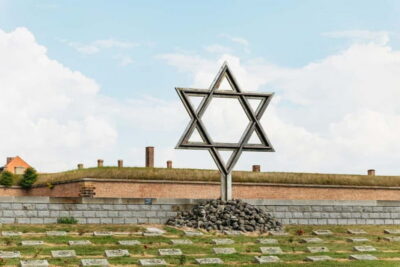
Terezin Concentration Camp Guided Tour w/ Audio
Read our review →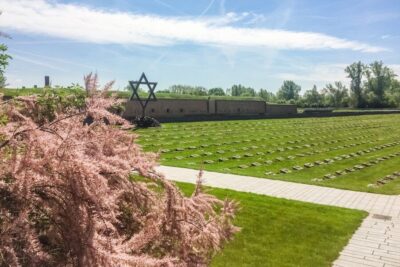
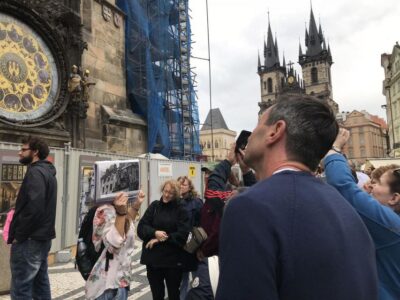
WWII Guided Tour & The Crypt of Operation Anthropoid
Read our review →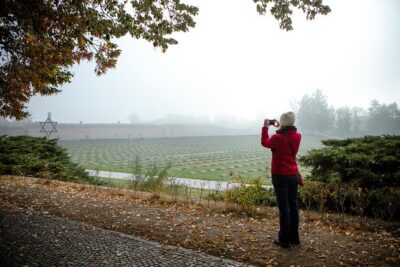
Terezin Concentration Camp Day Tour from Prague
Read our review →
WWII in Prague Tour & The Crypt of Operation Anthropoid
Read our review →
Terezin & Bohemian Switzerland from Prague: Bastei, Narnia & Café
Read our review →Browse the lists this tour appears in