
Reviewed · MARKETS
Prague Cooking Class Including Market Visit and 3-Course Lunch
Prague’s best food lesson may begin with a shopping bag, not a chopping board. At Holešovice market, you choose seasonal ingredients with your chef, then carry them a short distance to Chefparade and turn them into potato soup, pork goulash, dumplings, or strudel.
I like the market-to-table format, which gives Czech food a useful setting instead of treating it as a list of unfamiliar dishes. I also like the small-group attention, with no more than 15 people and, at times, a truly private-feeling session such as Petra’s class with one participant.
The main drawback is the price: $240.05 per person is a serious outlay for a three-and-a-half-hour activity. It makes the most sense if you value instruction, a full lunch, local food guidance, and recipes you can use at home, not simply a meal.
In This Review
- Key points at a glance
- Starting at Holešovice market at 9:00 am
- Moving from market stalls to the Chefparade kitchen
- What you may cook: soup, goulash, dumplings, and strudel
- The potato and mushroom soup
- Pork goulash and Carlsbad dumplings
- Apple strudel and other Czech sweets
- The value of learning instead of simply eating
- Why the market visit improves the cooking lesson
- The setting, staff, and class atmosphere
- Who should book this Prague cooking class
- Practical details before you pay
- Should you book Chefparade’s market and cooking class?
- FAQ
- Where does the Prague cooking class begin?
- How long does the experience last?
- What happens during the market visit?
- Where does the cooking portion take place?
- What food might I prepare?
- Are drinks included?
- How many people can join the class?
- Can I cancel or change my booking?
Key points at a glance
- Shop before you cook: Your chef guides you through Prague’s Holešovice market and helps select fresh, seasonal ingredients.
- Cook a full Czech meal: The sample menu includes mushroom potato soup, pork goulash with Carlsbad dumplings, and apple strudel.
- Small class size: The maximum is 15 people, though the class may feel much more personal when numbers are low.
- Useful local instruction: You learn Czech seasonings, cooking methods, and dishes such as bramboráky and ovocné knedlíky.
- A practical finish: Food and soft drinks are included, alcoholic drinks cost extra, and recipes are sent by email after class.
- Easy morning timing: Meet at 9:00 am at 36 Underground, beside the market in Prague 7’s Holešovice district.
Starting at Holešovice market at 9:00 am
Your morning begins at 36 Underground, Bubenské nábř. 306/13, 170 00 Praha 7-Holešovice. The meeting point is in or beside the market area, and the cooking studio is nearby, one building away according to the directions provided for the class.
That location matters. You are not cooking in the middle of Prague’s old-town sightseeing zone. Holešovice gives you a look at a less polished, more everyday part of the city, then puts local food in context. The market visit is not just a quick stop to collect ingredients. You browse fruit, vegetables, mushrooms, and other food stalls with the chef explaining Czech ingredients and regional habits.
I like this opening because it gives you something to do with your eyes and hands before the class begins. You can ask why a certain ingredient appears in Czech cooking, how it is used, or which local produce is best at that time of year. One class included mushrooms and apples, along with a taste of blackcurrant wine, though you should not assume those exact items will be part of every session.
The market also gives you a chance to return later. Chefparade has a shop where you may find many of the ingredients used in class. That is handy if you discover a spice, dumpling ingredient, or Czech pantry item you want to try again at home.
You should allow a little care with the meeting point. The address is in Prague 7 rather than in the central tourist core, so read the arrival directions sent by the school and plan your morning route. One participant found the class easy to reach by Metro with only a short walk, but the exact journey depends on where you are staying.
More cooking classes in Prague:
- Cooking Czech Menu with Chef
★ 5.0 · 61 reviews - Prague: Traditional Czech Cooking Class with Market Tour
★ 4.6 · 53 reviews - Prague: Market Tour and Traditional Czech Cooking Class
★ 4.7 · 19 reviews
Moving from market stalls to the Chefparade kitchen
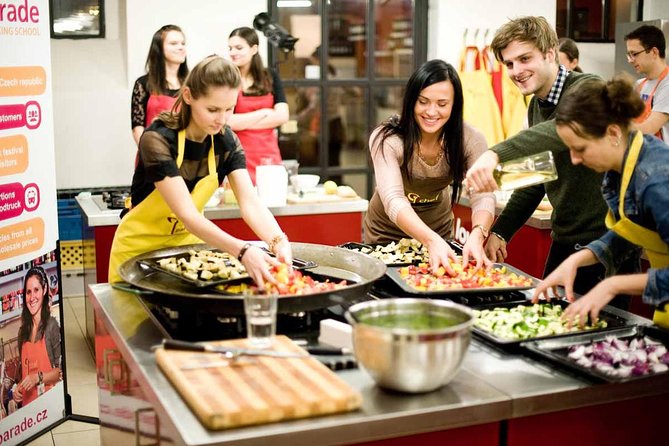
After the shopping walk, you go to Chefparade Cooking School. The cooking area is described as bright, clean, and fitted with modern equipment, a useful contrast to the rougher surroundings outside the studio.
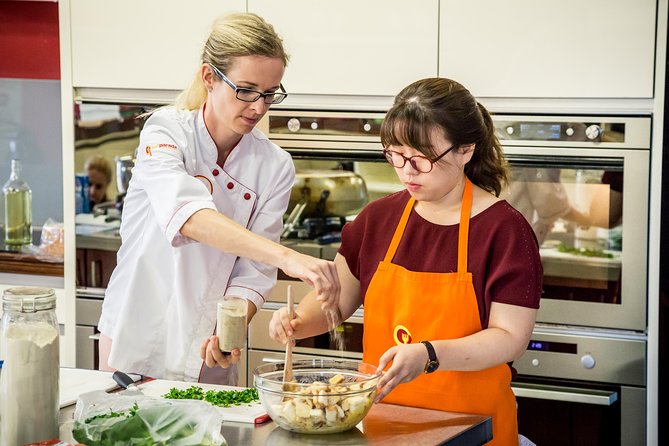
You receive an apron and a briefing on the three-course menu. Then the chef guides you through preparation step by step. This is hands-on cooking, not a demonstration where you sit at the edge of the room and watch someone else do the work.
The group limit is 15 people. That is small enough for a social class, though it is not guaranteed to feel like a private lesson. You will cook alongside other people, share the work, and sit down together at the end. If your class happens to be lightly booked, the difference can be substantial. Petra, for example, taught one participant alone, allowing plenty of time for conversation about food, family, and music.
The instruction focuses on practical skills you can repeat at home. You may learn how Czech cooks season a soup, build a goulash, prepare dumplings, or handle a pastry. The goal is not fancy restaurant plating. It is the more useful work of making familiar ingredients taste like the Czech dishes you encountered in Prague.
A former Czech MasterChef contestant has led one of the classes, and Chef Matt has also received praise for his teaching. The specific chef is not guaranteed, so book this for the cooking format rather than for one particular instructor.
What you may cook: soup, goulash, dumplings, and strudel
The advertised sample menu gives you a good idea of the meal:
- Czech traditional potato soup with mushrooms
- Pork goulash with Carlsbad dumplings
- Apple strudel
Menus can vary. Other classes have included bramboráky, Czech potato pancakes made with smoked meat or cheese, ovocné knedlíky, or fruit dumplings. Another menu featured roast pork with sauerkraut and Czech dumplings, while one class prepared paprika chicken with dumplings and apple strudel.
This variety is worth noting. You are not buying a fixed restaurant lunch with a cooking show attached. The final dishes may depend on the selected class menu, seasonal ingredients, and the chef leading your session. Confirmation of the booking arrives within 48 hours, subject to availability, so check the menu details if a particular dish is important to you.
The potato and mushroom soup
A soup course may sound modest, but it is a good way to learn Czech kitchen habits. Potato soup gives you practice with a basic local combination, while mushrooms add an earthy flavor associated with home cooking.
The class format lets you see how the ingredients are handled rather than simply receiving a bowl. That makes the dish easier to recreate later. You also get immediate feedback from the chef before sitting down to eat.
A few more Prague half-days to weigh up
- Prague Guided Walking Tour and Cruise with Authentic Czech Lunch
★ 5.0 · 3,627 reviews - Prague: Vltava River Lunch Cruise in an Open-Top Glass Boat
★ 4.5 · 2,865 reviews - Prague: Hard Rock Cafe with Set Menu for Lunch or Dinner
★ 4.4 · 1,487 reviews - Communism & Nuclear Bunker Tour + 70s Canteen Lunch (own expense)
★ 5.0 · 1,036 reviews
Pork goulash and Carlsbad dumplings
Pork goulash is the meal’s hearty center. It gives you a practical lesson in seasoning and slow-cooked flavor, while Carlsbad dumplings add one of the most distinctive parts of the menu.
Dumplings are often the part people want to understand better, and the class gives you that chance. One participant especially enjoyed preparing steamed dumplings. You learn not only what they taste like, but also how they are made and served with a saucy main dish.
Apple strudel and other Czech sweets
Apple strudel provides a familiar dessert with a Czech connection. The class may also include shredded pancake dessert or fruit dumplings, so you could encounter a sweeter and more distinctly Czech finish.
The dessert is prepared as part of the same session, then eaten after the savory courses. In one private-feeling class, an extra piece of strudel was taken away for a spouse. That kind of leftover may depend on the day’s quantities, so treat it as a pleasant possibility rather than a promised extra.
The value of learning instead of simply eating
At the end, you sit down with the food you prepared. The chef can comment on the dishes, answer final questions, and explain more about Czech cooking while you eat.
Food and soft drinks are included. Alcohol is not included, but you can buy alcoholic drinks at your own expense, and the minimum drinking age is 18. This keeps the basic price clear, though drink costs can add to an already expensive morning.
At $240.05 per person, the class costs far more than a typical Prague lunch. The price is easier to justify if you would otherwise pay for a market visit, a guided food experience, and a cooking lesson separately. You also leave with recipes, and recipes were sent by email after at least one class, giving you a way to repeat the meal.
The calculation changes if you only want to taste Czech food. In that case, a restaurant meal and a market visit will cost less and take less time. This experience earns its price through participation and instruction, not through the amount of food alone.
I would also compare the class with your interests. If you enjoy cooking, ask questions, and like learning the story behind ordinary dishes, the morning offers solid value. If you dislike group activities or prefer to spend your holiday sightseeing, three and a half hours in a kitchen may feel like too much.
Why the market visit improves the cooking lesson
The market is the part that keeps the class from feeling like a generic cooking workshop. You begin by seeing raw ingredients in their local setting, then use them in the kitchen.
That order helps you understand Czech food as everyday cooking rather than a collection of restaurant labels. You may handle mushrooms, apples, root vegetables, potatoes, and other produce before learning how they fit into soup, dumplings, or dessert.
The chef also acts as a bridge between the market and the kitchen. You can ask about Czech preferences, regional recipes, and seasonings while the ingredients are still in front of you. That context is valuable if you have wondered what people in the Czech Republic actually cook at home.
The walk is short, so this is not a major sightseeing tour of Prague’s markets. You get a food-focused look at one market, then move quickly into preparation. That is good for anyone who wants to cook, but less useful if your main aim is a long market visit with plenty of free time.
The setting, staff, and class atmosphere
Chefparade’s interior is clean and modern, with the equipment ready for the class. The staff are described as friendly, and the kitchen provides a comfortable place to work after the market.
The atmosphere depends partly on the group. With up to 15 people, expect a shared activity rather than a silent lesson. The class allows time to talk with the chef and the other cooks, which can make the meal feel social without turning the experience into a party.
The teaching style can also vary by chef. Matt has led a class praised for its pork goulash and root soup, while Petra provided a personal, conversational lesson for a solo participant. A chef with television experience may also lead, but there is no promise that your instructor will be a former MasterChef contestant.
That uncertainty is normal for a cooking school with several instructors. I would focus on the school, the market format, and the menu rather than booking solely because of a named chef.
Who should book this Prague cooking class
This class suits you best if you:
- Want a break from Prague’s main monuments
- Enjoy cooking as much as eating
- Prefer local food explained by a chef
- Like small-group activities with room for questions
- Want recipes and methods you can use at home
- Are traveling with family or friends who enjoy sharing a meal
It can also work well for a solo participant. The private session with Petra shows how personal the class may feel when few people book. You should still be comfortable joining a shared class if the group is larger.
Families should check the age and participation details before booking, since the available information specifies the minimum drinking age but does not give a child age policy. People with strict dietary requirements should also ask before committing, because the menu and ingredient substitutions are not specified.
The class is offered in English. That makes the instruction accessible to English-speaking visitors, and mobile tickets are accepted. The activity lasts about three hours and 30 minutes, ending back at the meeting point after the meal.
Practical details before you pay
Start time is 9:00 am. A morning start works well because you shop before the market and eat soon after the cooking session, but it does mean an early departure from your hotel.
The experience is booked, on average, 68 days in advance. That suggests you should not leave it until the last few days of a short Prague visit, especially if you need a particular date.
Confirmation arrives within 48 hours, subject to availability. The cancellation policy is strict: the experience is non-refundable and cannot be changed for any reason. I would only book once your Prague schedule is firm.
The activity ends where it begins, at the meeting point near Chefparade. Since the studio is close to the market, you do not lose time crossing the city between the shopping and cooking portions.
The rating is 4.6 from 22 ratings, which points to a very positive experience but not a guarantee of perfection. The main variables are the chef, group size, menu, and your own interest in cooking.
Should you book Chefparade’s market and cooking class?
I would book this if you want to understand Czech food by making it yourself. The market visit, hands-on preparation, three-course lunch, and emailed recipes give the morning a clear purpose, and the chefs can add the personal touch that turns a lesson into a cultural experience.
I would skip it if $240.05 feels too high for lunch and a short class, or if your Prague schedule is packed with sightseeing. The price is premium, and the non-refundable policy leaves little room for a change of plans.
For cooks, food-focused couples, families with older children, and curious solo participants, this is a strong choice. Book early, arrive ready to walk through the market, and think of the fee as payment for instruction and a local food lesson, not simply three courses at a table.
FAQ
Where does the Prague cooking class begin?
It begins at 9:00 am at 36 Underground, Bubenské nábř. 306/13, 170 00 Praha 7-Holešovice, Czechia.
How long does the experience last?
The experience lasts approximately three hours and 30 minutes.
What happens during the market visit?
You meet the chef at the market, browse fruit, vegetables, mushrooms, and other food stalls, and select fresh seasonal ingredients for the cooking class. The chef explains Czech food and cooking traditions as you shop.
Where does the cooking portion take place?
The cooking portion takes place at Chefparade Cooking School, located near the market.
What food might I prepare?
The sample menu includes Czech potato soup with mushrooms, pork goulash with Carlsbad dumplings, and apple strudel. Other possible dishes include potato pancakes, fruit dumplings, roast pork with sauerkraut, paprika chicken, and shredded pancake dessert.
Are drinks included?
Food and soft drinks are included. Alcoholic drinks can be purchased separately, and the minimum drinking age is 18.
How many people can join the class?
The class has a maximum of 15 participants.
Can I cancel or change my booking?
No. The experience is non-refundable and cannot be changed for any reason. Confirmation is sent within 48 hours of booking, subject to availability.
More Shopping Tours in Prague
- Prague: Heroes Park Superhero Store Entry Ticket
★ 4.5 · 9 reviews
More Market Visits in Prague
- Dresden Christmas Market & Bastei Saxon Switzerland Tour from Prague
★ 5.0 · 105 reviews - Prague: Farmers Market and Brunch Class with Celebrity Chef
★ 4.9 · 11 reviews
Just added around Prague
- Prague Highlights 4 Hour Private Walking Tour★ 5.0 · 3 reviews
- VIP Prague Segway Tour Around Monastic Breweries★ 4.0 · 3 reviews
- Private Guided Tour from Prague to UNESCO Kutna Hora★ 5.0 · 3 reviews
- From Prague Day Unique Tour To Cesky Krumlov★ 4.5 · 3 reviews
- Cesky Krumlov: Insta-Perfect Walk with a Local★ 5.0 · 3 reviews
- Prague: WWII Tour with Local Historian SMALL GROUP★ 5.0 · 3 reviews
- Learn Traditional Czech Cooking from Authentic Family Recipes★ 5.0 · 3 reviews
- Prague Tour in Spanish★ 5.0 · 3 reviews
Markets, compared.

Dresden Christmas Market & Bastei Saxon Switzerland Tour from Prague
Read our review →
Traditional Czech Cooking Class with Market Tour
Read our review →
Market Tour and Traditional Czech Cooking Class
Read our review →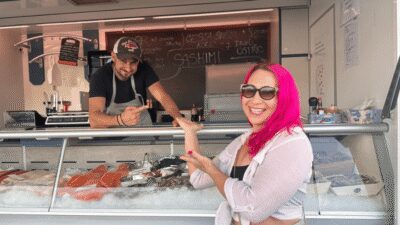
Farmers Market and Brunch Class with Celebrity Chef
Read our review →Browse the lists this tour appears in