
Reviewed · COMMUNISM & COLD WAR TOURS
Communism & Nuclear Bunker Tour + 70s Canteen Lunch (own expense)
Prague’s medieval center tells only half the story. This tour takes you from the Powder Tower through Old Town and Wenceslas Square, then below the city into a 1950s nuclear bunker built for the Cold War. Along the way, guides such as Klara and Leo explain how political events shaped ordinary lives.
I like the small groups of no more than 10 and the stop at a working-class canteen, where you can try Kofola or a proper Czech meal. I also like that the guide connects major events, from the 1948 Communist takeover to the Velvet Revolution, with personal stories and everyday details. The main drawback is that the tour involves several hours of walking and narrow bunker passages, so it is not a good fit for people with claustrophobia or serious mobility limits.
In This Review
- Key points to know before booking
- Why this tour shows a different Prague
- Republic Square and the road to 1948
- Old Town Square and the Era of Fear
- Wenceslas Square and the Prague Spring
- Národní Street and the human side of political change
- Lunch at a 1970s worker’s canteen
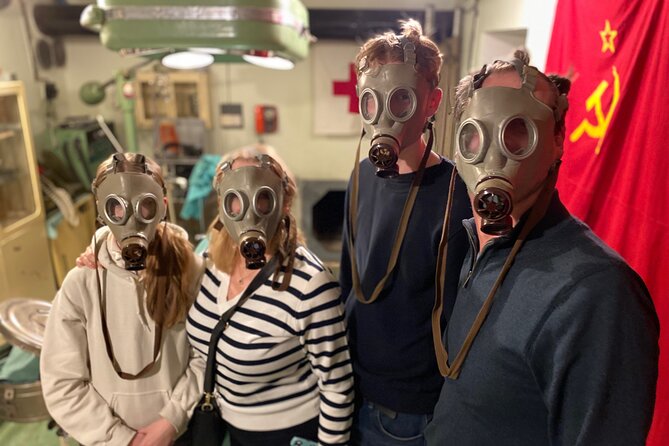
- Inside the nuclear bunker beneath Wenceslas Square
- What the guides add to the experience
- Price, timing, and practical value
- Who will enjoy this tour most
- Should you book the Prague Communism and Bunker Tour?
- FAQ
- Where does the tour begin?
- Where does the tour end?
- How long does the tour last?
- What language is the tour offered in?
- How large is the group?
- Is the bunker admission included?
- Is lunch included?
- What can I have at the canteen?
- Is the tour suitable for people with claustrophobia?
- Can most people participate?
- Is the tour near public transportation?
- Can I cancel for a full refund?
Key points to know before booking
- A real Cold War bunker: Enter a 1950s nuclear shelter beneath the upper part of Wenceslas Square, with Soviet-era objects and interactive displays.
- History tied to exact places: See where Communist leaders celebrated in 1948, where the Prague Spring was crushed, and where the Velvet Revolution gathered force.
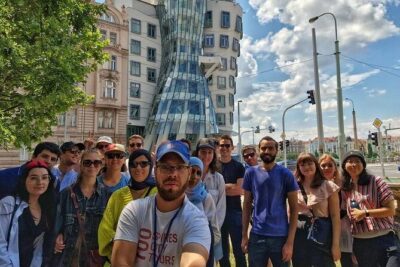
- Small, personal groups: The maximum is 10 people, and the tour may still run with only two or three participants.
- A genuine canteen stop: Eat Czech working-class food in a 1970s-style canteen, with food and drinks paid separately.
- Local stories: Klara and other guides explain both national events and the effects of Communist rule on family and daily life.
- Good value for history fans: The $35.07 price includes the guide and the €10 bunker admission, while lunch remains your choice and your expense.
Why this tour shows a different Prague
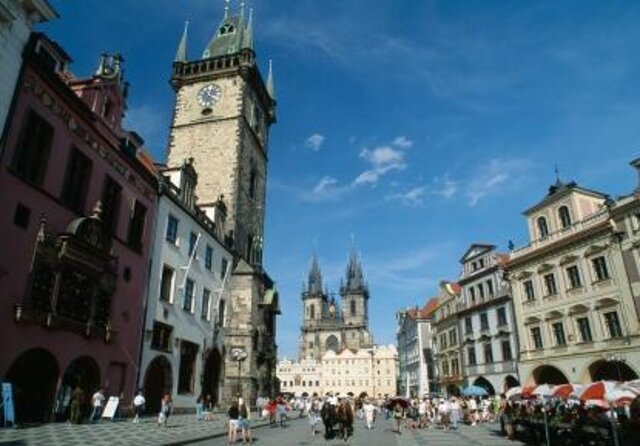
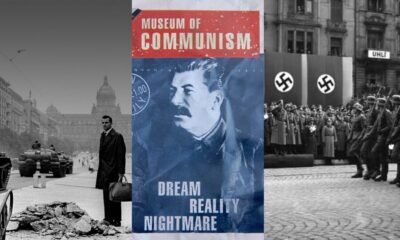
Most first visits to Prague focus on castles, Baroque churches, astronomical clocks, and handsome squares. Those sights matter, but they can leave you with a polished picture of the city. This walk adds the difficult modern chapter: Nazi occupation, Soviet control, fear, shortages, political repression, and the gradual return of democracy.
The route is not just a list of dates. Your guide points out places where those events happened. That helps you connect the broad story of Czechoslovakia with the streets under your feet.
The tour begins at the Powder Tower on Republic Square, a useful meeting point between Prague’s Old Town and New Town. Look for the guide holding a blue umbrella. From there, the walk moves through central Prague and ends at the upper part of Wenceslas Square, where the bunker is located.
At roughly three and a half hours, this is long enough to build a clear timeline without taking up an entire day. Still, you should wear comfortable shoes. The walking portions include several stops, street crossings, and time spent standing while the guide speaks.
More communism and Cold War tours:
- Prague: Communism History and Nuclear Bunker Guided Tour
★ 4.7 · 2,417 reviews - Prague Communism History and Nuclear Bunker Tour
★ 5.0 · 1,742 reviews - Prague: Communism and Bunker Tour with 70s Canteen Lunch
★ 4.8 · 250 reviews
Republic Square and the road to 1948
The first stop sets up the political background. You learn how Czechoslovakia declared independence in 1918 and why Hitler wanted to take the country early in the Second World War.
That opening matters because Communist rule did not appear out of nowhere in 1948. The war, Nazi occupation, liberation by the Russian Red Army in 1945, and postwar political choices all shaped what came next. Your guide explains why the Communist Party won the 1946 elections, giving you the context needed for the later takeover.
This part lasts about 15 minutes. It is a short introduction rather than a full history lecture, but it gives the rest of the tour a firm base. If you have already read about the First Czechoslovak Republic or the Second World War, you will have an easier time following the connections.
Old Town Square and the Era of Fear
Old Town Square provides one of the tour’s strongest historical settings. In 1948, Communist leaders celebrated their victory here. Today, the square is one of Prague’s most photographed places, so it can be startling to picture it as a stage for a new political order.
The guide then moves into the 1950s, described on the tour as the Era of Fear. You hear about working camps, manipulated trials, collectivization, the secret police, and life behind the Iron Curtain. These subjects explain how a government controls more than elections or newspapers. They reach into jobs, farms, schools, travel, and family life.
You also learn where Prague’s huge Stalin monument once stood. The monument itself is gone, but the story shows how public space was used to display political power. This 20-minute section is especially useful if you want more than a simple account of Communist leaders and dates.
The strongest guides, including Klara, add personal and family stories to this section. That approach helps you understand the difference between official slogans and the choices ordinary people had to make. The tone remains approachable, with humor used carefully around serious subjects.
Wenceslas Square and the Prague Spring
The tour reaches Wenceslas Square for a longer discussion of 1968 and 1989. In August 1968, Soviet-led forces occupied Czechoslovakia and crushed the Prague Spring, a period of attempted reform and greater political freedom.
The square was a major location during the occupation. Your guide explains the event and challenges the old language of Soviet peaceful help. That detail gives the stop a sharper edge and shows why the invasion remained such a painful subject.
You also hear about the November 1989 protests that became the Velvet Revolution. The guide discusses Václav Havel and other important figures in the end of Communist rule. The tour also visits Národní Street, where students were attacked by state police on November 17, 1989.
This is where the walking route becomes most useful. You are not simply hearing that protests happened in Prague. You are seeing the public spaces where people gathered, confronted the authorities, and helped change the country’s direction.
A few more Prague half-days to weigh up
- Prague Guided Walking Tour and Cruise with Authentic Czech Lunch
★ 5.0 · 3,627 reviews - Prague: Vltava River Lunch Cruise in an Open-Top Glass Boat
★ 4.5 · 2,865 reviews - Prague: Hard Rock Cafe with Set Menu for Lunch or Dinner
★ 4.4 · 1,487 reviews - Full-Day Prague Tour with Prague Castle, Lunch and Vltava Cruise
★ 4.0 · 921 reviews
Národní Street and the human side of political change
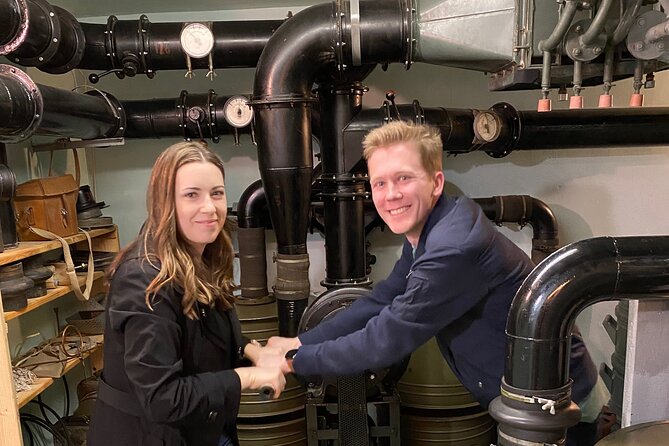
Národní Street adds a more immediate layer to the tour. The events of November 17 are tied to students and state violence, but the guide also places them within the wider public movement that followed.
The best part of this section is the focus on daily life under Communism, not only on leaders and institutions. You may hear about how the system affected families, work, food, travel, and personal choices. Guides who grew up in Communist Czechoslovakia can explain the period from lived experience, while other guides bring strong historical background and current perspective.
That personal approach is one reason the small group matters. With as many as 10 people, you can ask questions without trying to interrupt a large crowd. Some departures are much smaller, and the tour may go ahead with only two people. That can make the discussion feel more like a guided conversation than a standard city walk.
Lunch at a 1970s worker’s canteen
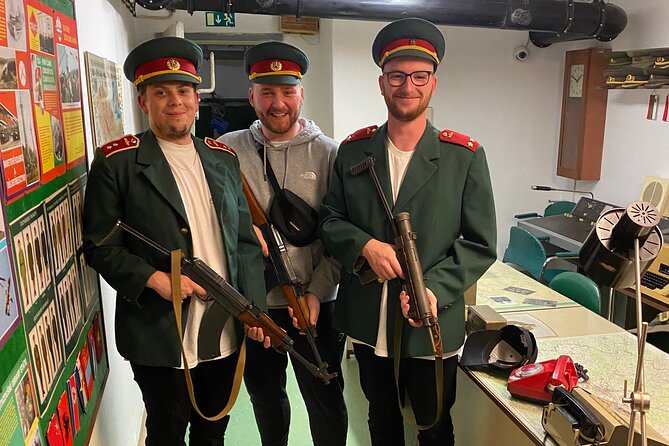
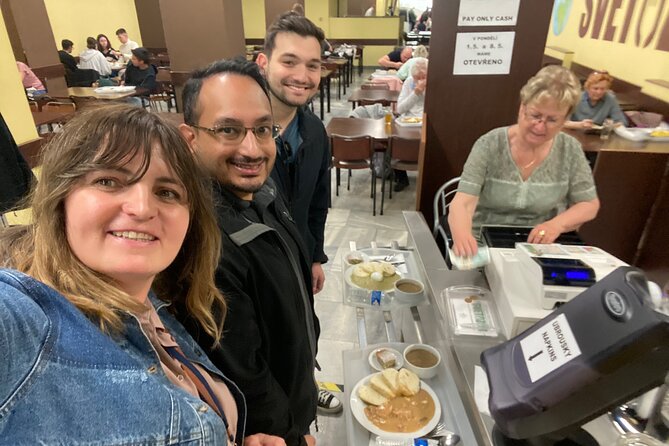
The canteen stop is more than a convenient break. It gives you a chance to see how a simple, inexpensive Czech meal fits into the story of working life during the Communist period.
Food and drinks are not included, so bring money for what you order. You can have Kofola, the popular Czech soft drink, or choose a proper working-class lunch. Examples mentioned by the guide include pork on paprika with potatoes, and the canteen offers reasonable prices, including a special senior price.
Your guide helps you choose if the menu is unfamiliar. The group sits together, which makes this a social part of the outing rather than a quick pause on the pavement. It is also a good opportunity to ask follow-up questions about Czech food and daily routines.
The canteen will not suit you if you want a polished restaurant or a long meal with many choices. Its appeal is precisely the plain, period feel. Think of it as a local eating experience with historical meaning, not a culinary tour.
Because the meal is at your own expense, the total cost depends on your order. The listed tour price of $35.07 does not include lunch or drinks, so budget separately.
Inside the nuclear bunker beneath Wenceslas Square
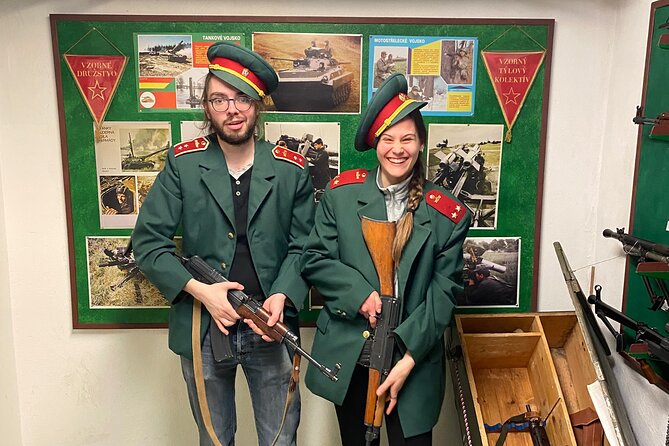
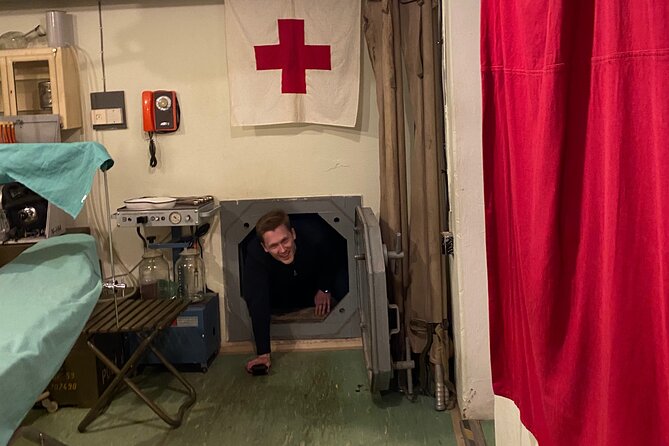
The bunker is the clear physical highlight for many people. Located in the upper part of Wenceslas Square, the Cold War shelter dates from the 1950s and offers a rare chance to enter a real nuclear bunker rather than view a recreated set.
The admission fee of €10 is included in the tour price. That improves the value, especially when you compare this experience with ordinary walking tours that charge extra for their main attraction.
Inside, you can expect authentic Soviet-era objects and exhibits that show how the shelter was intended to function. The experience may include trying on a gas mask, handling replica or display weapons, and taking part in a mock secret-police interrogation. The interactive elements make the visit memorable, but the subject remains serious. They offer a physical sense of the fear and military planning behind the Cold War.
The bunker portion lasts about an hour. You take an elevator down one level, then walk around 30 steps to a second level below ground. Narrow spaces are part of the experience, so people with claustrophobia should think carefully before booking.
Some mobility is required. The guide’s information indicates that the steps are manageable for many people, but the tour is not designed for anyone who cannot comfortably walk through confined underground areas. Most people can participate, but you should contact the operator if you have specific concerns.
What the guides add to the experience
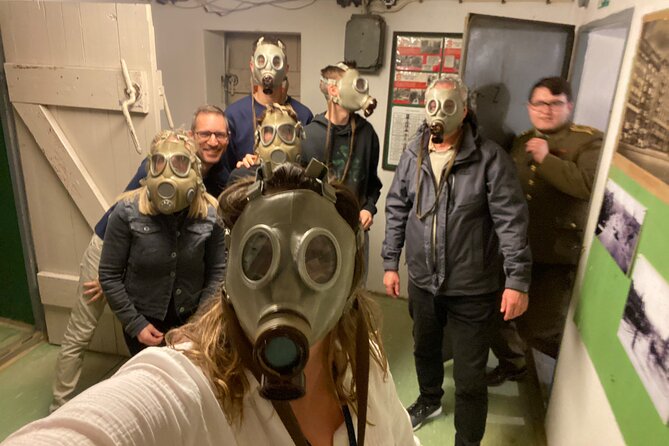
The guide can make or break a history tour, and this experience appears to rely heavily on the person leading it. Klara is frequently identified as the guide, with Leo and Stan also leading departures.
Klara’s style centers on storytelling, personal discussion, and photographs used along the route. She has helped people choose food at the canteen and has shared family experiences from Communist-era Czechoslovakia. Leo is praised for clear explanations, humor, and willingness to answer questions, including questions about current affairs.
That range matters because the tour is not only about architecture. You are asking how a political system worked and what it felt like to live under it. A guide who can explain both the official story and its effect on ordinary people adds much more value than a memorized timeline.
The group limit of 10 supports this personal style. Solo visitors may also find it an easy way to meet other people, since the canteen meal and walking discussion create natural chances to talk.
Price, timing, and practical value
At $35.07 per person, the tour is fairly priced for three and a half hours, a local guide, a small group, and a bunker admission worth €10. The included entry is important because the bunker is the tour’s main paid attraction.
The food arrangement keeps the base price from becoming misleadingly high. You pay only for what you choose at the canteen, although you should remember that the meal is not included. If you want the full experience, plan for lunch and a drink in addition to the advertised price.
The route begins at Republic Square and ends at Wenceslas Square, so it works well as a bridge between sightseeing in Old Town and New Town. It does not return you to the starting point. The end location is near public transportation, making it easy to continue elsewhere in Prague.
Confirmation is provided at booking, and free cancellation is available up to 24 hours before the start time. Changes or cancellations made within 24 hours are not accepted for a refund.
Who will enjoy this tour most
I would choose this tour if you want to understand Prague beyond its medieval center. It suits people interested in Central European politics, the Cold War, modern Czech history, or the way ordinary families lived under a totalitarian system.
It is also a good choice for first-time visitors who want a structured introduction to the city’s 20th-century past. The route passes familiar places, but the explanation changes how you see them.
You may want a different activity if you prefer a relaxed sightseeing walk with little political content. The subject is often grim, and the tour includes extended standing and walking. It is also not ideal if narrow underground spaces make you uncomfortable.
For the best experience, read a brief outline of Czech and Czechoslovak history before you go. You do not need a degree in European politics, but knowing the basic dates of 1918, 1945, 1948, 1968, and 1989 will help you follow the story.
Should you book the Prague Communism and Bunker Tour?
Book it if you want place-based modern history, a small group, and a real underground site rather than another general city walk. The canteen stop adds an everyday local angle, while the bunker gives the tour a strong physical finish.
I would be less likely to recommend it to anyone seeking a food-focused outing, an easy stroll, or a cheerful overview of Prague. For history-minded visitors, solo explorers, and anyone curious about how Communism shaped Czech life, the combination of street sites, personal stories, simple food, and bunker exhibits offers good value for the time and money.
FAQ
Where does the tour begin?
The tour begins at the Powder Tower, Náměstí Republiky 5, in Prague’s Old Town. Look for the guide holding a blue umbrella.
Where does the tour end?
It ends in the upper part of Wenceslas Square, Václavské náměstí, in New Town.
How long does the tour last?
The tour lasts approximately three hours and 30 minutes.
What language is the tour offered in?
The tour is offered in English.
How large is the group?
The maximum group size is 10 people.
Is the bunker admission included?
Yes. The €10 Cold War Museum admission fee is included in the tour price.
Is lunch included?
No. Food and drinks at the 1970s canteen are paid for separately.
What can I have at the canteen?
You can order Kofola or a Czech working-class meal. Examples include pork on paprika with potatoes. Your guide can help you choose.
Is the tour suitable for people with claustrophobia?
No. The tour is not recommended for people with claustrophobia because the bunker contains narrow underground spaces.
Can most people participate?
Most people can participate, but the tour involves walking and about 30 steps to a lower bunker level after taking an elevator down one level. Some mobility is required.
Is the tour near public transportation?
Yes. The meeting point and ending area are near public transportation.
Can I cancel for a full refund?
Yes, if you cancel at least 24 hours before the experience begins. Cancellations made less than 24 hours before the start time are not refunded.
Just added around Prague
- Prague Highlights 4 Hour Private Walking Tour★ 5.0 · 3 reviews
- VIP Prague Segway Tour Around Monastic Breweries★ 4.0 · 3 reviews
- Private Guided Tour from Prague to UNESCO Kutna Hora★ 5.0 · 3 reviews
- From Prague Day Unique Tour To Cesky Krumlov★ 4.5 · 3 reviews
- Cesky Krumlov: Insta-Perfect Walk with a Local★ 5.0 · 3 reviews
- Prague: WWII Tour with Local Historian SMALL GROUP★ 5.0 · 3 reviews
- Learn Traditional Czech Cooking from Authentic Family Recipes★ 5.0 · 3 reviews
- Prague Tour in Spanish★ 5.0 · 3 reviews
Communism & Cold War Tours, compared.
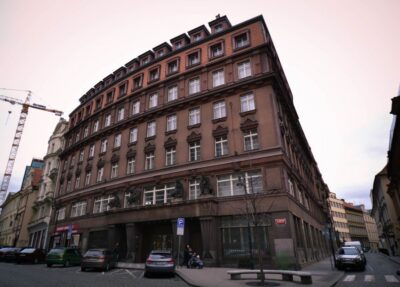
Communism History and Nuclear Bunker Guided Tour
Read our review →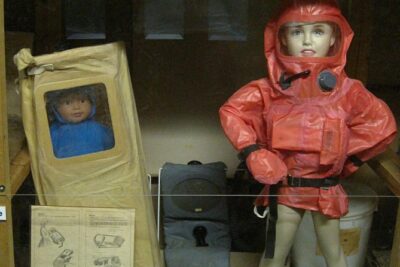
Prague Communism History and Nuclear Bunker Tour
Read our review →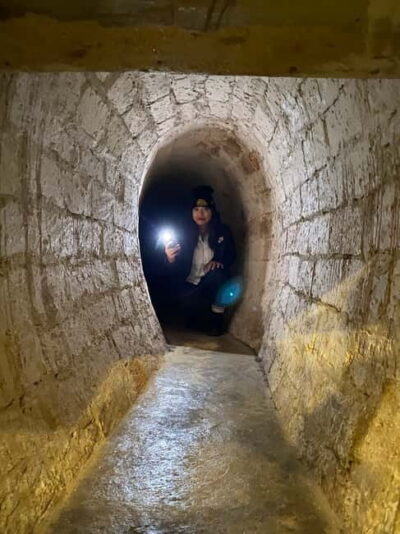
Communism and Bunker Tour with 70s Canteen Lunch
Read our review →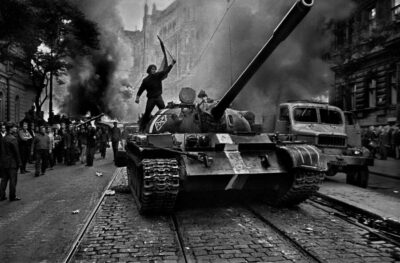
Second World War & Communism (Tip-based 3 hour tour)
Read our review →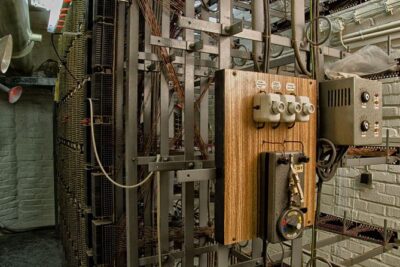
Skip the Line: 10-Z Bunker Entrance Ticket in Brno
Read our review →Browse the lists this tour appears in