
Reviewed · TEREZíN MEMORIAL DAY TRIPS
Prague: World War II and Communist History Tour
Prague’s most moving stories are often found beyond its medieval postcard views. This 2.5-hour walking tour follows the city through Nazi occupation, resistance, Communist rule, the crushed Prague Spring, and the Velvet Revolution. You may stand near the places where Czechs resisted, suffered, organized, and finally took power in 1989.
I like the way the tour joins two periods that are often taught separately: World War II and the Communist era. I also like its story-driven approach, especially the account of Operation Anthropoid, the Czech plot to assassinate Nazi security chief Reinhard Heydrich. The main drawback is that several stops depend more on the guide’s explanation than on visible monuments, and the walk can run longer than the advertised 150 minutes.
In This Review
- Key points to know before you book
- Prague’s 20th-century story begins in the Old Town
- The Jewish Quarter and the cost of Nazi rule
- Operation Anthropoid and the assassination of Heydrich
- From liberation to the Communist coup
- Wenceslas Square and the Prague Spring
- The Plastic People and Charta 77
- Dancing House and the Velvet Revolution
- What the guide contributes to the walk
- Walking time, pace, and practical value
- How to fit it into a Prague visit
- Should you book the World War II and Communist History Tour?
- FAQ
- Where does the tour meet?
- How long does the tour last?
- What language is the tour in?
- What historical periods does the tour cover?
- Which Prague locations are included?
- How much does the tour cost, and can I cancel?
Key points to know before you book
- Operation Anthropoid is the emotional center: Learn about the assassination of Reinhard Heydrich and the resistance fighters who took refuge in the Cyrill and Methodius Church crypt.
- The tour links 1939 to 1989: You follow the move from Nazi occupation to Communist control, Prague Spring, Soviet invasion, and the Velvet Revolution.
- Wenceslas Square carries much of the modern story: The square helps explain the Communist coup, public protest, and the mass demonstrations of 1989.
- The guide makes or breaks the experience: Past guides have included Adam, Tony, Zach, Daren, Sean, Kevin, Amanda, and Analisa, with strong praise for clear storytelling and humor.
- Expect a real city walk, not a museum circuit: The Jewish Quarter, Municipal House, Dancing House, and central streets provide the setting, while much of the detail comes through narration.
- At $34, the value is strong: You get 150 minutes of live English commentary, and free cancellation up to 24 hours before the start adds useful flexibility.
Prague’s 20th-century story begins in the Old Town
The meeting point is at Týnská 639/4 in Staré Město, close to Prague’s Old Town core. That is a handy place to begin, since you can reach it while already exploring the Old Town, though the tour itself is not a standard introduction to Gothic churches, kings, or castle views.
Instead, the guide uses central Prague as a stage for the city’s political shocks. The opening section sets up the Nazi occupation and explains why the takeover was so devastating for Czechoslovakia. You learn how a highly industrialized and relatively progressive state was forced into a system of terror, censorship, arrests, and collaboration.
I appreciate this wider frame. You are not simply shown a building and handed a date. The guide explains what occupation meant for ordinary people, how resistance worked, and how fear shaped public life. The tone is serious, but the guides have generally used humor and local anecdotes to keep the pace human rather than grim from start to finish.
The Municipal House is one of the early landmarks connected with the political setting of modern Prague. You may recognize it as a grand Art Nouveau concert and civic building, but here it helps place the city’s political life in context. The contrast is useful: Prague’s elegant public spaces were also scenes in a country swept into violent upheaval.
More Terezin memorial day trips:
- From Prague: Terezin Concentration Camp Guided Tour w/ Audio
★ 4.5 · 1,959 reviews - From Prague: Tour of Terezin Concentration Camp
★ 4.4 · 1,269 reviews - Prague: WWII Guided Tour & The Crypt of Operation Anthropoid
★ 4.7 · 1,030 reviews
The Jewish Quarter and the cost of Nazi rule
The route skirts or passes through the Jewish Quarter, an area many people visit for its synagogues and cemetery. On this tour, the focus shifts from architectural and religious history to the destruction caused by Nazi racial policy.
The guide connects the occupation to the persecution of Jewish communities and to the wider machinery of Nazi rule. This is one part of the walk where you should expect difficult subject matter. The tour does not treat the period as a neat sequence of military events. It addresses the effect on civilians and the moral compromises forced on people trying to survive.
The Jewish Quarter is also a good reminder that Prague’s 20th-century story cannot be reduced to one heroic resistance tale. The city’s wartime experience included courage, fear, loss, silence, and uncertainty. A strong guide keeps those strands together, and past guides such as Zach and Analisa were praised for telling the story without smoothing away uncomfortable facts.
If you have already spent a morning touring the Jewish Museum sites, this section may overlap in location but not in purpose. The emphasis here is political and social history, not a full tour of the synagogues. That makes this experience a useful companion to a separate Jewish Quarter visit rather than a replacement for one.
Operation Anthropoid and the assassination of Heydrich
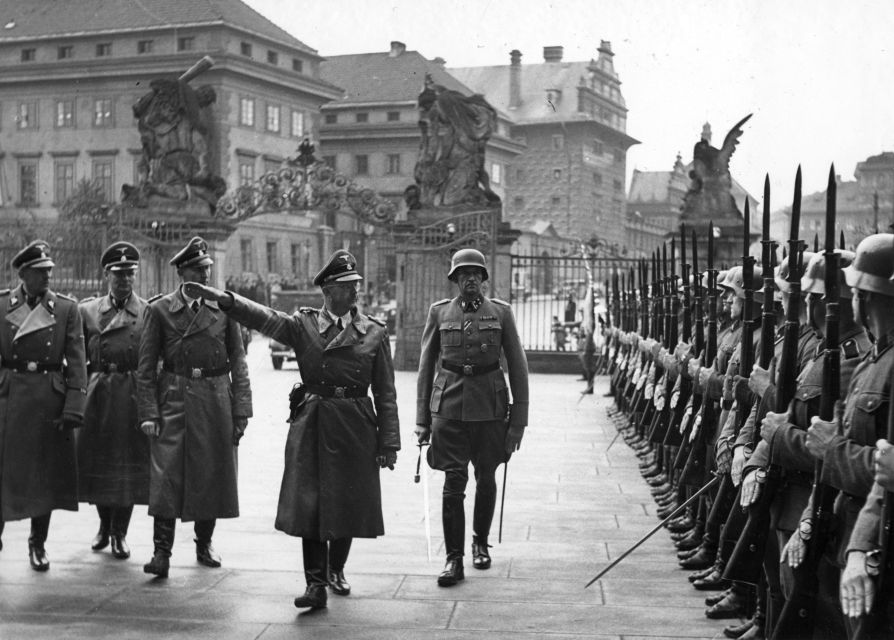
The most gripping section concerns Operation Anthropoid, the wartime plan to assassinate Reinhard Heydrich, the Nazi official who headed the security services and served as a leading figure in the occupation of Bohemia and Moravia.
The story is presented as a sequence of decisions, risks, and consequences. You learn about the Czech resistance plot, the attack, and the severe Nazi retaliation that followed. The value of hearing this on foot is not that the streets look dramatically different. It is that the guide can connect ordinary city spaces with events that demanded extraordinary courage.
The Cyrill and Methodius Church area, including the crypt where resistance fighters hid, gives this part of the tour a physical focus. Several people who took this tour singled out the church and crypt as a poignant moment. If access to a museum or interior site is included on your departure, that adds weight to the account, but you should check the exact arrangement for your date because the core activity is the walking tour.
This section can be emotionally heavy. It deals with assassination, betrayal, reprisal, and the treatment of civilians after the attack. I would not choose it if you want a light sightseeing walk, but it is one of the clearest reasons to book this particular experience.
If you want to prepare, Anthropoid is an obvious film choice. One past participant also followed up with Munich, which gives you a useful reminder that political violence and state power did not end with 1945. Watching a film before or after the tour can help, but it is not required.
From liberation to the Communist coup
The tour then moves from the end of Nazi rule into the uncertain years that followed. This transition is essential. The end of World War II did not bring an uncomplicated return to democratic normality, and the guide explains how the Communist coup changed the direction of Czechoslovak politics.
The Communist takeover is not treated as an isolated date. You hear about the hopes and frustrations that made the new order possible, followed by the letdown of life under a system that promised equality while restricting political choice and personal freedom.
This is where the tour’s linked structure works well. The Nazi period and Communist period were different systems, with different goals and methods, but both reshaped daily life through pressure from the state. By placing them in one narrative, the guide helps you understand why later reform movements mattered so much.
The route through central Prague gives you changing views of the city as the story moves forward. The architecture is attractive, but the subject is often stark. You may pass grand buildings and busy streets while hearing about arrests, propaganda, surveillance, and the loss of public trust.
More communism and Cold War tours:
- Prague: Communism History and Nuclear Bunker Guided Tour
★ 4.7 · 2,417 reviews - Prague Communism History and Nuclear Bunker Tour
★ 5.0 · 1,742 reviews - Communism & Nuclear Bunker Tour + 70s Canteen Lunch (own expense)
★ 5.0 · 1,036 reviews - Prague: Communism and Bunker Tour with 70s Canteen Lunch
★ 4.8 · 250 reviews
Wenceslas Square and the Prague Spring
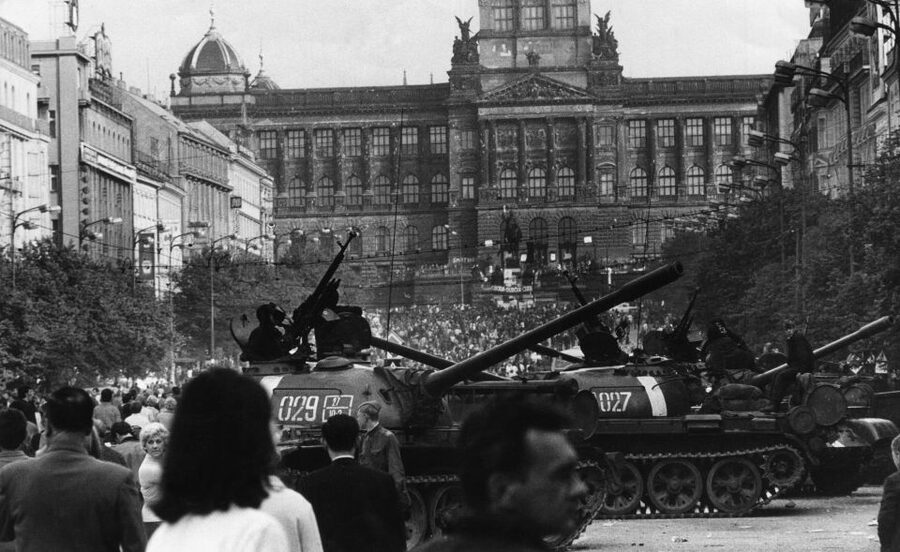
Wenceslas Square is one of the most important locations on the walk. It is a long urban boulevard rather than a quiet memorial, which makes it a powerful place to discuss political crowds, speeches, protest, and public fear.
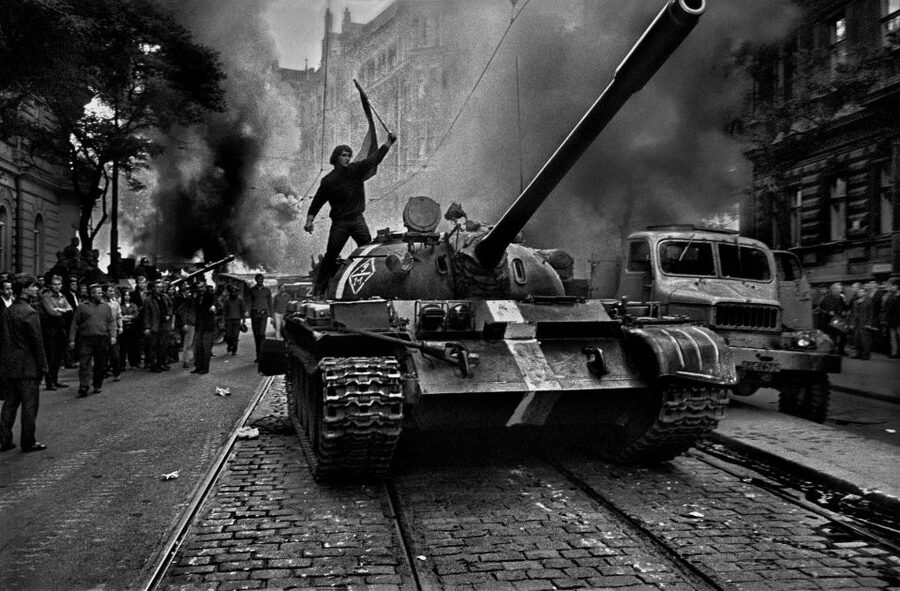
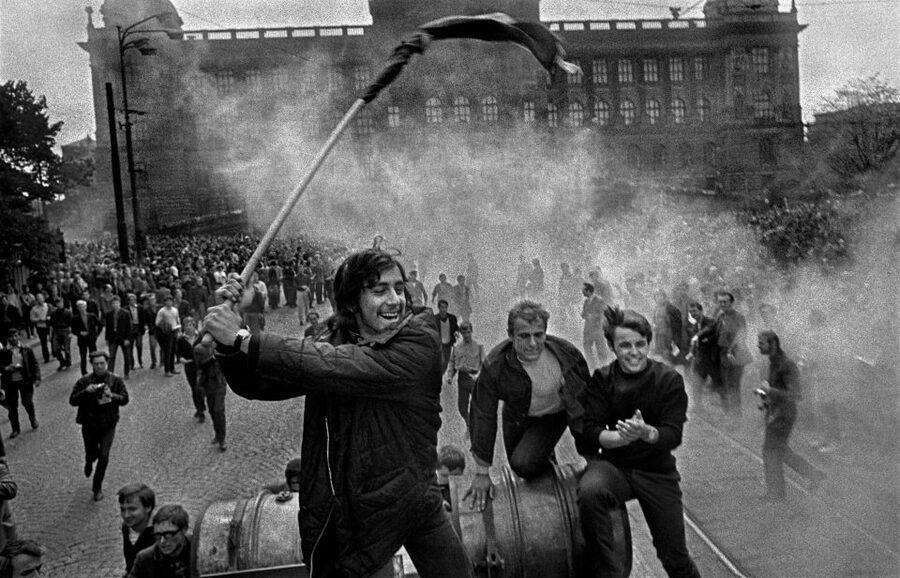
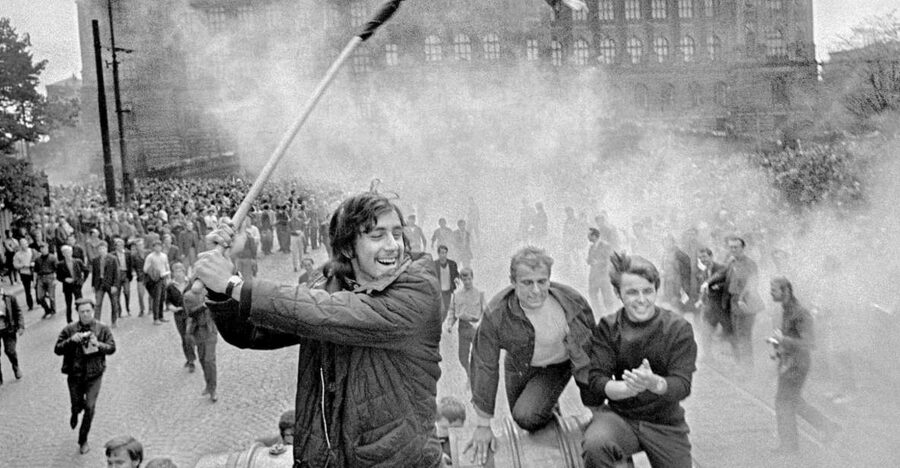
Here, the guide explains the Prague Spring of 1968, the attempt to create a more open form of socialism, and the Warsaw Pact invasion that crushed those reforms. You also learn how ordinary Czechs reacted to the arrival of foreign troops and how the invasion changed the mood of the country.
The square is especially useful for understanding the difference between private opinion and public action. A government can control newspapers and institutions, but a public square can still become a place where people gather and make their feelings visible. The guide brings out that tension through personal accounts and local stories.
The following period, known as Normalization, receives attention too. Rather than suggesting that life simply stopped, the tour explains how people adapted, withdrew, complied, or resisted in different ways. That nuance matters. Communist Prague was not a single experience shared equally by everyone.
The Plastic People and Charta 77
The story later turns to cultural resistance. You hear about the persecution of the Plastic People of the Universe, an underground rock band whose treatment by the authorities helped spark wider opposition.
This is a memorable detail because it shows how political conflict could begin with music, style, and freedom of expression. The band’s story makes Normalization feel less like an abstract period in a textbook and more like a struggle over what people could read, hear, perform, and say.
Charta 77 widens the picture again. The guide explains how dissidents challenged the Communist government and how figures such as Václav Havel became part of a growing opposition movement. You are introduced to an eclectic group of writers, artists, musicians, and activists rather than a single polished political class.
I find this part particularly valuable for first-time visitors who know Havel mainly as a president or playwright. The tour places him within a network of dissidents and explains why his eventual rise to power seemed both improbable and deeply connected to years of pressure from below.
Dancing House and the Velvet Revolution
The Dancing House is among the tour’s listed landmarks and helps bring the route into the late 20th century. Its unusual form is a reminder that Prague’s story did not end with the fall of Communism. The city continued to change, physically and politically, after 1989.
The guide then reaches the Velvet Revolution, when mass demonstrations helped sweep Havel and the dissident movement into power. Wenceslas Square again becomes central, this time as a place of public euphoria rather than Communist control.
The best part of this final section is the sense of contrast. You have already heard about occupation, purges, censorship, invasion, and cultural persecution. The sudden possibility of change feels more significant because the guide has shown how long the pressure had built.
Do not expect a large collection of exhibits at every stop. One criticism of the route is also its practical limitation: some locations have few visible signs explaining what happened there. If you prefer plaques, preserved rooms, and objects, you may want to add a museum visit. If you enjoy reconstructing events from a guide’s account, this format works much better.
What the guide contributes to the walk
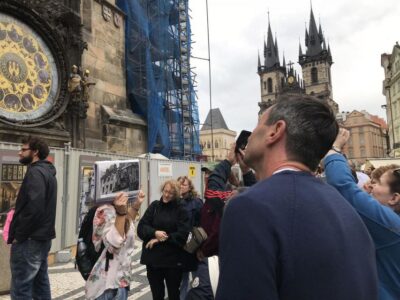
The strongest feature of this experience is the guiding. Names recorded for different departures include Adam, Tony, Zach, Daren, Sean, Kevin, Amanda, and Analisa. You cannot select a past guide or assume the same person will lead every departure, but the repeated pattern is clear: the experience depends heavily on a guide who can explain complicated politics in plain English.
Adam was praised for energy, humor, and a large store of historical detail. Tony was noted for patience, clear explanations, and useful restaurant and bar suggestions. Zach was often described as an animated storyteller who built the history gradually, while Daren was singled out for passion and an ability to make the hours pass quickly.
That variety matters because this is not a tour where you simply look at a building and move on. The guide’s voice carries much of the content. A strong guide can explain why one event led to another, answer questions, and add the local perspective promised by the tour. A less engaging delivery would make the same streets feel much thinner.
The group can be small, though the exact size is not fixed in the information provided. Small groups make it easier to ask questions and hear the guide, and one past participant felt the experience was almost like a private tour. Do not book on the assumption that every departure will have the same group size.
Walking time, pace, and practical value
The advertised duration is 150 minutes, or two and a half hours. Plan your day with a little breathing room afterward. One departure ran longer than expected, and another included a tram ticket to save walking time. Those details may vary, so do not schedule a train, meal reservation, or show immediately after the tour.
You should wear comfortable shoes. The route covers several parts of central Prague, and the experience is a genuine walking tour rather than a single-site talk. One participant described it as a lot of walking but still pleasant, while another completed it in pouring rain. Weather can change the experience, especially because much of the value comes from standing outside while listening.
The tour is offered in English with a live guide. It suits you best if you can follow a fairly dense spoken account and enjoy asking questions along the way. Families with older children, history enthusiasts, and visitors who want more than Prague’s usual royal and religious sights are likely to get the most from it.
At $34 per person, I consider the price good for 2.5 hours of live guiding in central Prague. The value is not based on admission to a long list of attractions. It comes from having someone connect scattered streets and landmarks into one understandable account.
Free cancellation up to 24 hours before the start and the reserve-now, pay-later option also reduce the risk of fitting it into a changing itinerary. Check the available starting time before booking, since the schedule can affect how easily you pair it with other sightseeing.
How to fit it into a Prague visit
I would place this tour after a general Old Town or Prague Castle introduction. Once you know the basic shape of the city, the modern political story becomes easier to follow. You will recognize the central streets, but see them with a different set of questions.
It also pairs well with an independent visit to the Jewish Quarter. The tour gives you context about Nazi persecution, while the synagogues and cemetery provide a longer, more focused look at Jewish Prague. The two experiences cover different ground.
If Operation Anthropoid is your main interest, consider allowing extra time around the Cyrill and Methodius Church area. The walking tour may pass the relevant location and explain its importance, but the exact amount of interior or museum time is not guaranteed by the core description.
The tour is less suitable if you want a relaxed photo walk or a broad survey of Prague’s architecture. It is also not ideal for anyone who dislikes political history, difficult wartime stories, or long stretches of listening outdoors. The route is enjoyable, but its purpose is education, not entertainment alone.
Should you book the World War II and Communist History Tour?
Book it if you want to understand how Prague moved from Nazi occupation through Communist rule to the Velvet Revolution. The best parts are the linked timeline, the Operation Anthropoid story, the Cyrill and Methodius Church connection, and the guide’s ability to make public events feel personal.
I would especially recommend it to first-time visitors who already have a basic Old Town plan and want to understand the Czech Republic beyond its beautiful façades. At $34, the cost is fair, and the flexible cancellation terms help.
Skip it if you need a highly visual tour with an interior at every stop or if you have little patience for detailed narration. Several places offer atmosphere rather than obvious memorials, so you must be willing to listen.
For the right person, this is one of the most useful ways to spend a half-day in Prague. You leave with more than a list of dates. You understand why these streets still carry the weight of occupation, resistance, compromise, protest, and freedom.
FAQ
Where does the tour meet?
The meeting point is Týnská 639/4 in Staré Město, Prague 1, Czechia.
How long does the tour last?
The stated duration is 150 minutes, or 2.5 hours. Allow extra time afterward because one past departure ran longer than listed.
What language is the tour in?
The tour is conducted in English with a live guide.
What historical periods does the tour cover?
It covers the Nazi occupation, Czech resistance, the Communist coup, Prague Spring, the Warsaw Pact invasion, Normalization, the persecution of the Plastic People of the Universe, Charta 77, and the Velvet Revolution of 1989.
Which Prague locations are included?
The route includes or relates to the Municipal House, Jewish Quarter, Dancing House, and Wenceslas Square. The tour also covers the Cyrill and Methodius Church area in connection with the resistance and Operation Anthropoid.
How much does the tour cost, and can I cancel?
The price is $34 per person. You can cancel up to 24 hours before the tour for a full refund, and you can reserve now and pay later.
More History Walks around Prague
- Prague: Oldtown, Medieval Underground & Dungeon History Tour
★ 4.2 · 8,244 reviews - Prague Old Town, Medieval Underground and Dungeon Historical Tour
★ 4.5 · 3,227 reviews - Prague: Historic City Center Bus Tour with Top Sights
★ 4.4 · 2,360 reviews - Prague Historic Pub Tour with Drinks Included
★ 5.0 · 2,084 reviews
Just added around Prague
- Prague Highlights 4 Hour Private Walking Tour★ 5.0 · 3 reviews
- VIP Prague Segway Tour Around Monastic Breweries★ 4.0 · 3 reviews
- Private Guided Tour from Prague to UNESCO Kutna Hora★ 5.0 · 3 reviews
- From Prague Day Unique Tour To Cesky Krumlov★ 4.5 · 3 reviews
- Cesky Krumlov: Insta-Perfect Walk with a Local★ 5.0 · 3 reviews
- Prague: WWII Tour with Local Historian SMALL GROUP★ 5.0 · 3 reviews
- Learn Traditional Czech Cooking from Authentic Family Recipes★ 5.0 · 3 reviews
- Prague Tour in Spanish★ 5.0 · 3 reviews
Terezín Memorial Day Trips, compared.
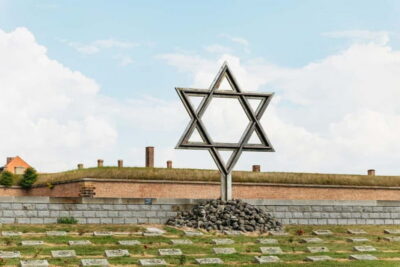
Terezin Concentration Camp Guided Tour w/ Audio
Read our review →
WWII Guided Tour & The Crypt of Operation Anthropoid
Read our review →
Terezin Concentration Camp Day Tour from Prague
Read our review →
WWII in Prague Tour & The Crypt of Operation Anthropoid
Read our review →
Terezin & Bohemian Switzerland from Prague: Bastei, Narnia & Café
Read our review →Browse the lists this tour appears in