
Reviewed · COMMUNISM & COLD WAR TOURS
Prague Communism History and Nuclear Bunker Tour
Prague’s communist past is easiest to grasp when you connect events to real streets. This tour does that, leading you from the former StB secret police building and Velvet Revolution sites to a nuclear bunker four floors below the city. The result is a brisk lesson in Cold War Prague, not just a museum visit.
I like two things here. First, the guides often add personal memories of growing up under communism, which can make dates and political names feel human. Second, the tour takes you to places you could easily pass without noticing, then supplies the context. The drawback is that the bunker transfer can take a sizable chunk of the tour, and the quality depends heavily on your guide.
In This Review
- What makes this tour worth considering
- Prague’s Cold War story begins on the pavement
- The StB holding cells and the fear of surveillance
- The Velvet Revolution Memorial at Národní třída
- Wenceslas Square and the August 1968 invasion
- Olšanské náměstí and socialist-era Prague
- The ride to the bunker is part of the calculation
- Four floors underground at the nuclear bunker
- Guides can make or break the experience
- Is $45.16 a fair price?
- Who should book this Prague history tour?
- Practical details before you go
- Should you book the bunker tour?
- FAQ
- How long does the Prague Communism History and Nuclear Bunker Tour last?
- What sites are included?
- Is entrance to the nuclear bunker included?
- Is transport to the bunker included?
- What language is the tour offered in?
- Is the tour suitable for people with mobility issues?
- Is the tour suitable for people with claustrophobia?
- Where does the tour start and finish?
What makes this tour worth considering
- A four-floor underground bunker: Spend about an hour in a former nuclear shelter now presented as a Communism and Cold War Museum.
- A street-level history lesson: Visit the StB holding cells, Velvet Revolution Memorial, Národní třída, and Wenceslas Square.
- Personal Czech perspectives: Guides including Stan, Pavel, Ladislav, and Lada have used their own memories to explain life under the former regime.
- A manageable group size: The tour accepts up to 26 people, with smaller groups possible.
- Transport is included: The ride to and from the bunker is covered, though it can account for much of the total time.
- A serious subject with room for humor: Strong guides use stories and wit to keep a difficult topic approachable.
Prague’s Cold War story begins on the pavement
The tour starts inside a passage at Malé náměstí 459/11, about 20 meters to the right of Hotel U Prince. This is in Prague’s Old Town, close to familiar central sights, so it is an easy place to reach by public transportation or on foot.
From here, the walk moves beyond medieval Prague. You begin looking at the city through the years of Soviet influence, the 1968 invasion, and the 1989 Velvet Revolution. That shift is the main value of the experience. You are not simply told that Czechoslovakia lived under communism. You are shown the streets where the state exercised power and where people later challenged it.
The walking portions are relatively short at each stop, often around ten minutes. Still, the entire outing lasts about two hours and 20 minutes, and the timing can change by 10 or 15 minutes depending on group size. Wear comfortable shoes. This is not a punishing hike, but the bunker includes many stairs and ramps.
More communism and Cold War tours:
- Prague: Communism History and Nuclear Bunker Guided Tour
★ 4.7 · 2,417 reviews - Communism & Nuclear Bunker Tour + 70s Canteen Lunch (own expense)
★ 5.0 · 1,036 reviews - Prague: Communism and Bunker Tour with 70s Canteen Lunch
★ 4.8 · 250 reviews
The StB holding cells and the fear of surveillance
One early stop is the former StB building, associated with Czechoslovakia’s secret police. The holding cells offer a stark way to discuss political control. Here, the subject becomes personal: interrogation, fear, and the pressure placed on people who were considered a threat to the state.
The guide also connects this place with Václav Havel, the playwright, dissident, and later president. That link helps place the building in the wider story of opposition to communist rule. Havel’s story is not treated as an isolated biography. It becomes part of a larger question: how do ordinary people live when the government monitors speech, limits choices, and punishes dissent?
This stop is small, so do not expect a large museum display. Its value comes from the explanation around it. A strong guide will give the building meaning, while a weaker one may rush through the facts or spend too much time on side topics.
The Velvet Revolution Memorial at Národní třída
The tour then reaches the Velvet Revolution Memorial, followed by Národní třída. These sites are tied to the demonstrations of 1989, when public protest helped bring communist rule in Czechoslovakia to an end.
Národní třída is still an active city street, which makes the story especially effective. You are standing in an everyday part of Prague while hearing about a moment of fear, courage, and rapid political change. The contrast between the normal present and the tense events of 1989 gives this portion its force.
Your guide explains the role of students, demonstrators, and the changing political climate. The best guides do not reduce the Velvet Revolution to one dramatic evening. They show how public pressure built and why the events mattered to the country that followed.
The memorial itself is not a long stop. Plan for a compact explanation rather than a full historical presentation. If you want a detailed study of the revolution, you will need another museum or book. This tour’s job is to place the event in the city and connect it with the other stops.
Wenceslas Square and the August 1968 invasion
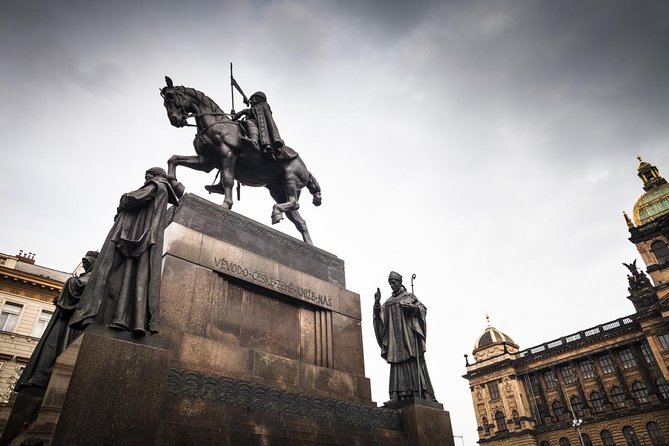
Wenceslas Square brings the story back to 1968 and the Soviet-led invasion of Czechoslovakia. The tour discusses the reform period associated with Alexander Dubček, often linked with the effort to create a more open form of socialism.
This is an important distinction. The story is not simply communism versus democracy from the beginning. Czechoslovakia also experienced attempts to reform the system from within, followed by military intervention and a return to tighter control. A good explanation here helps you understand why 1968 remains such an important date in Czech memory.
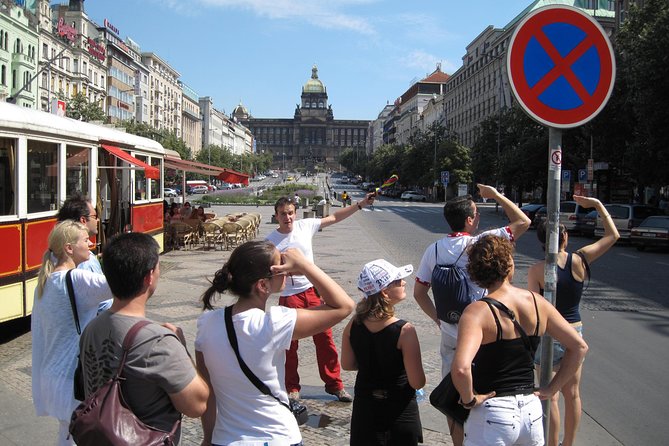
Wenceslas Square is large and busy, so you will be learning in an open public setting rather than a quiet gallery. That can be a strength because you see how political events unfolded in a real civic space. It can also make it harder to hear, especially if the group spreads out.
The guide’s approach matters most at this stop. Guides such as Stan and Pavel have been praised for adding humor and personal memories, while another guide may focus more directly on dates and political facts. If you want a strictly academic lecture, ask questions when the guide pauses. The experience is designed as a spoken walking tour, not a formal seminar.
More history walks around Prague:
- Prague: Oldtown, Medieval Underground & Dungeon History Tour
★ 4.2 · 8,244 reviews - Prague Old Town, Medieval Underground and Dungeon Historical Tour
★ 4.5 · 3,227 reviews - Prague: Historic City Center Bus Tour with Top Sights
★ 4.4 · 2,360 reviews - Prague Historic Pub Tour with Drinks Included
★ 5.0 · 2,084 reviews
Olšanské náměstí and socialist-era Prague
Olšanské náměstí provides a different view of the city. The area was part of a former workers’ district and still has socialist-era buildings, including concrete architecture from the 1970s.
This stop matters because communist history is not only about protests, prisons, and famous leaders. It is also about housing, work, planning, and the physical shape of daily life. The original buildings show how the state tried to organize urban life during the later decades of the regime.
Do not expect a grand monument here. The appeal is in noticing the ordinary built environment. With the right explanation, a block of concrete apartments becomes evidence of an era’s priorities. Without that explanation, it may look like a routine neighborhood stop.
The supplied schedule gives roughly ten minutes for this section. That is enough for a focused introduction, but not enough to examine the district in detail. If socialist architecture interests you, take mental notes and consider returning on your own.
The ride to the bunker is part of the calculation
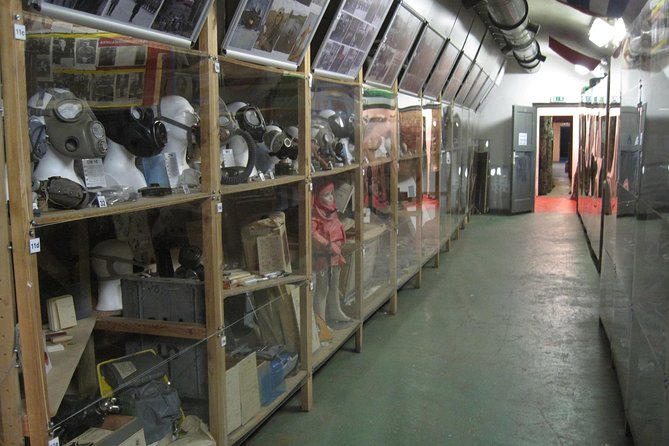
Transport to and from the bunker is included, which saves you from arranging a separate trip. It also lets the walking route cover central locations before moving to a less central museum.
There is a practical catch: the transfer can take a substantial portion of the tour. One dissatisfied participant estimated that nearly 45 minutes of the advertised time was spent riding the tram. The exact figure can vary, but you should not think of the full two hours and 20 minutes as continuous sightseeing.
That ride is not automatically wasted time. A good guide continues the story while the group travels, and several praised the informal explanations given on the way. Still, if your priority is maximum time inside the bunker or a long walking tour through communist architecture, the format may feel less efficient.
The group can include up to 26 people. A smaller group is more comfortable, especially when standing around city sites or moving through underground passages. It also gives you a better chance to ask questions and hear personal stories.
Four floors underground at the nuclear bunker
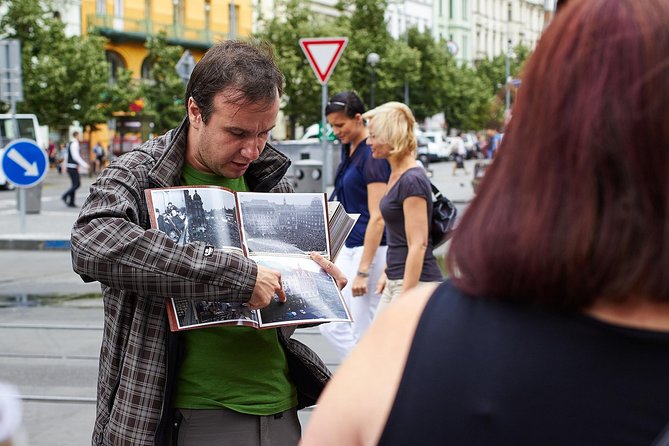
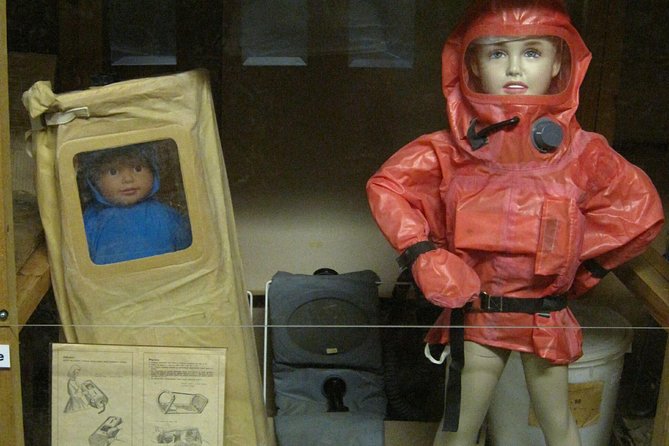
The final major stop is the Prague Nuclear Bunker Communism and Cold War Museum. You spend about an hour underground, with admission included in the tour price.
The bunker gives physical weight to Cold War anxiety. Four floors below the street, the idea of nuclear conflict becomes less abstract. You see the kind of shelter built for a frightening possibility, and the enclosed setting changes the mood from an outdoor history walk to something more immediate.
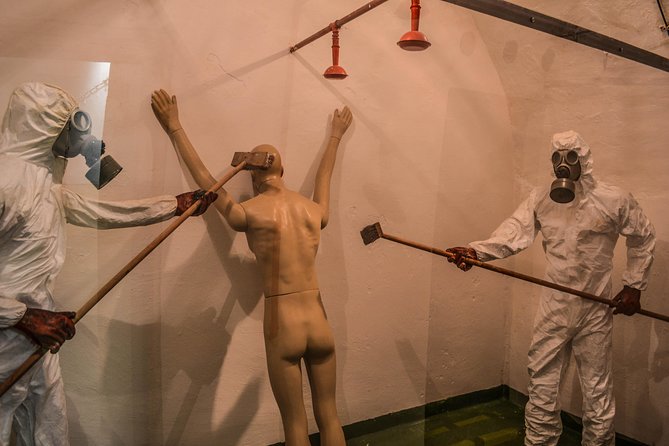
The museum uses mannequins and 1980s-era objects to present the period. Some displays are linked directly to Czechoslovak life, while others may feel like a broader Cold War collection. If you expect a polished national museum with extensive labels and a carefully ordered collection, you may find the bunker modest or uneven.
I would approach it as an atmospheric historical site rather than a complete account of communism. The bunker is strongest when it shows the fears and preparations of the period. It is less useful as a full explanation of how ordinary people worked, shopped, studied, or managed daily life under the regime.
There are lots of stairs and ramps. The tour is not suitable for people with walking disabilities or mobility issues, and it is not recommended for anyone with claustrophobia, serious heart problems, or similar concerns. It is also not suitable for young children below school age. Pregnant people with concerns about enclosed spaces or exertion should take particular care before booking.
Photography is allowed. Video recording requires special permission. The guide will also expect everyone to stay with the group and follow safety instructions.
Guides can make or break the experience
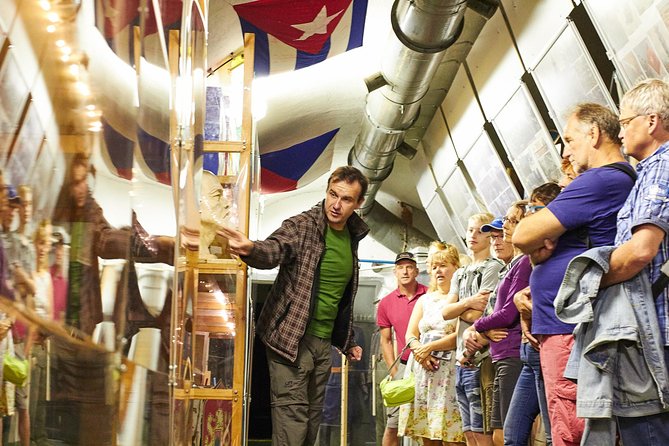
The strongest praise has gone to guides who combine historical facts with lived experience. Stan has been described as funny, charismatic, and able to connect Cold War events with his own memories. Pavel has been praised for being friendly and making Czech history easy to follow. Ladislav and Lada have also been singled out for personal stories and genuine passion.
Other guide names connected with strong experiences include Tom, Maki, Karl, and L. You cannot choose a specific guide from the information provided, so treat these names as examples of the range of personalities you may encounter, not a promise of assignment.
This matters more than usual because the tour relies on spoken commentary. The historical sites are often compact, and the bunker displays do not tell the entire story by themselves. A guide who explains context, answers questions, and avoids repetition can make the same route feel powerful. A guide who wanders into irrelevant topics or presents only one repeated message can make the tour feel slow.
The subject is also politically and emotionally charged. Personal experience adds authenticity, but it can sometimes produce a strongly anti-communist presentation with less attention to contradictions or everyday life. If you want a more balanced social history, listen carefully and ask specific questions about policy, work, family life, and how people adapted.
The tour requires you to speak the language you selected when booking. Translation during the experience is not allowed, and the guide may refuse disruptive behavior, intoxication, smoking, pets, bachelor parties, or costumed groups. Those rules keep a serious tour focused.
Is $45.16 a fair price?
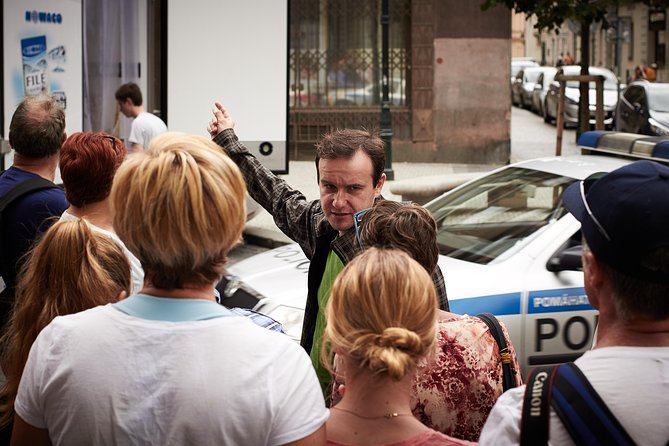
At $45.16 per person, the price is reasonable if you value a guide-led route, included transport, and bunker admission. You also receive a photo booklet and bunker survival guide, which add a little context beyond the walk.
The value is strongest for a first visit to Prague when you want a single organized introduction to the country’s 20th-century political story. You do not have to research the sites, work out the transport, or find the bunker yourself. The guide connects several separate locations into one narrative.
The value is weaker if you already know Czech communist history or mainly want a large, detailed museum. The bunker is only about an hour, and the ride may use much of the remaining time. You are paying for interpretation and convenience as much as for admission.
The tour has a 4.8 rating from 1,742 ratings and a 95 percent recommendation rate. Those figures point to a consistently popular experience, but they do not remove the main variable: your guide. The occasional poor experience centers on repetition, limited historical context, a rushed route, or a confrontational tone. Keep that possibility in mind when comparing it with a private tour or a specialist museum visit.
Who should book this Prague history tour?
I would recommend it to history enthusiasts, visitors curious about the Cold War, and anyone who wants to understand Prague beyond its castle, churches, and medieval lanes. It is also a good choice if you learn best from stories rather than labels on a wall.
Families with school-age children may enjoy it, especially if they are comfortable with a somber subject and many stairs. Very young children are not allowed. People who dislike enclosed spaces, have serious heart concerns, or cannot manage stairs should choose another activity.
Book it if personal testimony matters to you and you like seeing real places tied to political events. Think twice if you want a long, detailed discussion of daily life under communism, a wide survey of socialist architecture, or a bunker visit with extensive original artifacts.
Practical details before you go
Meet inside the passage at Malé náměstí 459/11 in Prague 1. The ticket office is about 20 meters to the right of Hotel U Prince. The tour ends back at the same address.
Online tickets can be booked up to 30 minutes before departure, but once the group has left, joining is not guaranteed. Arrive early, wear normal walking shoes, and allow extra time beyond the stated 2 hours and 20 minutes.
Free cancellation is available if you cancel at least 24 hours before the start time. Cancellations or changes made within 24 hours are not refunded or accepted.
Should you book the bunker tour?
Book this tour if you want a focused, accessible introduction to Prague’s communist past with a real bunker at the center. The combination of StB cells, Národní třída, Wenceslas Square, socialist-era buildings, and personal guide stories gives you a useful frame for understanding recent Czech history.
Do not book it expecting every stop to be extensive or every guide to offer the same depth. The bunker is no-frills, the transfer takes time, and the presentation can lean heavily on the guide’s personality. For the right audience, especially anyone drawn to Cold War history and authentic sites, the personal stories and underground setting make the price worthwhile.
FAQ
How long does the Prague Communism History and Nuclear Bunker Tour last?
The scheduled duration is approximately 2 hours and 20 minutes. The total time can vary by about 10 or 15 minutes depending on group size.
What sites are included?
The route includes the StB holding cells, Velvet Revolution Memorial, Národní třída, Wenceslas Square, Olšanské náměstí, and the Prague Nuclear Bunker Communism and Cold War Museum.
Is entrance to the nuclear bunker included?
Yes. Admission to the Nuclear Bunker Museum is included in the tour price.
Is transport to the bunker included?
Yes. Transport to and from the bunker is included.
What language is the tour offered in?
The tour includes a live guide, with a fixed language option selected when booking. You must speak the chosen tour language, and translation into another language during the tour is not allowed.
Is the tour suitable for people with mobility issues?
No. The experience is not possible for people with walking disabilities or mobility issues. The bunker includes many stairs and ramps.
Is the tour suitable for people with claustrophobia?
No. The experience is not recommended for people with claustrophobia, serious heart issues, or similar concerns.
Where does the tour start and finish?
It starts inside the passage at Malé náměstí 459/11, about 20 meters to the right of Hotel U Prince. It finishes at the same address.
Just added around Prague
- Prague Highlights 4 Hour Private Walking Tour★ 5.0 · 3 reviews
- VIP Prague Segway Tour Around Monastic Breweries★ 4.0 · 3 reviews
- Private Guided Tour from Prague to UNESCO Kutna Hora★ 5.0 · 3 reviews
- From Prague Day Unique Tour To Cesky Krumlov★ 4.5 · 3 reviews
- Cesky Krumlov: Insta-Perfect Walk with a Local★ 5.0 · 3 reviews
- Prague: WWII Tour with Local Historian SMALL GROUP★ 5.0 · 3 reviews
- Learn Traditional Czech Cooking from Authentic Family Recipes★ 5.0 · 3 reviews
- Prague Tour in Spanish★ 5.0 · 3 reviews
Communism & Cold War Tours, compared.
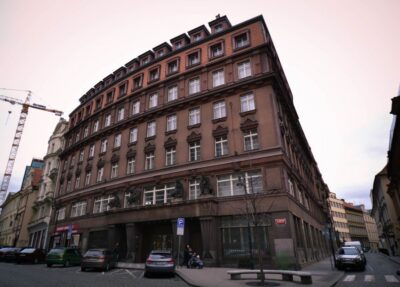
Communism History and Nuclear Bunker Guided Tour
Read our review →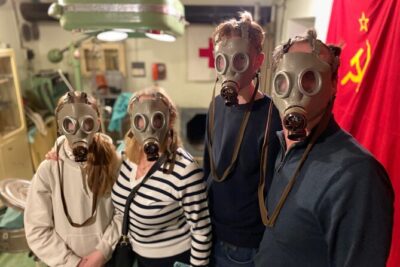
Communism & Nuclear Bunker Tour + 70s Canteen Lunch (own expense)
Read our review →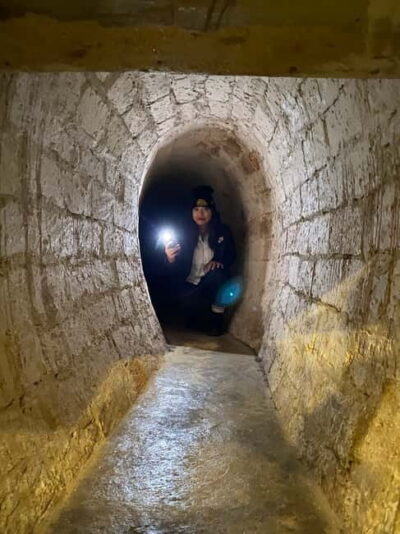
Communism and Bunker Tour with 70s Canteen Lunch
Read our review →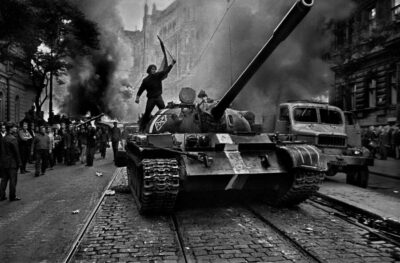
Second World War & Communism (Tip-based 3 hour tour)
Read our review →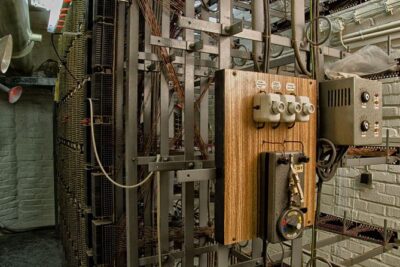
Skip the Line: 10-Z Bunker Entrance Ticket in Brno
Read our review →Browse the lists this tour appears in