
Reviewed · TEREZíN MEMORIAL DAY TRIPS
Small-Group World War 2 & Operation Anthropoid Tour in Prague
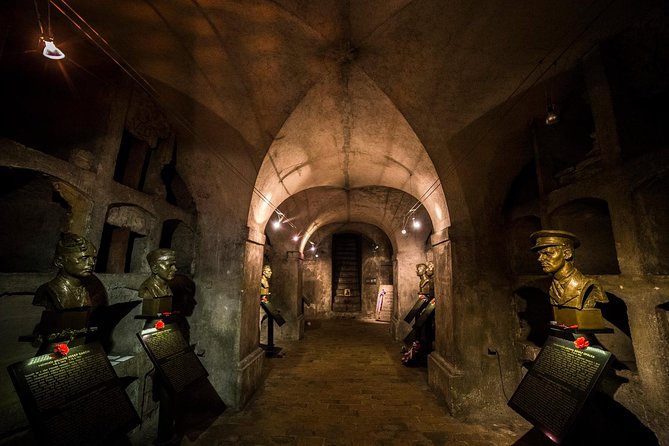
The most powerful part of this Prague walking tour comes at the end: the crypt beneath St. Cyril and Methodius Cathedral, where Czech paratroopers made their final stand after killing Reinhard Heydrich. The tour also links that dramatic episode to ordinary streets, apartment buildings, hotels, and public squares across central Prague.
I like the way the route explains the road from the aftermath of World War I to Nazi occupation, instead of dropping you into 1942 without context. I also like the use of period photographs and real resistance locations. The drawback is that much of the tour is storytelling beside modern buildings, so you need patience, good walking shoes, and an interest in history.
In This Review
- Key points to know before booking
- Why Operation Anthropoid gives this Prague walk its focus
- Starting in Old Town with Europe on the brink
- Old Town Hall and the Prague Uprising
- Resistance safehouses around Melantrichova
- The assassination, the Baťa store, and Lidice
- Petschek Palace and the cost of betrayal
- Karlovo náměstí and wartime Prague
- Entering St. Cyril and Methodius Cathedral
- What the three hours feel like
- Is $33.88 good value in Prague?
- Practical details before you go
- Who should book this tour?
- FAQ
- How long does the World War II and Operation Anthropoid tour last?
- Where does the tour begin?
- Where does the tour end?
- Is entry to St. Cyril and Methodius Cathedral included?
- Is the tour offered in English?
- Is the tour suitable for children?
- Can I cancel for a full refund?
Key points to know before booking
- The crypt is the emotional centerpiece: End inside the church and memorial connected to the last hideout of the resistance fighters.
- The tour begins with the causes of World War II: Expect the Treaty of Versailles, economic collapse, nationalism, Hitler’s rise, and the creation of Czechoslovakia.
- You visit real resistance locations: The route includes an apartment building used as a hideout and sites tied to Operation Anthropoid.
- It is a serious three-hour walk: There is plenty of standing while the guide explains events and shows images.
- Guides bring different strengths: Daniel, Allen, Dana, Richard, Martin, Robin, Pablo, and others have led the experience, with repeated praise for clear English, enthusiasm, and detailed explanations.
- The small-group format has a 30-person limit: You meet at 1:30 pm in Old Town and finish at the cathedral in New Town.
Why Operation Anthropoid gives this Prague walk its focus
Many Prague tours concentrate on castles, kings, beer, and pretty squares. This one takes a harder route through the city’s 1939 to 1945 story. The focus is not on battlefield ruins, because Prague avoided the level of street fighting and destruction seen in many European cities. Instead, the guide shows you how occupation worked through offices, police headquarters, propaganda, fear, resistance, and betrayal.
The central episode is Operation Anthropoid, the code name for the 1942 mission to assassinate Reinhard Heydrich. Heydrich was the Nazi security chief appointed to control the Protectorate of Bohemia and Moravia. The tour explains how Czech and Slovak paratroopers were sent from Britain, how local resistance networks supported them, and how the attempt changed life in the Czech lands.
That structure makes the experience useful even if you already know the basic story. You are not simply shown the church where the final shootout happened. You follow the chain of events through Prague, from political decisions to hiding places, the attack, the Nazi response, and the eventual betrayal that exposed the resistance network.
More Terezin memorial day trips:
- From Prague: Terezin Concentration Camp Guided Tour w/ Audio
★ 4.5 · 1,959 reviews - From Prague: Tour of Terezin Concentration Camp
★ 4.4 · 1,269 reviews - Prague: WWII Guided Tour & The Crypt of Operation Anthropoid
★ 4.7 · 1,030 reviews
Starting in Old Town with Europe on the brink
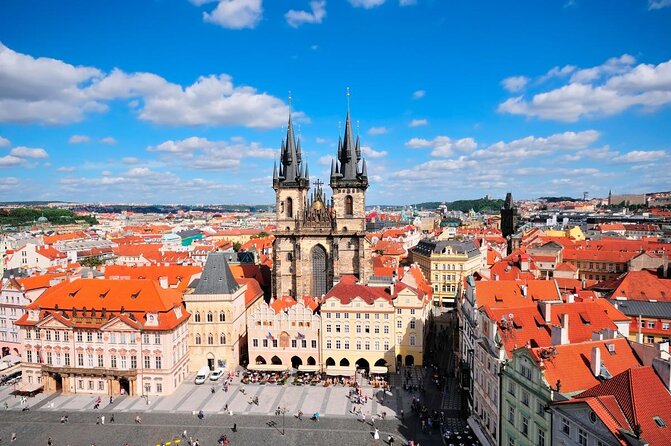
Meet your guide outside the building at Týnská 627/7, near the Old Town center. The meeting point is in front of McGee’s Trips & Tickets, not inside the shop, so arrive a few minutes early and check the address carefully. The tour begins at 1:30 pm.
The first stop is U Budovce, where the guide sets up the political background. You hear how World War I helped bring down three major empires, created nine new nations, and left Europe facing inflation, unemployment, debt, and political anger. Poland, Austria, and Czechoslovakia all emerged from this unsettled period in different ways.
This opening is longer than a quick introduction. It explains why nationalism gained force and how economic misery helped Hitler build support. If you already have a firm grasp of interwar European history, this section may feel familiar. If you do not, it is essential, because the later discussion of the Sudetenland and the Munich Agreement will make much more sense.
The guide then moves to the Stone Bell House and the surrounding Old Town area. Here, the story turns to the Sudeten German Party, the Munich Agreement, and the creation of the Protectorate of Bohemia and Moravia. The setting is visually pleasant, with Gothic architecture and one of Old Town’s major churches nearby, but the subject is the loss of Czech sovereignty.
I find this contrast useful. Prague’s historic center can look untouched, almost like a storybook city. The guide helps you understand that beautiful facades also witnessed forced political change, surveillance, intimidation, and accommodation with the occupying power.
Old Town Hall and the Prague Uprising
At Old Town Hall, you see the section damaged during the Prague Uprising of May 1945. The guide explains what everyday life was like during the occupation and how the uprising developed as Nazi control began to collapse.
This is one of the route’s better examples of using a building as evidence. You are not looking at a preserved battlefield. You are looking at a city structure that still carries a visible connection to the final days of the war. The discussion reaches May 8, 1945, when the occupation ended in Prague.
The tour then passes along Celetná Street. Here, the story includes the execution of Czech students on November 17, 1939, the closure of Czech universities, and the rule of Konstantin von Neurath. The appointment of Heydrich on September 27, 1941, becomes the turning point.
This section helps explain why Heydrich was so feared. His arrival brought a sharper campaign against resistance and opposition. The guide connects policy to human consequences, rather than treating the occupation as a list of dates and official titles.
Plan to stand and listen in busy public spaces. A good guide will use photographs to show you what has changed, but there may not be a dramatic wartime object at every stop. One honest description of the tour is that you see many ordinary buildings while the guide supplies the historical weight.
Resistance safehouses around Melantrichova
Near Melantrichova, the route focuses on the preparation for Operation Anthropoid. You learn about the government-in-exile in London and other covert missions, including Operation Benjamin, Silver A, and Silver B.
These names can come quickly, so this is a place where listening closely helps. They refer to the wider network of missions, couriers, parachutists, and helpers that operated before and around Anthropoid. The assassination was not an isolated act by two men. It depended on planning, communication, transport, shelter, and extraordinary courage from people living under occupation.
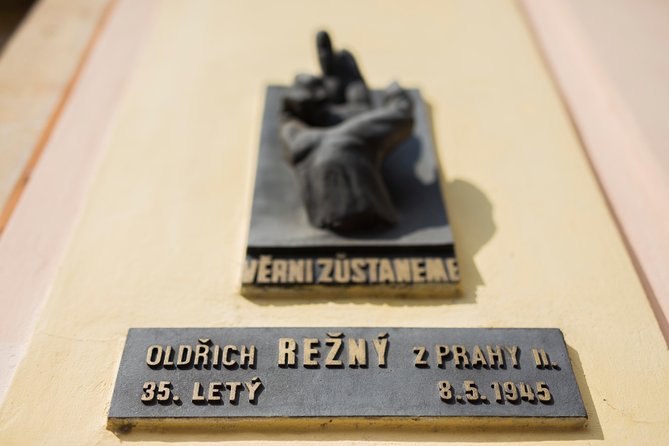
The guide points out the building containing the former apartment of Josef and Marie Svatoš. The house served as an important resistance hideout. You do not enter a preserved wartime apartment, but seeing the actual location makes the risks more concrete. A safehouse was not an abstract term. It was a normal home in a normal city building, with neighbors, police, informers, and constant danger nearby.
This is where guides such as Daniel, Allen, Richard, Robin, and Rafek have earned particular praise for linking names and places to the wider story. Allen, in particular, is described as using photographs and personal stories to make the Czech struggle easier to follow. Rafek has also adapted the pace for visitors with later plans, though you should not count on every group receiving a custom schedule.
Same city, a completely different afternoon:
- Prague: 50-Minute Sightseeing Evening Cruise
★ 4.2 · 33,780 reviews - Prague: Medieval Dinner with Unlimited Drinks
★ 4.4 · 19,847 reviews - Prague: Skip-the-line Castle Ticket and Optional AudioGuide
★ 4.3 · 11,121 reviews - Prague: Castle Tour with Local Guide and Entry Ticket
★ 4.6 · 10,422 reviews
The assassination, the Baťa store, and Lidice
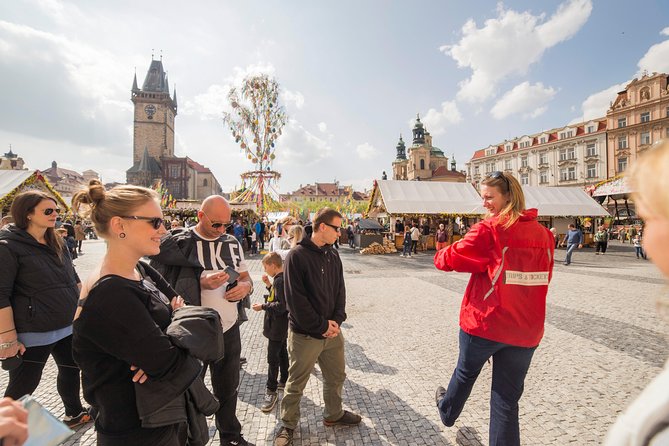
At the Baťa department store, the guide discusses the assassination of Heydrich. The building was used to display objects found at the scene. Today, the stop is mainly about what happened and how the investigation unfolded, rather than a museum visit with original material on display.
Operation Anthropoid is often presented as a clean military success. The reality was far messier. The attack killed Heydrich, but it also triggered brutal reprisals, arrests, executions, and the destruction of communities. The tour makes that human cost central.
At Wenceslas Square, you hear about Lidice. On June 10, 1942, the village’s men were executed and the women were sent to concentration camps. Lidice was destroyed and ceased to exist as a community.
This is one of the tour’s heaviest sections. It is also one reason the experience is not recommended for small children. The subject includes murder, torture, betrayal, and collective punishment. Parents should consider the age and sensitivity of children carefully, even though children up to age six are free.
The route also passes the Esplanade Hotel, described as a favored hotel of Nazi officials during the occupation. This short stop helps show the social world around power. Not every wartime story took place in a prison or a battlefield. Hotels, offices, shops, and streets all became part of the machinery of occupation.
Petschek Palace and the cost of betrayal
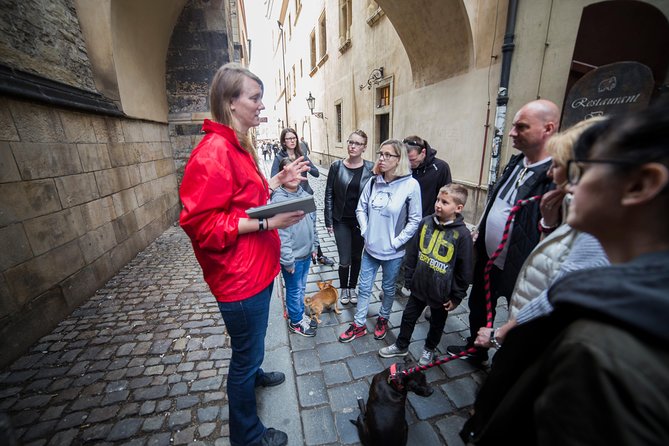
Petschek Palace was the Gestapo headquarters in Prague. Czechoslovaks were interrogated, tortured, and killed there in large numbers. The building gives the guide a grim setting for explaining the occupation’s system of repression.
The tour also discusses Karel Čurda, who entered the palace on June 16, 1942, and betrayed his comrades. His information changed the search for the men responsible for Heydrich’s assassination. This is a difficult part of the story because it moves beyond a simple division between heroes and villains. Fear, pressure, and survival shaped decisions, though the consequences were devastating.
Nearby, the route passes the National Museum and continues through Vodičkova. Along this stretch, the guide discusses two unsuccessful covert operations, Tin and Bioscop. These episodes broaden the tour beyond Anthropoid and show how many resistance efforts were attempted, often with little chance of success.
The strongest guides keep these names tied to people and choices. Dana, Allen, and Martin have been singled out for detailed explanations and a willingness to answer questions. Richard, a Prague history student, is also noted for clear English and strong storytelling. Your experience will depend partly on the guide’s delivery, so expect variation in pace and style.
Karlovo náměstí and wartime Prague
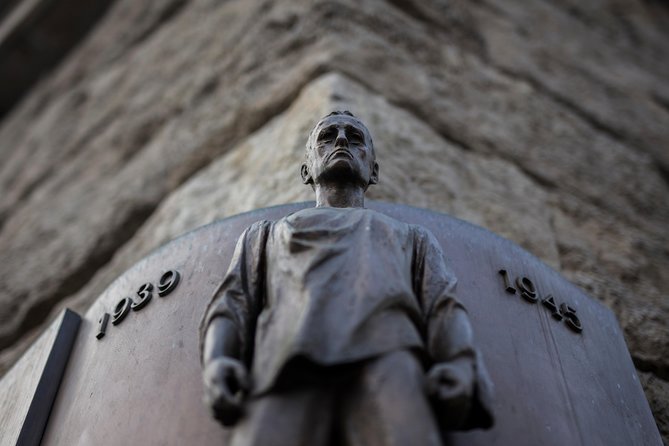
At Karlovo náměstí, the subject turns to the bombing of Prague in 1945. This is a useful correction to the idea that the city escaped the war completely. Prague did not endure the scale of destruction seen in some other capitals, but it was not untouched.
The route’s broad point is that wartime history can survive in less obvious forms. A damaged section of Old Town Hall, a former police headquarters, an apartment used as a shelter, and a church crypt may tell more about Prague’s war than a row of tanks or a ruined fortress.
You should also expect a fair amount of explanation where there is little visible wartime material. One guide may use photographs, maps, and personal stories very effectively. Another may rely more heavily on spoken facts. If you prefer a fast-moving tour with a major monument at every stop, this could feel slow. If you enjoy reconstructing the past from clues, the format works well.
Entering St. Cyril and Methodius Cathedral
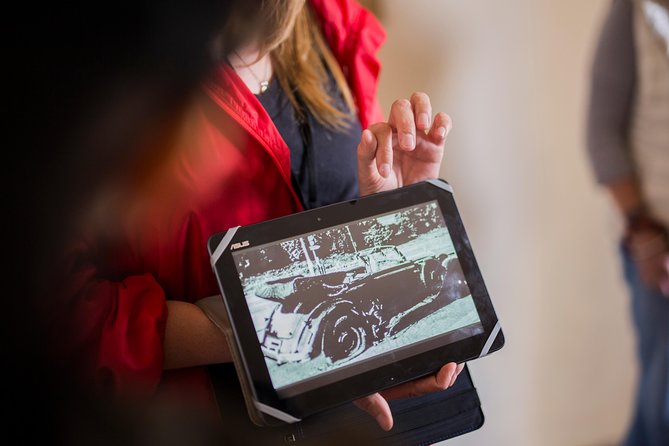
The final major stop is St. Cyril and Methodius Cathedral on Resslova Street. Admission to the church and memorial is included, and the guide enters with the group.
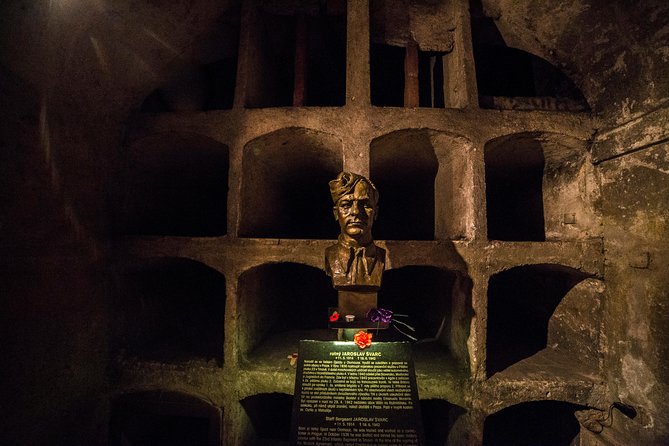
The cathedral is tied directly to the final days of the Anthropoid story. After the assassination, Czech and Slovak paratroopers and their helpers took refuge there. The crypt and related memorial spaces give you something that most of the earlier stops cannot: a preserved, enclosed place where the danger feels immediate.
The National Memorial to the Heroes of the Heydrich Terror occupies the crypt area. Here, you see where the resistance fighters paid the ultimate price. The atmosphere is sober rather than theatrical, and that restraint suits the subject.
Several guides describe the crypt as the highlight of the route. I understand why. After hours of walking through present-day Prague, you enter a place connected to a final act of resistance. The story stops being a distant sequence of political events and becomes a physical space with limited exits, gunfire, and desperate choices.
The tour ends here, at the cathedral in New Town. You are not returned to the Old Town starting point, so remember that the finish is at Resslova 9a. The location is near public transportation, making it fairly practical for your next plan.
What the three hours feel like
The advertised length is about three hours, with the listed stops ranging from three to twenty minutes. The total experience includes walking between locations, listening outdoors, viewing buildings, and visiting the church and crypt.
This is not a seated museum lecture. You need a moderate level of fitness and comfortable shoes. You may also spend several minutes standing still while traffic, weather, or city noise competes with the guide’s voice. One useful tip is to stay close enough to hear clearly, especially in the early Old Town sections.
The group can include up to 30 people. That is still more manageable than a huge city tour, but it is not a private experience. In poor weather, the group may be smaller. The tour runs in English and uses a mobile ticket.
Guides have included Daniel, Allen, Dana, Richard, Martin, Robin, Pablo, and others. The strongest common qualities are clear English, enthusiasm, detailed knowledge of Czech 20th-century history, and care with an upsetting subject. A few guides have been described as especially passionate, while one experience was criticized for a monotone delivery and too many filler words. That is worth keeping in mind: the content is strong, but the presentation can vary.
Is $33.88 good value in Prague?
At $33.88 per person, I consider this a fair price for a three-hour guided walk that includes entry to St. Cyril and Methodius Cathedral and the memorial crypt. The value comes less from the free outdoor stops and more from the guide’s ability to connect scattered locations into one clear story.
Exploring independently would cost less if you simply walked past the buildings. But you could easily miss the former safehouse, fail to understand the importance of Petschek Palace, or see the damaged Old Town Hall without knowing what happened there. The guide provides the context that turns ordinary streets into historical evidence.
The price makes the most sense if you are genuinely interested in World War II, Czech resistance, or Prague’s 20th-century history. It is less useful if you want a general sightseeing tour or a short introduction to the city.
Practical details before you go
The tour starts at 1:30 pm at Týnská 627/7 in Prague 1. The start is in central Old Town, and the finish is at St. Cyril and Methodius Cathedral in Prague 2. Hotel pickup and drop-off are not included, and food and drinks are your responsibility.
Confirmation is provided at booking. Service animals are allowed, and children must be accompanied by an adult. The subject matter makes this a poor choice for very young children, even though children six and under do not pay.
Free cancellation is available up to 24 hours before the start time for a full refund. Changes or cancellations inside that window are not accepted for a refund. The experience also requires a minimum number of participants, so a cancellation caused by low enrollment may result in another date or a full refund.
Who should book this tour?
I would choose this tour if you want Prague’s wartime story presented through real locations rather than only through museum displays. It suits history-minded visitors, people who have read about Operation Anthropoid, and anyone who wants to understand how the occupation affected Czech civilians and resistance networks.
I would skip it if you dislike long explanations, have limited walking stamina, or want a tour built around grand sights and light commentary. You should also be comfortable with painful material involving executions, torture, concentration camps, and reprisals.
Book it early if this subject is central to your Prague plans. The experience is often reserved well ahead, with bookings commonly made about 27 days before the date. Most important, arrive at the exact meeting point and allow time to find the guide. The tour may leave after a short wait, and the company does not promise a refund for a late arrival.
For the right audience, this is a worthwhile use of an afternoon. The preserved crypt gives the tour a memorable finish, while the route across Old Town and New Town shows how much of Prague’s wartime story is hidden in plain sight.
FAQ
How long does the World War II and Operation Anthropoid tour last?
The tour lasts approximately three hours, including the walking route, outdoor explanations, the cathedral visit, and the memorial crypt.
Where does the tour begin?
It begins at 1:30 pm in front of McGee’s Trips & Tickets at Týnská 627/7 in Prague 1. You should meet outside the building, not inside the shop.
Where does the tour end?
The tour ends at the Orthodox Cathedral of Saints Cyril and Methodius and the National Memorial to the Heroes of the Heydrich Terror at Resslova 9a in Prague 2.
Is entry to St. Cyril and Methodius Cathedral included?
Yes. Admission to the church and the National Memorial to the Heroes of the Heydrich Terror is included in the tour.
Is the tour offered in English?
Yes. The tour is offered in English and includes a local guide.
Is the tour suitable for children?
The tour is not recommended for small children because it covers serious World War II subjects, including executions, torture, and concentration camps. Children up to six years old are free, and children must be accompanied by an adult.
Can I cancel for a full refund?
Yes, if you cancel at least 24 hours before the experience start time. Cancellations or changes made less than 24 hours before the start time are not accepted for a refund.
Just added around Prague
- Prague Highlights 4 Hour Private Walking Tour★ 5.0 · 3 reviews
- VIP Prague Segway Tour Around Monastic Breweries★ 4.0 · 3 reviews
- Private Guided Tour from Prague to UNESCO Kutna Hora★ 5.0 · 3 reviews
- From Prague Day Unique Tour To Cesky Krumlov★ 4.5 · 3 reviews
- Cesky Krumlov: Insta-Perfect Walk with a Local★ 5.0 · 3 reviews
- Prague: WWII Tour with Local Historian SMALL GROUP★ 5.0 · 3 reviews
- Learn Traditional Czech Cooking from Authentic Family Recipes★ 5.0 · 3 reviews
- Prague Tour in Spanish★ 5.0 · 3 reviews
Terezín Memorial Day Trips, compared.
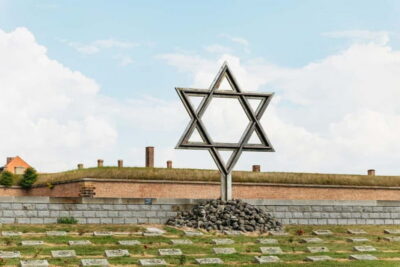
Terezin Concentration Camp Guided Tour w/ Audio
Read our review →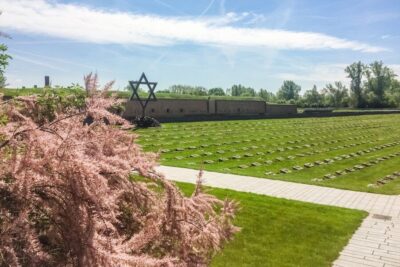
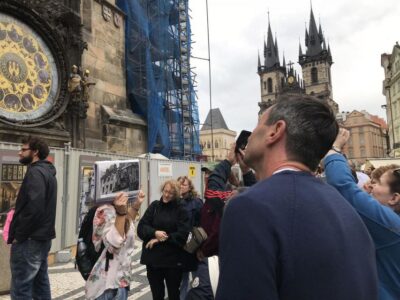
WWII Guided Tour & The Crypt of Operation Anthropoid
Read our review →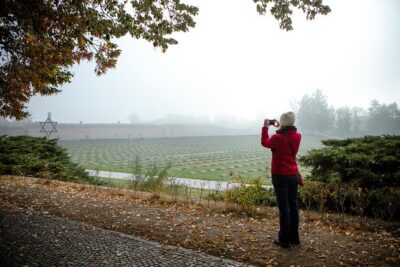
Terezin Concentration Camp Day Tour from Prague
Read our review →
WWII in Prague Tour & The Crypt of Operation Anthropoid
Read our review →
Terezin & Bohemian Switzerland from Prague: Bastei, Narnia & Café
Read our review →Browse the lists this tour appears in