
Reviewed · TEREZíN MEMORIAL DAY TRIPS
Prague Communism and World War II Walking Tour
Prague’s prettiest streets carry some of its hardest stories. This walking tour follows the city from the Nazi occupation through Soviet domination and finally to the Velvet Revolution of 1989, using squares, monuments, plaques, and ordinary streets as the classroom.
I like the clear timeline, which helps you connect the fall of democracy, wartime terror, communist rule, the 1968 invasion, and the return of freedom. I also like the local angle: guides including Tomas, Martin, Maria, and Dominick have been praised for personal stories, lively conversation, and answers that go beyond a textbook.
The main caution is that this is a history walk, not a museum tour or a specialist Operation Anthropoid visit. If you want tunnels, parachutist hideouts, or a detailed Jewish Quarter visit, this route may feel too broad. At about $30.12, it offers good value for an engaging guide, but your experience depends heavily on the guide assigned and the questions you bring.
In This Review
- Key points to know before you book
- Starting beneath the Old Town Bridge Tower
- New Town and the road from democracy to dictatorship
- Wenceslas Square and the shock of 1968
- What the local guide adds
- Walking distance, pace, and practical comfort
- Is $30.12 a fair price?
- Who will get the most from this walk?
- Should you book it?
- FAQ
- Where does the Prague Communism and World War II Walking Tour start?
- What time does the tour begin?
- How long does the walking tour last?
- What subjects does the tour cover?
- Is the tour offered in English?
- Are admission tickets, food, or drinks included?
- What happens if I need to cancel?
Key points to know before you book
- The route links three major Prague areas: Křižovnické náměstí, New Town, and Wenceslas Square.
- The focus is 20th-century political history: Nazi occupation, communism, Prague Spring, Soviet control, and 1989.
- Personal storytelling is a major strength: Tomas has shared family memories, while one guide described participating as a student demonstrator during the Velvet Revolution.
- The walk can run longer than two hours: Several tours extended by 15 minutes or more when discussion continued.
- You walk through central Prague rather than entering major attractions: Admission is free, but food, drinks, and any transport costs are not included.
- The small maximum of 25 people helps: Some departures have been private or nearly private, while larger groups may offer less time for questions.
Starting beneath the Old Town Bridge Tower
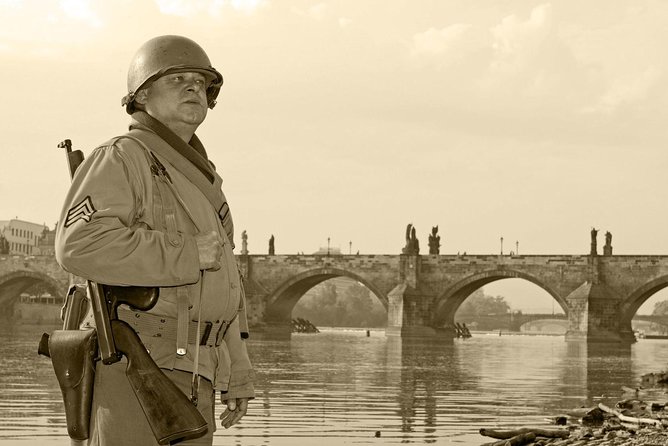
The walk begins at Křižovnické náměstí, beside the Old Town Bridge Tower in the center of Prague. This is a useful meeting point because it is easy to reach by public transport and sits close to the Charles Bridge, one of the city’s most familiar sights.
Your first view is classic Prague: across the river, Prague Castle rises above the historic center. The guide uses that view to introduce the political power of the Czech lands, then points toward the site where the enormous statue of Joseph Stalin once towered over the city. That contrast tells you what this tour does well. It uses famous sights to explain less visible chapters of Prague’s past.
The opening section lasts about 15 minutes. It is not a long history lecture, which is welcome. You get the basic setting before the walk moves into the political changes that shaped the 20th century.
You will hear how the Czech lands moved from the Austrian monarchy to an independent Czechoslovak state. The new country became one of the stronger economies of its era and, after 1933, the last functioning democracy in Central and Eastern Europe. That context matters. It shows that the Nazi takeover and later communist seizure of power did not happen in a country with no democratic tradition.
More Terezin memorial day trips:
- From Prague: Terezin Concentration Camp Guided Tour w/ Audio
★ 4.5 · 1,959 reviews - From Prague: Tour of Terezin Concentration Camp
★ 4.4 · 1,269 reviews - Prague: WWII Guided Tour & The Crypt of Operation Anthropoid
★ 4.7 · 1,030 reviews
New Town and the road from democracy to dictatorship
The New Town section is where the tour shifts from broad orientation to harder questions. You learn about the Nazi Protectorate of Bohemia and Moravia, the suffering of the Second World War, and Operation Anthropoid, the successful assassination of senior Nazi official Reinhard Heydrich.
The tour’s treatment of Operation Anthropoid is useful as part of a larger story. You hear how the wartime resistance fits into occupation, repression, and the struggle to restore Czech independence. If this operation is your main reason for booking, keep your expectations in check. The walk does not promise a dedicated visit to the parachutists’ hideouts or wartime tunnels.
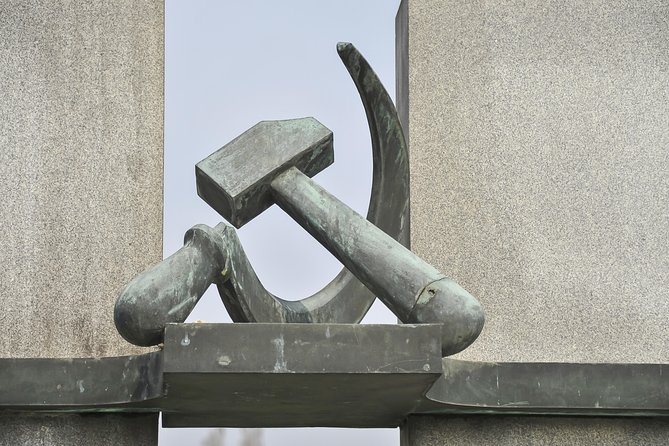
The New Town portion also explains how communism took hold after the war. The guide discusses the role of the Soviet Union, the methods used by the Communist Party, and the way a formerly democratic state became a strict dictatorship. The aim is not simply to name dates. It is to show how power changed daily life and reduced the value placed on individual freedom.
This is one of the better parts of the walk for first-time visitors who know the broad outline but want the Czech perspective. Guides have discussed childhood during communist rule, school atomic drills, and life behind the Iron Curtain. Those details can make a complicated political period easier to understand.
The presentation varies by guide. Tomas has been praised for connecting political events with his family background and memories of Prague from the 1970s onward. Martin has been described as an excellent communicator who welcomed questions. A younger guide was also praised for clear English, maturity, and the ability to handle detailed historical questions.
Wenceslas Square and the shock of 1968

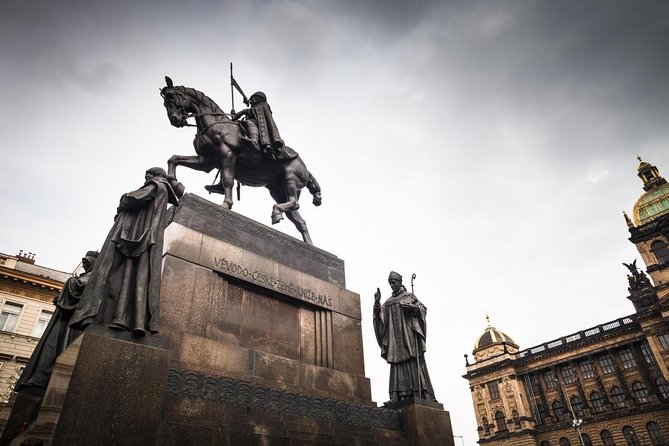
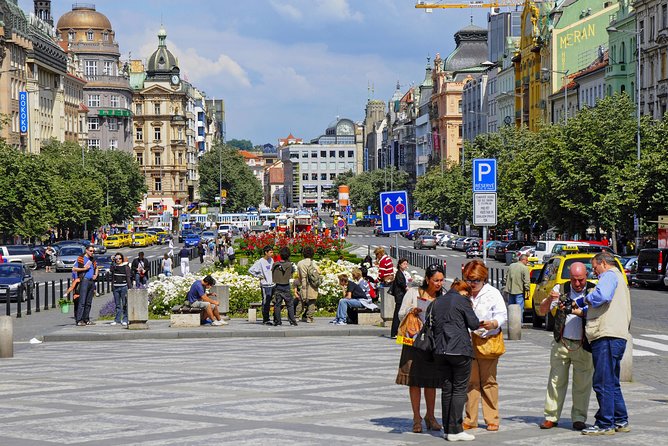
The longest part of the tour takes place around Wenceslas Square, or Václavské náměstí. You spend about an hour here and in the surrounding streets, tracing the crisis years that led from hope to repression and finally to freedom.
The square is a natural stage for this story. In 1968, the Prague Spring raised hopes for a more open form of socialism. Soviet-led forces invaded, and tanks entered Prague. The National Museum still carries the memory of that violence, including damage caused by gunfire.
The guide then explains the bleak years that followed. The period known as normalization brought tighter control, pressure on citizens, and a retreat from the freedoms promised during the Prague Spring. The tour connects the events of the 1970s and 1980s to the people and public spaces around you, so the story does not feel locked away in the past.
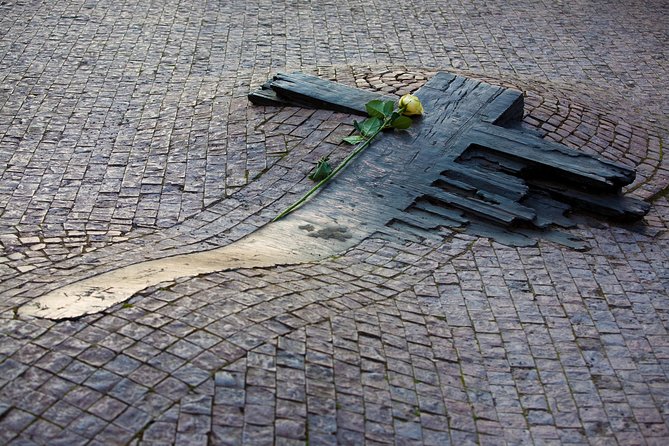
You also hear about Jan Palach and Jan Zajíc, young students who set themselves on fire in 1969 in protest against the occupation and the loss of national resolve. Their sacrifice is part of the story of Wenceslas Square, where national celebration, protest, and state force have repeatedly met.
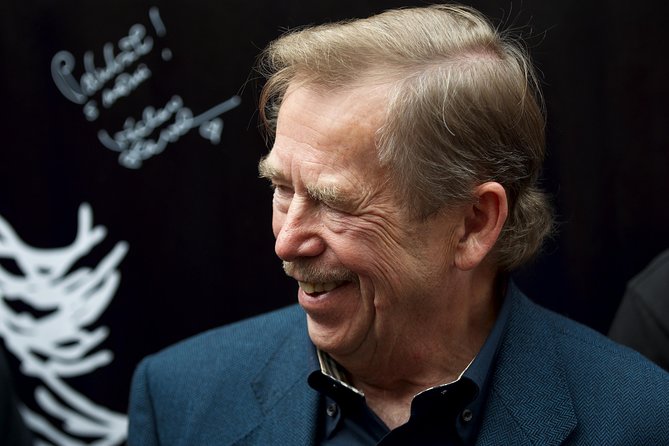
The final chapter is the Velvet Revolution. You hear about Václav Havel, student demonstrations, police violence, and the clashes on Národní třída. One guide has been described as a student demonstrator during the events of 1989, offering a first-hand account rather than a distant summary. That kind of perspective can be the emotional center of the walk.
The tour does not treat the revolution as a sudden fairy-tale ending. It follows the long buildup of frustration and courage that made the change possible. You may also get lighter, less familiar stories about the early years of freedom, which keep the final section from becoming too solemn.
What the local guide adds
A good guide is especially important on a tour about political history. Dates and names are easy to find in a book. It is harder to understand what a regime felt like in ordinary life, how people spoke in public, or why a square mattered to those who gathered there.
That local viewpoint is the tour’s strongest feature. Guides have shared stories about school drills, family life, Soviet influence, and the experience of growing up under communism. The result can feel like a conversation with someone who knows Prague as a living place rather than a collection of monuments.
Tomas has received especially warm praise for combining history, politics, and personal background. Martin has guided several departures and has been described as pleasant, clear, and generous with information. Maria has taken visitors to less familiar parts of Prague and extended a tour beyond its planned length when time and interest allowed. Dominick has handled detailed questions from visitors with a strong background in history.
Do not assume every departure will be private. The maximum is 25 people, but some outings have ended up with only two people or a single small group. That is wonderful for questions and conversation, though it is not guaranteed. If your guide is open to discussion, the walk may run beyond two hours. Allow extra time if you have another booking afterward.
More communism and Cold War tours:
- Prague: Communism History and Nuclear Bunker Guided Tour
★ 4.7 · 2,417 reviews - Prague Communism History and Nuclear Bunker Tour
★ 5.0 · 1,742 reviews - Communism & Nuclear Bunker Tour + 70s Canteen Lunch (own expense)
★ 5.0 · 1,036 reviews - Prague: Communism and Bunker Tour with 70s Canteen Lunch
★ 4.8 · 250 reviews
Walking distance, pace, and practical comfort
This is a central-city walk, but it is still a walk. One departure was described as manageable and easy to follow, while another participant advised wearing comfortable shoes. That is sensible advice, especially if you have already spent the morning on cobbled streets around the Old Town.
The listed start time is 10:00 a.m. The walk ends in central Prague, with the exact final point described broadly as Prague city center. The formal route begins at Křižovnické náměstí and continues toward New Town and Wenceslas Square. Some guide-led departures have followed a slightly different sequence, including Charles Square and the Vítkov Memorial, so the exact path may vary.
That flexibility can be a plus. A guide may adjust the route for group interest, current access, or the best way to explain the story. It also means you should not book this expecting a fixed list of indoor stops.
Admission tickets are not part of the experience because the tour is conducted outdoors. Food and drinks are also not included. Public transport is nearby, and one guide purchased tram tickets for a group, but you should not treat transport costs as included in the $30.12 price.
Children can participate when accompanied by an adult. Most people can manage the activity, but the combination of walking, uneven surfaces, and standing makes comfortable footwear a smart choice.
Is $30.12 a fair price?
At $30.12 per person, this is priced as an affordable guided walk rather than a full attraction package. You are paying for about two hours of a professional guide’s time, a planned historical route, and the chance to ask questions along the way.
The value is strongest if you want a focused introduction to Prague’s recent past. A standard sightseeing walk may explain the Charles Bridge, Old Town, and castle, but it may not show how the city experienced Nazi rule, Soviet power, and the end of communism. This tour gives those subjects the main stage.
The value is weaker if you already have a strong command of Czech and Central European history, or if you want access to museums and preserved wartime interiors. One participant felt the World War II material did not go far enough and expected more attention to the Jewish Quarter. That is a fair limitation.
You may also receive extra value if the group is small. A private-feeling walk with time for follow-up questions can make the price feel very reasonable. If the group reaches 25 people, the experience may be less personal, though the subject matter can still be worthwhile.
The tour is recommended by 93 percent of customers and carries a 4.7 rating from 28 reviews. Those figures suggest a strong overall experience, but they do not remove the main variable: the guide. The most praised feature is not a particular building. It is the guide’s ability to explain Prague through personal stories and thoughtful conversation.
Who will get the most from this walk?
I would choose this tour for history-minded visitors who want to understand modern Prague before exploring the city on their own. It works especially well early in a stay, since it gives you a political and geographic frame for places you will see later.
It also suits people who prefer conversation to a recorded audio guide. You can ask why a particular monument matters, how a political decision affected ordinary people, or what changed after 1989. Guides have also offered suggestions for local food, beer, and further sights at the end.
You may want another tour if your main interest is the Holocaust, Jewish Prague, or Operation Anthropoid. The walk touches those subjects, but it also covers the Austrian monarchy, the birth of Czechoslovakia, postwar communism, Prague Spring, normalization, and the Velvet Revolution. Its strength is the full timeline, not one narrow topic.
This is also a good match for couples, families with older children, and solo visitors who enjoy asking questions. Younger children may find two hours of political history demanding, even though children are allowed with an adult.
Should you book it?
Book this walk if you want Prague’s 20th century explained in one steady story, with real places beneath your feet and a local guide who can add personal memories. The route is central, the price is reasonable, and the small-group limit gives the experience a chance to feel personal.
Skip it if you want major indoor sights, a dedicated wartime resistance route, or a detailed Jewish Quarter tour. In that case, pair your Prague sightseeing with the Museum of Communism or a specialist World War II experience.
For most history buffs, this is a smart use of a morning. Wear good shoes, bring questions, and leave a little room in your schedule in case the conversation keeps going.
FAQ
Where does the Prague Communism and World War II Walking Tour start?
It starts at Křižovnické náměstí, beside the Old Town Bridge Tower in central Prague.
What time does the tour begin?
The scheduled start time is 10:00 a.m.
How long does the walking tour last?
The planned duration is approximately two hours. Some departures have lasted longer when guides continued discussions or answered questions.
What subjects does the tour cover?
It covers the move from the Austrian monarchy to independent Czechoslovakia, the Nazi Protectorate, World War II, Operation Anthropoid, the communist takeover, Soviet influence, the Prague Spring, the 1968 invasion, and the Velvet Revolution.
Is the tour offered in English?
Yes. The tour is offered in English.
Are admission tickets, food, or drinks included?
A professional guide is included. Food and drinks are not included, and the outdoor walking route does not include admission tickets.
What happens if I need to cancel?
You can receive a full refund if you cancel at least 24 hours before the local start time. Cancellations or changes made less than 24 hours before the start are not accepted for a refund.
More Walking Tours in Prague
- Prague: 3-Hour Walking Tour of Old Town & Prague Castle
★ 4.7 · 5,696 reviews - Prague: Ghost Walking Tour Where Legends Come To Life
★ 4.4 · 5,253 reviews - Prague: Jewish Quarter Walking Tour with Admission Tickets
★ 4.7 · 3,729 reviews - Prague Guided Walking Tour and Cruise with Authentic Czech Lunch
★ 5.0 · 3,627 reviews
Just added around Prague
- Prague Highlights 4 Hour Private Walking Tour★ 5.0 · 3 reviews
- VIP Prague Segway Tour Around Monastic Breweries★ 4.0 · 3 reviews
- Private Guided Tour from Prague to UNESCO Kutna Hora★ 5.0 · 3 reviews
- From Prague Day Unique Tour To Cesky Krumlov★ 4.5 · 3 reviews
- Prague: WWII Tour with Local Historian SMALL GROUP★ 5.0 · 3 reviews
- Cesky Krumlov: Insta-Perfect Walk with a Local★ 5.0 · 3 reviews
- Learn Traditional Czech Cooking from Authentic Family Recipes★ 5.0 · 3 reviews
- Prague Tour in Spanish★ 5.0 · 3 reviews
Terezín Memorial Day Trips, compared.
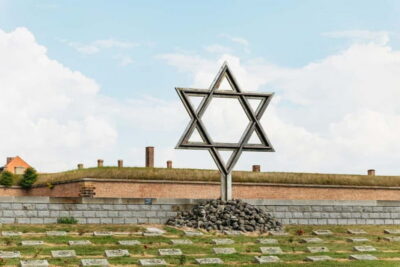
Terezin Concentration Camp Guided Tour w/ Audio
Read our review →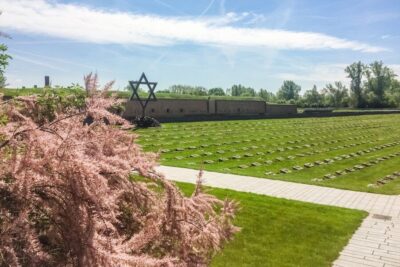
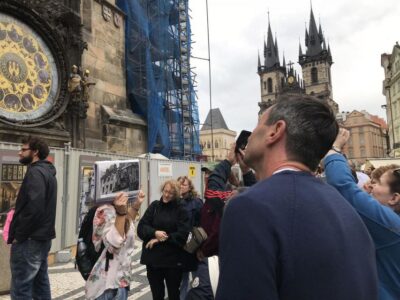
WWII Guided Tour & The Crypt of Operation Anthropoid
Read our review →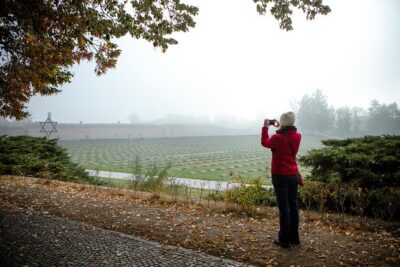
Terezin Concentration Camp Day Tour from Prague
Read our review →
WWII in Prague Tour & The Crypt of Operation Anthropoid
Read our review →
Terezin & Bohemian Switzerland from Prague: Bastei, Narnia & Café
Read our review →Browse the lists this tour appears in