
Reviewed · COMMUNISM & COLD WAR TOURS
Prague: 2-Hour Back to Communism Walking Tour
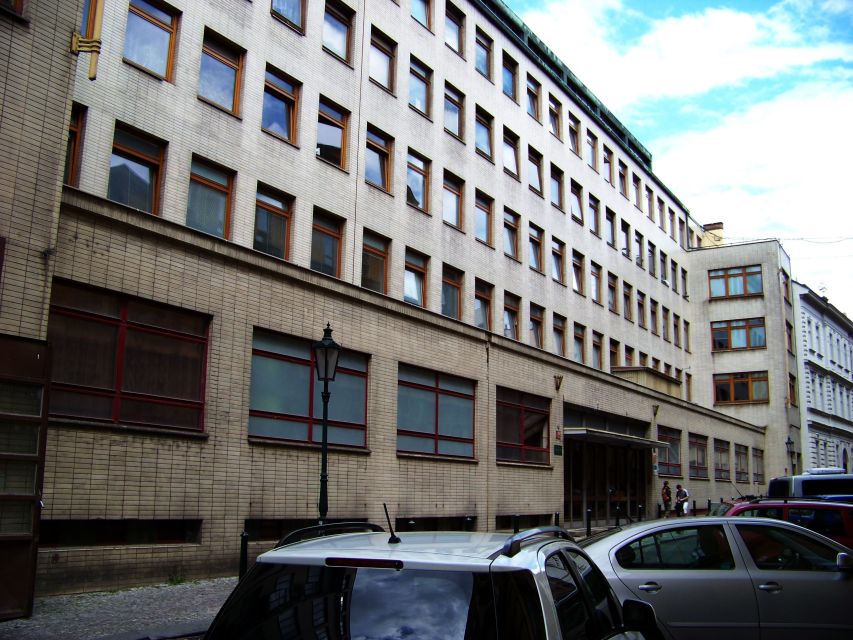
Prague’s communist past is not locked in a museum. It sits in former party offices, protest squares, police buildings, and streets where Soviet power was challenged. This walking tour brings those places together while a local guide explains how the system worked and what daily life felt like. I like the focus on firsthand local memory and the chance to ask questions as you walk. I also like that the tour covers both the theory and the human cost, rather than reducing the subject to a few dates.
The main drawback is guide consistency. Some visitors have had a highly engaging and detailed experience, while one German-language tour had weaker language skills and another guide was distracted by phone duties and illness. At about $50 per person, that matters, though an unexpectedly small group can turn the booking into a private tour at the usual group price.
In This Review
- Key points at a glance
- Why this tour gives Prague a different story
- Starting on Na Příkopě
- The former secret police headquarters
- Where Stalin’s statue once watched Prague
- Communist party offices and the machinery of power
- Protest streets, demonstrations, and revolution
- Soviet occupation and the end of an era
- What the guides add, and where the experience can slip
- Is $50 a fair price for two hours?
- Who will get the most from this walk?
- Practical advice before you go
- Should you book the Back to Communism walk?
- FAQ
- How long does the Prague Back to Communism walking tour last?
- Where does the tour start?
- Which languages are available?
- What places related to communism will I see?
- Does the guide discuss everyday life under communism?
- Can I ask questions during the tour?
- Is the walking tour wheelchair accessible?
- Can I book a private group?
- What should I bring?
- Can I cancel the booking?
Key points at a glance
- A walking lesson in Prague’s Cold War past: Visit sites tied to secret police, party power, protests, Soviet occupation, and revolution.
- Personal stories from the communist era: Local guides who lived through the period explain ordinary life, not just political theory.
- Two starting points in central Prague: Meet at either Na Příkopě 28 or Na Příkopě 864, depending on the option you book.
- A balanced look at socialism: The guide discusses claimed benefits as well as shortages, repression, fear, and limits on freedom.
- Good for questions and discussion: The format leaves room to ask about politics, family life, resistance, and the Cold War.
- Guide quality can vary: English, Czech, and German are offered, but German fluency has not been equally strong on every departure.
Why this tour gives Prague a different story
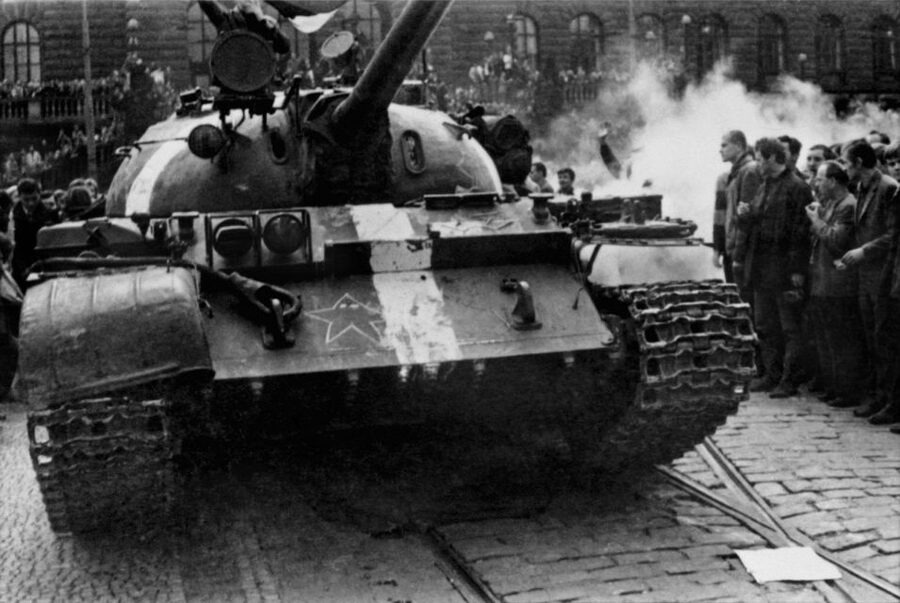
Many first visits to Prague focus on Gothic churches, grand squares, and the old royal city. This walk shifts your attention to the 20th century, when Czechoslovakia lived under a Soviet-aligned communist government and Prague became a center of political control, public protest, and eventual change.
I like that the subject is handled on foot. You are not only hearing about communism as an idea. You are looking at the places where power operated. A former secret police headquarters can say more than a page of text, especially when a guide explains what the building represented and how ordinary people related to it.
The tour begins with an introduction to socialism and communism. You hear how these ideas developed in the 19th century and how they spread across Central and Eastern Europe. That opening gives you a useful frame before the walk moves into Prague’s own story.
This matters because the word communism can mean different things in different settings. The guide focuses on the Soviet model and its effect on Europe after the Second World War. If you want a general history of every communist movement around the world, this is too narrow. If you want to understand Prague under Soviet influence, it fits much better.
More communism and Cold War tours:
- Prague: Communism History and Nuclear Bunker Guided Tour
★ 4.7 · 2,417 reviews - Prague Communism History and Nuclear Bunker Tour
★ 5.0 · 1,742 reviews - Communism & Nuclear Bunker Tour + 70s Canteen Lunch (own expense)
★ 5.0 · 1,036 reviews
Starting on Na Příkopě
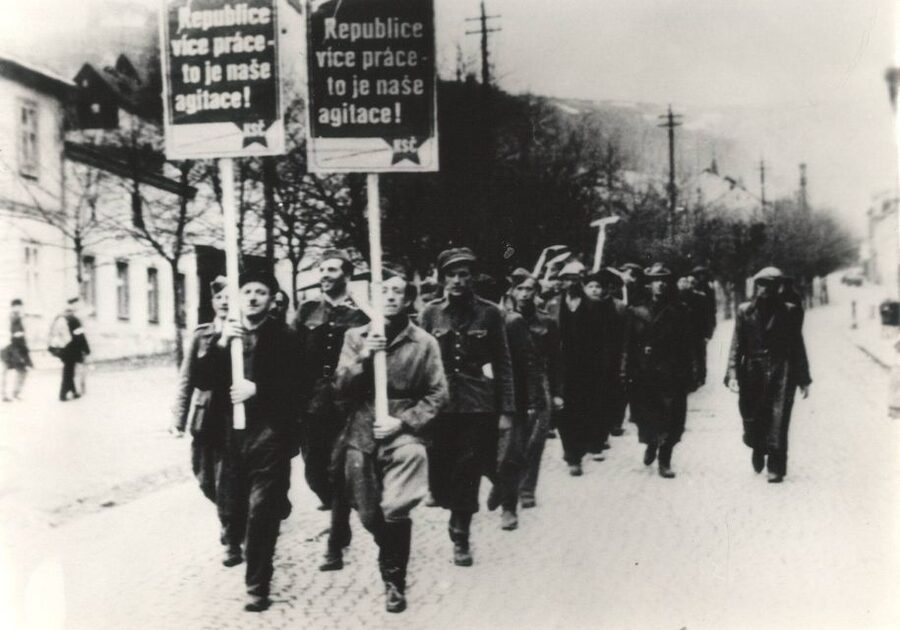
You begin at one of two possible meeting points on Na Příkopě, either number 28 or number 864. Check the exact address attached to your booking, since the meeting point can change with the option selected.
This central location is practical for a walking tour. You do not need a coach or public transport to move between the main sites. Bring a passport or ID card, and leave large luggage behind. The walk is wheelchair accessible, though you should still confirm the exact meeting arrangement if you need a particular level of access.
The stated duration is one to two hours, with the main guided walk taking about two hours. That is enough time to build a clear picture without turning the subject into an all-day lecture. You will want comfortable shoes and a little mental space for a serious topic. This is not a light sightseeing stroll with occasional political trivia.
The former secret police headquarters
One of the most important stops is the former headquarters of the communist secret police. Even without entering, the place gives the subject a physical anchor. This was not distant government policy. It was a system with offices, files, surveillance, interrogations, and people assigned to watch the population.
Your guide explains the role of the secret police within the wider government structure. The value here comes from connecting the building to daily behavior. People living under surveillance had to think carefully about what they said, who they trusted, and how openly they expressed political views.
This is also where a personal guide can add something a standard audio guide cannot. A local who lived through the period may explain how fear, caution, or silence appeared in ordinary life. The tour does not treat repression as an abstract word. It links political control to the choices people made at home, at work, and in public.
Do not expect a museum visit or a large collection of objects at this stop. The experience depends on the explanation and the setting. If you prefer indoor exhibits with documents and displays, you may want to pair this walk with a separate museum visit.
Where Stalin’s statue once watched Prague
The tour also takes you to the former site of Prague’s Stalin statue. The monument once represented Soviet power in a very direct, imposing form. Its disappearance tells its own story about changing political attitudes and the rejection of the personality cult surrounding Joseph Stalin.
The stop works best as a lesson in public space. Governments use monuments to shape what people see, remember, and accept as normal. When a huge political statue appears in a prominent place, it is not simply decoration. It tells the public who holds power and which version of the past must be honored.
Your guide places the monument within the wider story of Czechoslovakia and the Soviet Union. This helps you understand why the site mattered, even if little remains of the original structure. You are looking at absence as much as presence.
The location also helps break up the more institutional parts of the walk. After hearing about police power and party organization, you see how ideology was presented in the city itself.
More walking tours in Prague:
- Prague: 3-Hour Walking Tour of Old Town & Prague Castle
★ 4.7 · 5,696 reviews - Prague: Ghost Walking Tour Where Legends Come To Life
★ 4.4 · 5,253 reviews - Prague: Jewish Quarter Walking Tour with Admission Tickets
★ 4.7 · 3,729 reviews - Prague Guided Walking Tour and Cruise with Authentic Czech Lunch
★ 5.0 · 3,627 reviews
Communist party offices and the machinery of power
Another part of the walk covers current and former seats of the Communist Party. These locations show how political control moved through offices, committees, and official institutions. The guide discusses important personalities, dates, and turning points, giving you a basic timeline to follow.
I appreciate this part because it makes the system easier to understand. It is one thing to hear that Czechoslovakia was under communist rule. It is another to learn where the party operated and how political authority appeared in the capital.
The guide also discusses the period’s claimed advantages and disadvantages. That balance is important. A useful tour should not pretend that every person experienced the system in exactly the same way, and it should not repeat official slogans without question.
You may hear about stability, employment, education, housing, or social services alongside censorship, restricted travel, political pressure, shortages, and limited personal choice. The point is not to force you into a simple verdict. It is to help you understand why some people remember parts of the period differently, while still recognizing the larger structure of state control.
Protest streets, demonstrations, and revolution
The walk continues through places linked to protests, demonstrations, rebellions, and revolutions. Here the story shifts from institutions to public action. Prague’s streets became stages where people challenged authority, gathered in large numbers, and tested how far the government would go to suppress dissent.
Your guide connects individual events to the wider political climate. You learn about key dates and personalities, but the discussion also shows how major changes are built from smaller acts of refusal, public courage, and growing pressure.
This is one of the strongest reasons to choose the tour instead of reading a short timeline online. Streets that look ordinary today can carry a completely different meaning once you know what happened there. You begin to notice how a city can hold political memory without displaying a large sign at every corner.
The subject can be heavy. Some areas still carry a gloomy feeling connected to violence, fear, or loss. That tone is part of the experience, but it may not suit anyone looking for a cheerful introduction to Prague.
Soviet occupation and the end of an era
The Soviet occupation is a central part of the tour’s story. You learn how the occupation affected Prague and how the presence of Soviet power shaped public life after the war. The guide also places the occupation within the larger Cold War division of Europe.
The walk then moves toward the protests and revolutions that ended communist rule. You are given the political background, but the strongest moments come when the guide explains how these events were felt by people living in the city.
That local viewpoint is the tour’s main strength. A guide who lived through the era can describe more than official milestones. The discussion may cover what people could buy, how they dealt with authority, what they feared, and how they understood the changes taking place around them.
The experience does not promise a single family story or one fixed personal account. Guide quality and emphasis will vary. Still, the chance to speak with someone from the period gives the walk a human scale that a purely academic lecture often lacks.
What the guides add, and where the experience can slip
The guides speak Czech, English, or German. The best feedback points to clear explanations, unusual details, and an engaging manner that draws you into the subject. One Italian-speaking participant described the guide as especially good at bringing the history to life and explaining its many sides.
That is exactly what this tour needs. Communist-era history has plenty of names and dates, but a dry recital would make the two hours drag. You want someone who can explain why an event mattered and how it affected ordinary people.
There is also a practical warning. German-language ability has not been equally strong on every departure. If you are booking in German, make sure you are comfortable with the language level offered. One participant also had a guide who spent much of the walk dealing with organizational problems by phone, while persistent coughing affected the presentation.
Those problems appear to be exceptions rather than the whole story, but they are worth considering at this price. The guide is the experience. The buildings and locations matter, yet the interpretation creates most of the value.
A small group can work in your favor. One booking intended as a group tour became a personal tour because nobody else joined. If that happens, you may receive more room for questions and a conversation tailored to your interests. Some people prefer a larger group atmosphere, but others will see the private format as a lucky benefit.
Is $50 a fair price for two hours?
At $50 per person, this is not the cheapest way to hear about Prague’s communist past. You are paying for a professional guide, local perspective, and a route that links several significant sites in central Prague.
The value is strongest if you want conversation and interpretation. The guide can explain the differences between theory and practice, answer questions, and connect political events to ordinary life. A book or free online article may give you more dates, but it will not respond to your particular interests while you stand in the places being discussed.
The value is weaker if you only want to see monuments or take photographs. Most of the locations are viewed from public streets, and the tour’s main product is spoken explanation. You should book it for the story, not for access to interiors or a long list of included sights.
The flexible booking terms also help. You can cancel up to 24 hours before the start for a full refund, and you can reserve now and pay later. That makes it easier to fit the walk around changing Prague plans.
Who will get the most from this walk?
I would choose this tour if you want to understand Prague beyond its older architecture. It suits people interested in the Cold War, modern European politics, Soviet influence, social history, and the way large political systems affect private life.
It is also a good choice if you prefer asking questions to standing quietly in a museum. The guide welcomes discussion, so you can ask about daily routines, political leaders, protest movements, or the difference between official claims and personal experience.
Families with older teenagers may find the subject useful, though the serious material and discussion of repression may not suit young children. The walk can also work well early in a Prague visit, since it gives later sightseeing a modern political layer.
You may want to skip it if you want only architecture, food, or light city stories. It is also a less suitable choice if your main interest is communism outside the Soviet sphere. The focus is clearly Czechoslovakia, Prague, and the Soviet model in Central and Eastern Europe.
Practical advice before you go
Check your exact meeting point, since two Na Příkopě addresses are used. Carry an ID card or passport, but do not bring large bags or luggage.
Choose your language with care. English and Czech are listed alongside German, but German delivery has not been equally strong on every outing. If the subject is important to you, English may be the safer choice unless you have confirmed the German guide’s fluency.
Plan for a serious walking discussion rather than a fast sightseeing circuit. Ask questions as you go. The tour is designed to explain both the political system and ordinary life, and you will get more from it if you take part in that conversation.
The activity is wheelchair accessible, and private groups are available. The duration can be listed as one to two hours, with the guided experience generally described as about two hours, so check the current start time and length when booking.
Should you book the Back to Communism walk?
Book it if you want Prague’s 20th century explained at street level, with a local guide who can discuss both political facts and personal memory. The former secret police headquarters, Stalin’s former statue site, party offices, protest locations, and occupation-era sites give the walk a clear structure.
I would be comfortable recommending it to history-minded visitors who value a live conversation more than a polished attraction. Just keep your expectations realistic: the quality depends heavily on the guide, German delivery may vary, and the tour offers public sites rather than museum interiors.
For a two-hour introduction to Prague under communism, the experience offers a useful mix of places, context, and firsthand perspective. It is not a complete study of the subject, but it can give you the questions and background needed to understand the city with sharper eyes.
FAQ
How long does the Prague Back to Communism walking tour last?
The tour is listed as lasting one to two hours, with the guided walk described as approximately two hours. Check the available starting times when booking.
Where does the tour start?
There are two possible starting locations on Na Příkopě: Na Příkopě 28 and Na Příkopě 864. The exact meeting point depends on the option booked.
Which languages are available?
The tour is offered in Czech, English, and German.
What places related to communism will I see?
The route includes the former secret communist police headquarters, the former location of Stalin’s statue, current and former Communist Party seats, and places linked to protests, demonstrations, rebellions, revolutions, and the Soviet occupation.
Does the guide discuss everyday life under communism?
Yes. Local guides who lived through the period describe ordinary life and discuss both the advantages and disadvantages associated with the era.
Can I ask questions during the tour?
Yes. Discussion and questions are welcome during the experience.
Is the walking tour wheelchair accessible?
Yes, the activity is listed as wheelchair accessible.
Can I book a private group?
Yes, a private group option is available.
What should I bring?
Bring a passport or ID card. Large bags and luggage are not allowed.
Can I cancel the booking?
You can cancel up to 24 hours in advance for a full refund. Reserve now and pay later is also available.
More 2-Hour Experiences in Prague
- Prague: Pub Crawl with 2-Hour Open Bar at Drunken Monkey
★ 3.9 · 670 reviews - Prague Castle & Castle District: 2-Hour Guided Tour
★ 4.6 · 622 reviews - Prague Boats 2-hour Lunch Cruise
★ 4.0 · 352 reviews - 2-Hour Old Town and Jewish Quarter Tour in Prague
★ 5.0 · 310 reviews
Just added around Prague
- Prague Highlights 4 Hour Private Walking Tour★ 5.0 · 3 reviews
- VIP Prague Segway Tour Around Monastic Breweries★ 4.0 · 3 reviews
- Private Guided Tour from Prague to UNESCO Kutna Hora★ 5.0 · 3 reviews
- From Prague Day Unique Tour To Cesky Krumlov★ 4.5 · 3 reviews
- Cesky Krumlov: Insta-Perfect Walk with a Local★ 5.0 · 3 reviews
- Prague: WWII Tour with Local Historian SMALL GROUP★ 5.0 · 3 reviews
- Learn Traditional Czech Cooking from Authentic Family Recipes★ 5.0 · 3 reviews
- Prague Tour in Spanish★ 5.0 · 3 reviews
Communism & Cold War Tours, compared.
Communism History and Nuclear Bunker Guided Tour
Read our review →
Prague Communism History and Nuclear Bunker Tour
Read our review →
Communism & Nuclear Bunker Tour + 70s Canteen Lunch (own expense)
Read our review →
Communism and Bunker Tour with 70s Canteen Lunch
Read our review →
Second World War & Communism (Tip-based 3 hour tour)
Read our review →Browse the lists this tour appears in