
Reviewed · COMMUNISM & COLD WAR TOURS
Prague Cold War Walking Tour
Prague’s Communist past comes into sharp focus on this three-hour walk, which connects Klement Gottwald’s former mausoleum, Cold War bomb-shelter corridors, Stalin’s vanished monument, and the sites of the Velvet Revolution. This is not a quick parade of old buildings. The route asks how propaganda, Czech nationalism, fear, and public protest shaped everyday life.
I like the small maximum group of eight, which gives a historian room to answer questions instead of delivering a fixed speech. I also like the unusual route, especially the former embalming laboratory and the locked shelter doors in the Karlin-Zizkov tunnel. The main drawback is the steep 20 to 30 minute climb to Vitkov Hill, so you should consider the private city-center version if hills are difficult for you.
In This Review
- Key points to know before booking
- Why this Prague Cold War tour is different
- Starting near central Prague
- Cold War shelter doors in the Karlin-Zizkov tunnel
- The climb to Vitkov Hill and the National Monument
- A look at the Zizkov Television Tower
- Wenceslas Square, from royal foundation to mass protest
- The upside-down Wenceslas statue
- The John Lennon Wall and political protest
- Reading the city through its political buildings
- A historian-led discussion with room for questions
- Time, transport, and physical demands
- Who will get the most from this experience?
- Is $126.43 a fair price?
- Should you book the Prague Cold War Walking Tour?
- FAQ
- How long does the Prague Cold War Walking Tour last?
- What time does the tour start?
- How many people can join the tour?
- Is the tour offered in English?
- Are tram tickets included?
- Is the Vitkov Hill climb difficult?
Key points to know before booking
- Gottwald’s former mausoleum: See the place where the mummified Communist leader Klement Gottwald was displayed, along with the adjoining embalming laboratory.
- A serious history lesson: Discuss Communist Party propaganda, the 1948 takeover, Czech nationalism, the Prague Spring, and the Velvet Revolution.
- Vitkov Hill climb: Reach the National Monument by a steep uphill route that takes about 20 to 30 minutes.
- Small-group format: The group is limited to eight people, and the tour is offered in English with a historian guide.
- Tram tickets included: Public transport is part of the tour, while food, drinks, and hotel transfers are not.
- Strong guide potential: Vadim is specifically praised for leading a sophisticated, thoughtful discussion of Communism in the Czech lands.
Why this Prague Cold War tour is different
Many Prague history walks focus on the medieval center, the castle, or the Second World War. This one looks at the period after 1948, when the Communist Party took power and Czechoslovakia became part of the Soviet-led political bloc.
The route is useful because it does not treat Communism as a single block of time. You move between symbols of official power, places tied to military memory, public squares, and sites of protest. That mix helps you see the tension between the government’s public message and the private reality behind it.
You will not simply hear that propaganda mattered. You will see the settings built to support it, including the Hall of the Red Army and the former mausoleum of Gottwald. You will also visit places where people later challenged that system, including the John Lennon Wall and Wenceslas Square.
The experience costs $126.43 per person, which is a substantial price for a three-hour walk. The value depends on what you want from Prague. If you only want a general introduction to the city, this is too specialized and costly. If you want a focused history lesson with access to sites most ordinary sightseeing tours skip, the small group and specialist guide make the price easier to justify.
More communism and Cold War tours:
- Prague: Communism History and Nuclear Bunker Guided Tour
★ 4.7 · 2,417 reviews - Prague Communism History and Nuclear Bunker Tour
★ 5.0 · 1,742 reviews - Communism & Nuclear Bunker Tour + 70s Canteen Lunch (own expense)
★ 5.0 · 1,036 reviews
Starting near central Prague
The published meeting information gives Náměstí Republiky 1077/2 in Prague 1, while the tour description identifies St. Joseph Church as the starting point. Since those details do not match exactly, confirm the precise meeting spot when your booking is confirmed.
The listed afternoon departure is 2:00 pm, and morning departures may also be available if requested at booking. Give yourself enough time to arrive early. The tour uses walking and trams, so you should wear comfortable shoes and dress for changing weather.
The route requires a moderate level of fitness. The major physical challenge comes later at Vitkov Hill, but you will also spend much of the three hours on your feet. Food and drinks are not included, and there is no hotel pickup or drop-off.
Cold War shelter doors in the Karlin-Zizkov tunnel
The first stop is a pedestrian tunnel linking Karlin and Zizkov. It takes only about ten minutes, but it sets the tone well.
Look for the locked doors leading into nuclear bomb-shelter corridors built during the Cold War. The corridors are still maintained, which gives the subject a practical edge. This was not only a period of speeches and statues. Authorities also planned for nuclear conflict and expected ordinary people to use protected underground spaces.
You do not enter the shelter corridors, and admission is free. The value here comes from seeing the doors in their real setting while the guide explains what they represent. It is a short stop, but it makes the Cold War feel less like a distant chapter in a textbook.
The climb to Vitkov Hill and the National Monument
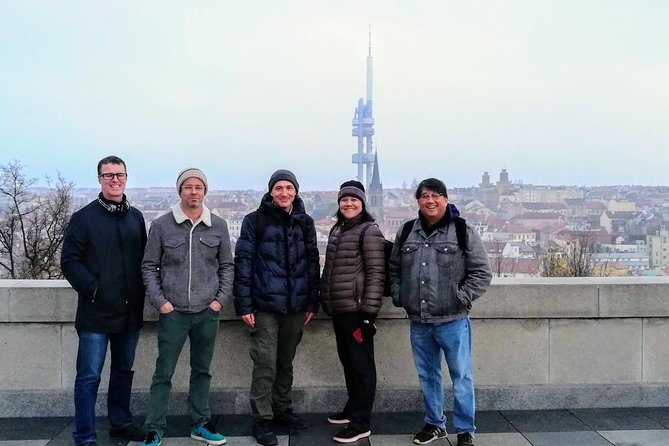
Vitkov Hill is the tour’s longest stop, lasting about an hour. It is also the part that requires the most effort.
The uphill climb takes roughly 20 to 30 minutes. For anyone with knee, heart, or mobility concerns, this is important. The tour provider recommends a private alternative that leaves out Vitkov Hill and concentrates on Cold War sites in central Prague. That option costs more in principle because it is private, but it may be the better choice if the climb would make the rest of the tour unpleasant.
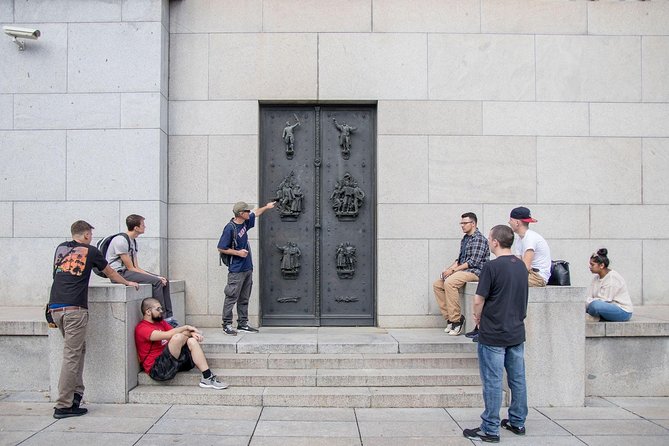
At the top, the National Monument brings together several layers of Czech and Slovak political memory. It commemorates Czech and Slovak warriors of the First World War, but the Communist era gave parts of the monument a different role. You visit the Hall of the Soviet Soldier and discuss the way the state used military memory and national identity for political purposes.
This is where the tour’s history becomes more subtle. Communist rule in Czechoslovakia was tied closely to Moscow, yet it also needed to speak in local national terms. The guide explains how Czech nationalism fit into Communist politics, rather than presenting the country as a passive copy of the Soviet Union.
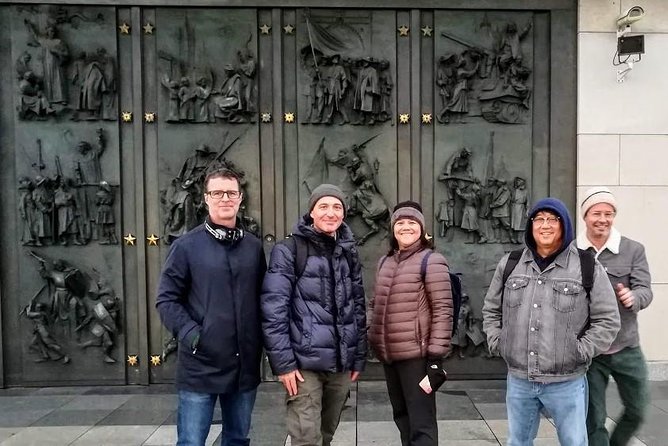
The former mausoleum of Klement Gottwald is the most unusual part of the stop. Gottwald was the first chairman of the Communist Party of Czechoslovakia and later its general secretary and chairman. His mummified body was displayed here in a carefully managed political ritual.
The adjoining laboratory, where his body was embalmed, adds an unsettling practical detail. It shows the lengths to which political leaders could be turned into symbols. The body was not simply buried and remembered. It was placed on public display, in a setting designed to support the image of an enduring Communist leader.
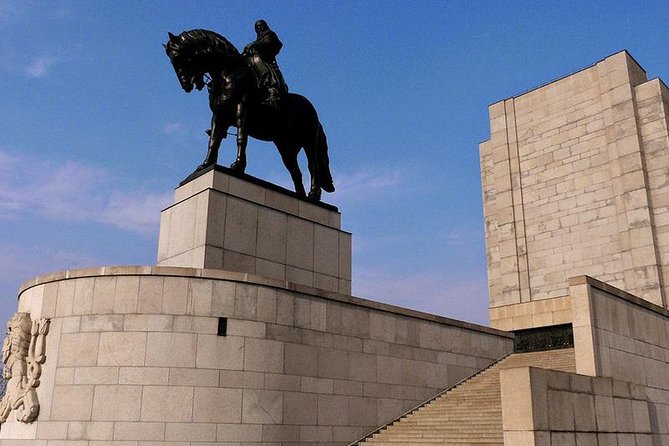
You also see the monument to Jan Zizka, a huge bronze equestrian statue. It is described as the third-largest bronze equestrian statue in the world. The statue gives the hill a powerful visual focus, while the guide uses it to explain the role of military heroes and national stories in Communist public life.
The National Monument requires an admission ticket, which is not included in the tour price. Ask your guide how the visit is handled on your date, since the supplied details identify admission as separate.
More walking tours in Prague:
- Prague: 3-Hour Walking Tour of Old Town & Prague Castle
★ 4.7 · 5,696 reviews - Prague: Ghost Walking Tour Where Legends Come To Life
★ 4.4 · 5,253 reviews - Prague: Jewish Quarter Walking Tour with Admission Tickets
★ 4.7 · 3,729 reviews - Prague Guided Walking Tour and Cruise with Authentic Czech Lunch
★ 5.0 · 3,627 reviews
A look at the Zizkov Television Tower
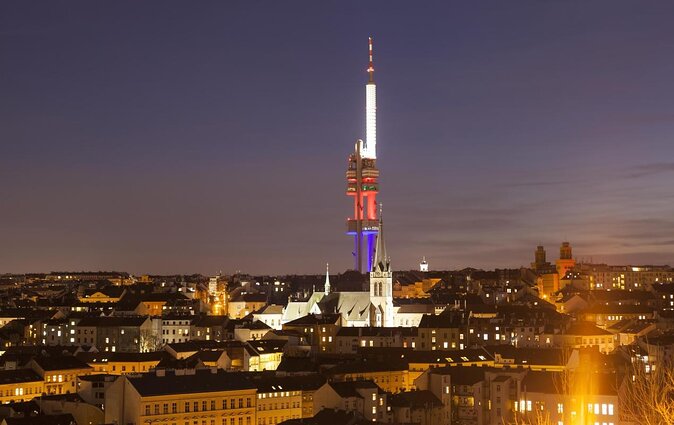
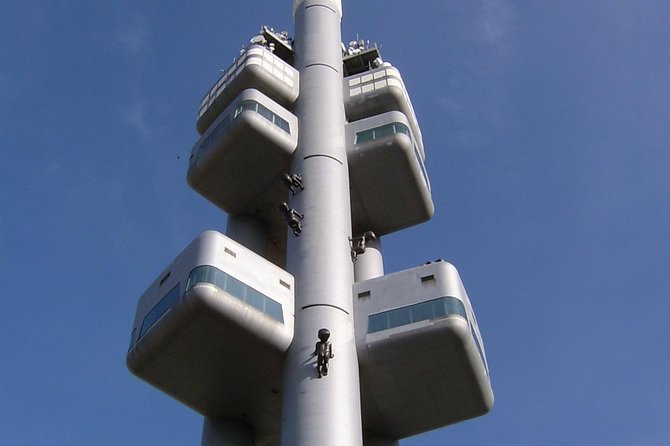
The stop at the Zizkov Television Tower is brief, about five minutes, and admission is free. The point is not to tour the tower. You get one of the best views of its Brutalist design.
The tower is a useful change of pace after the monument. Its stark concrete-and-metal appearance reflects the visual language of Communist-era public architecture, even though the building also belongs to Prague’s later twentieth-century development.
Do not expect a long photo stop or an interior visit here. You are taking in the tower from outside and hearing why its form matters. If you enjoy architecture, this short pause will be more rewarding than it is for someone interested only in political events.
Wenceslas Square, from royal foundation to mass protest
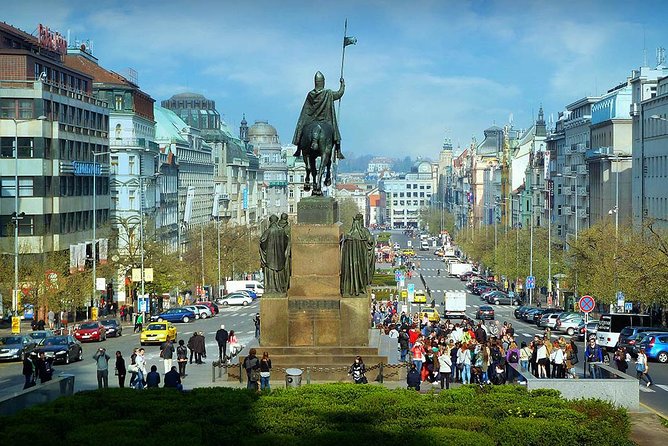
The tour then reaches Wenceslas Square for about 20 minutes. This is one of Prague’s most important public spaces, and the guide places its modern political meaning within a much longer story.
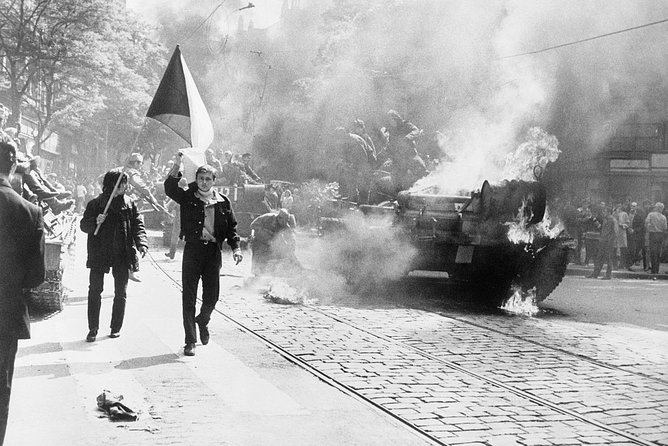
The square was founded in the fourteenth century. Over time, it served as a setting for military parades, public gatherings, and demonstrations. During the Communist period, occupying powers used it for displays of authority. The same space later became central to the Prague Spring and the Velvet Revolution.
The stop helps you connect official power with public reaction. A military parade can project control, but a crowd gathering in the same place can challenge that message. The guide discusses the tragic events of the Prague Spring and the excitement that followed during the Velvet Revolution.
The Velvet Revolution began in 1989, when public protest helped bring Communist rule to an end in Czechoslovakia. The tour treats it as more than a happy final chapter. You consider how quickly political change could spread, and how the events still echo in the Czech Republic today.
The upside-down Wenceslas statue
Near the end, you see the upside-down statue of King Wenceslas riding a dead horse. The stop lasts about five minutes.
This ironic sculpture invites a different sort of discussion. It is not a monument from the Communist period itself, but it comments on power, national symbols, and Central European politics. The image of a familiar national figure placed in an absurd position asks you to question how public symbols are used and who gets to define their meaning.
Because the stop is short, the guide has to keep the explanation focused. It works best as a final prompt rather than a major attraction. By this point, you have already seen how statues, squares, monuments, and buildings can carry political messages. The sculpture gives that idea a sharp, modern twist.
The John Lennon Wall and political protest
The route includes the John Lennon Wall, an important site of political protest. It offers a contrast to the formal monuments at Vitkov Hill.
The wall became associated with messages of peace, freedom, and opposition to Communist control. Its importance lies in the fact that protest appeared through informal writing and art rather than official speeches or organized state ceremonies.
You will not get the same type of historical evidence here as at the former mausoleum or the National Monument. The wall is more symbolic and public-facing. Still, it helps explain how dissent could appear in everyday spaces, especially when direct political opposition was restricted.
The guide’s job is especially important at this stop. Without context, the wall can look like a colorful urban attraction. With the political background, it becomes part of the story of how people expressed ideas that official institutions did not welcome.
Reading the city through its political buildings
The route also passes the National Assembly building, which served as the seat of the Communist government. This is another brief but useful connection between architecture and power.
A government building can look ordinary when you pass it alone. On this tour, you see it as part of a network of institutions that controlled public life. The building becomes a prompt to discuss who made decisions, how the Communist Party operated, and how political authority was presented to the public.
The tour does not seem designed to overwhelm you with dates. Its strength is the way the guide links physical places to political ideas. A monument, a parliament building, a shelter door, and a public square each reveal a different part of the system.
A historian-led discussion with room for questions
The tour is conducted in English by a historian, and the group maximum is eight. That matters more here than it would on a simple sightseeing walk.
Communist history can raise difficult questions about ideology, national identity, public fear, resistance, and memory. A large group would make it hard to pause when something catches your interest. With a small group, you have a better chance to ask about a specific monument, the Prague Spring, or the role of the Communist Party in Czech political life.
Vadim is one named guide associated with the experience. His approach is praised for providing a sophisticated, intellectual discussion of Communism in the Czech lands. That description fits the kind of visitor this tour should suit: someone who wants causes, consequences, and competing viewpoints, not just a list of dates.
Guide quality always affects a walking tour, so the historian format is a real part of the value. The tour is best when you treat it as a conversation with a specialist. If you prefer a light, fast-moving introduction with lots of postcard views, the subject matter and pace may feel too serious.
Time, transport, and physical demands
The tour lasts about three hours. That is enough time to cover a broad route, but not enough to spend long inside every location. The stops range from five minutes at the television tower and upside-down statue to about an hour at the National Monument.
Tram tickets are included, which keeps the route practical and avoids an extra transport cost. You should still expect substantial walking. The steep ascent to Vitkov Hill is the key issue, and the tour provider specifically advises choosing a private route without the hill if climbing is difficult.
The tour is offered in English. Group discounts may be available, and you can request a morning or afternoon departure. Confirmation is sent within 48 hours, subject to availability, so avoid making tight same-day plans around an unconfirmed booking.
Free cancellation is available if you cancel at least 24 hours before the start time. Changes or cancellations made later are not accepted for a refund.
Who will get the most from this experience?
I would choose this tour if you have already seen Prague’s main medieval sights and want to understand the city’s twentieth-century political life. It also suits history students, architecture fans, and anyone interested in how public spaces are used to shape memory.
You should be comfortable walking for three hours and climbing a steep hill. The tour is not a good fit if you need frequent seated breaks, want to avoid serious political subjects, or are mainly looking for interior sightseeing.
Families with older children may find the monuments and shelter doors memorable, but the discussion is intellectual rather than designed as a children’s activity. The small group is also useful for visitors who want to ask questions without speaking in front of a large crowd.
Is $126.43 a fair price?
At $126.43 per person, this is not a budget walk. You are paying for a specialist subject, a historian guide, a group of no more than eight, tram tickets, and a carefully connected route through less familiar parts of Prague.
The price makes more sense if you value interpretation. The former mausoleum, embalming laboratory, and shelter corridors are not the sort of places most first-time sightseeing routes explain in detail. You are also getting a framework for understanding why Wenceslas Square and the John Lennon Wall matter.
If you only want to see the outside of the Zizkov Television Tower, Wenceslas Square, and a few monuments, you can visit those areas independently for far less. The tour earns its cost through the guide’s explanations and the way the sites fit together.
Should you book the Prague Cold War Walking Tour?
Book it if you want a focused, serious look at Prague after 1948, especially if the former Gottwald mausoleum, Communist propaganda, the Velvet Revolution, and public protest interest you. The eight-person limit and historian-led format are major advantages, and Vadim’s thoughtful style is a strong reason to request him if guide choice is possible.
Think twice if the Vitkov climb is a problem or if you want a broad introduction to Prague. Confirm the exact starting point, ask about the departure time you want, and decide if the private city-center option would suit your fitness level better.
For the right visitor, this tour adds the political layer that many Prague itineraries miss. It leaves you looking at statues, squares, and government buildings with a sharper sense of what they were meant to say, and what people later tried to say back.
FAQ
How long does the Prague Cold War Walking Tour last?
The tour lasts approximately three hours.
What time does the tour start?
The listed start time is 2:00 pm. Morning and afternoon departures may be available, so request your preferred time when booking.
How many people can join the tour?
The maximum group size is eight people.
Is the tour offered in English?
Yes. The tour is offered in English and led by a historian guide.
Are tram tickets included?
Yes. Tram tickets are included. Food, drinks, and hotel pickup and drop-off are not included.
Is the Vitkov Hill climb difficult?
The route includes a steep 20 to 30 minute climb to the Vitkov Hill monument. If climbing is difficult for you, a private city-center tour that leaves out Vitkov Hill is recommended.
Just added around Prague
- Prague Highlights 4 Hour Private Walking Tour★ 5.0 · 3 reviews
- VIP Prague Segway Tour Around Monastic Breweries★ 4.0 · 3 reviews
- Private Guided Tour from Prague to UNESCO Kutna Hora★ 5.0 · 3 reviews
- From Prague Day Unique Tour To Cesky Krumlov★ 4.5 · 3 reviews
- Cesky Krumlov: Insta-Perfect Walk with a Local★ 5.0 · 3 reviews
- Prague: WWII Tour with Local Historian SMALL GROUP★ 5.0 · 3 reviews
- Learn Traditional Czech Cooking from Authentic Family Recipes★ 5.0 · 3 reviews
- Prague Tour in Spanish★ 5.0 · 3 reviews
Communism & Cold War Tours, compared.
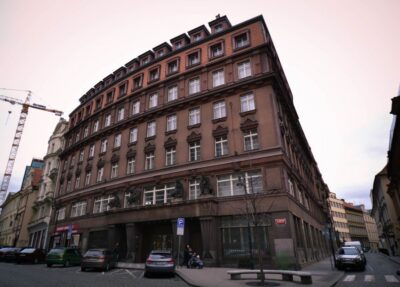
Communism History and Nuclear Bunker Guided Tour
Read our review →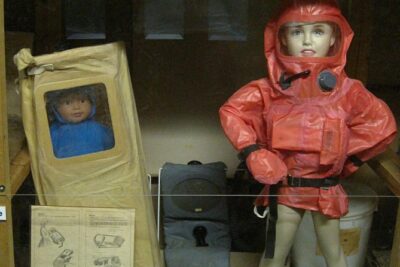
Prague Communism History and Nuclear Bunker Tour
Read our review →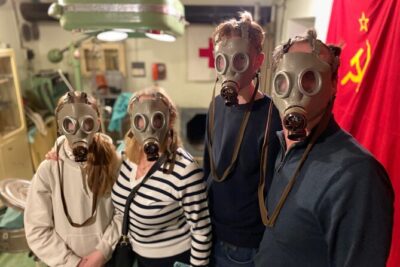
Communism & Nuclear Bunker Tour + 70s Canteen Lunch (own expense)
Read our review →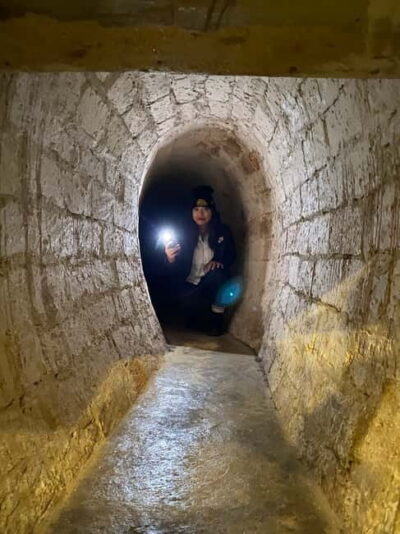
Communism and Bunker Tour with 70s Canteen Lunch
Read our review →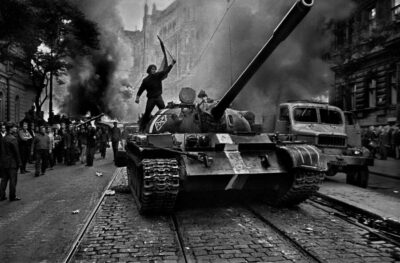
Second World War & Communism (Tip-based 3 hour tour)
Read our review →Browse the lists this tour appears in