
Reviewed · COMMUNISM & COLD WAR TOURS
Prague Private Tour and Museum of Communism with transfer
Prague’s communist past becomes far more human when a local guide connects museum displays with places such as Wenceslas Square, Národní třída, and Letná Park. I like the private Mercedes transfer, which saves time and makes it easier to reach scattered sites, and I like the chance to hear personal memories from guides such as Iva, Hanna, or Pavel. The museum admission is included, too.
The main drawback is the price: at $221.60 per person, this is a splurge, especially for a solo traveler or couple. You should also expect a moderate amount of walking, and the exact balance between driving and walking depends on your interests and the guide’s plan.
In This Review
- Key points to know before booking
- Why this private Prague history tour works
- Hotel pickup and the Mercedes transfer
- The Museum of Communism: daily life behind the slogans
- Albertov and the first steps toward the Velvet Revolution
- Wenceslas Square and the bullet marks of 1968
- Národní třída and the violence that changed public opinion
- Letná Park and the empty base of Stalin’s monument
- How much control do you really have?
- Is $221.60 per person a fair price?
- Who should book this experience?
- My recommendation
- FAQ
- How long does the private Prague communist history tour last?
- Is hotel pickup included?
- Where does the tour end?
- Is Museum of Communism admission included?
- Is transportation private?
- Which places are visited?
- Can I request special interests?
- Is food included?
- Can I cancel for a full refund?
Key points to know before booking
- Personal stories give the museum extra weight: Guides such as Iva, Hanna, and Pavel have spoken about life under communism and the political changes of the last several decades.
- The route links museum displays to real places: You visit Wenceslas Square, Národní třída, Albertov, and Letná Park.
- Private transport saves valuable time: A Mercedes and driver handle hotel pickup, transfers, and the return to your hotel or another central location.
- You can shape the tour: Mention interests such as World War II sites, architecture, or Prague’s political history when booking.
- The museum is not just about leaders and dates: Expect exhibits on school, work, propaganda, censorship, the secret police, courts, and daily life.
- The tour works best for history-minded visitors: It offers context that is difficult to gather from a quick museum visit or a self-guided walk.
Why this private Prague history tour works
Communist-era Prague is not contained in one neighborhood. Important locations are spread across the city, and their meaning can be easy to miss if you pass by in a taxi or on foot. This tour brings the pieces together: a museum covering the years from the February 1948 communist takeover to the Velvet Revolution in 1989, followed by streets and squares where those events played out.
I like that the experience is not limited to a standard city-center walk. Albertov, Wenceslas Square, Národní třída, and Letná Park each tell a different part of the story. You see where demonstrations began, where Soviet tanks arrived, where police violence helped spark public anger, and where a giant Stalin statue once watched over Prague.
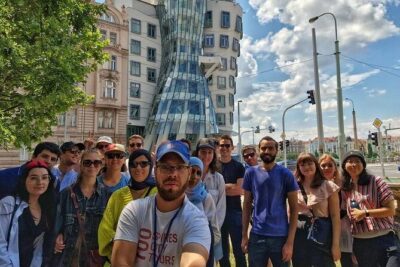
The private format is important here. You travel only with your own group, and you can ask questions without waiting for a large tour group to catch up. The guide can also adjust the route. One family used extra time to visit the memorial connected with the assassination of Reinhard Heydrich, the Church of Saints Cyril and Methodius, the Dancing House, and the television tower. Those additions are not guaranteed, but they show why it helps to share your interests before the tour begins.
More communism and Cold War tours:
- Prague: Communism History and Nuclear Bunker Guided Tour
★ 4.7 · 2,417 reviews - Prague Communism History and Nuclear Bunker Tour
★ 5.0 · 1,742 reviews - Communism & Nuclear Bunker Tour + 70s Canteen Lunch (own expense)
★ 5.0 · 1,036 reviews
Hotel pickup and the Mercedes transfer
Your guide collects you from your Prague hotel lobby or another agreed location. A private Mercedes vehicle and driver then take you to the Museum of Communism, with bottled water provided in the car.
This arrangement is especially useful if you are staying outside the immediate historic center, traveling with older family members, or trying to fit several sights into one morning. Prague’s public transport is good, but switching between distant sites still takes time. Here, you can use the drive to ask questions or simply watch the city pass by.
The driver is part of the experience, not just a person behind the wheel. Piotr and Petr have been praised for being helpful and flexible, and one family appreciated being dropped near the main square instead of returning directly to the hotel. That kind of small adjustment can make a four-hour tour fit better into the rest of your day.
The vehicle does not eliminate walking. Wear comfortable shoes, since the route includes several outdoor stops and a city walk. The tour operates in all weather, so bring suitable clothing and be ready for Prague’s changeable conditions.
The Museum of Communism: daily life behind the slogans
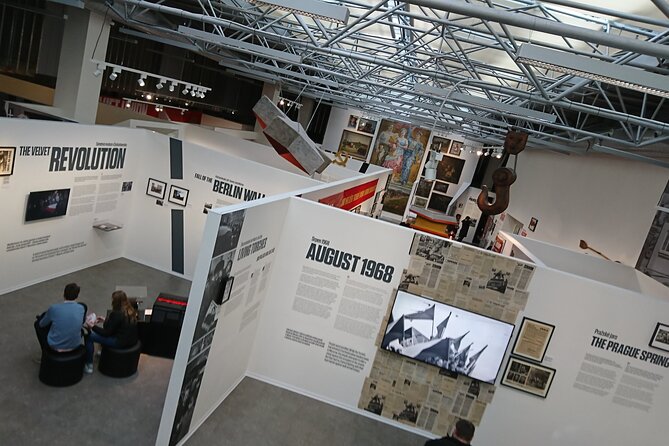
The museum visit lasts about one hour, and admission is included. Skip-the-line entry saves a little time, though the larger benefit is having a guide explain what you are seeing instead of moving through the displays alone.
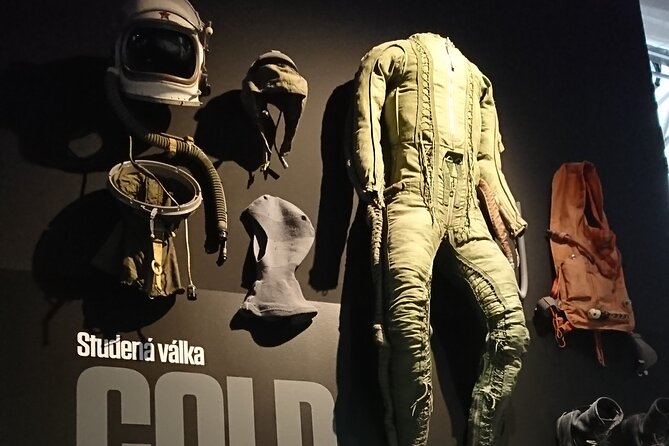
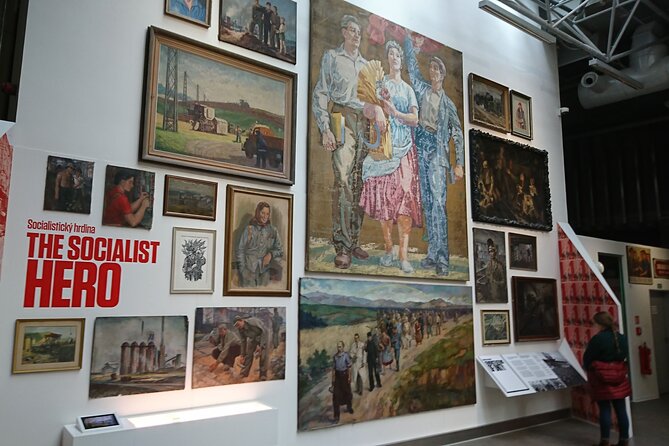
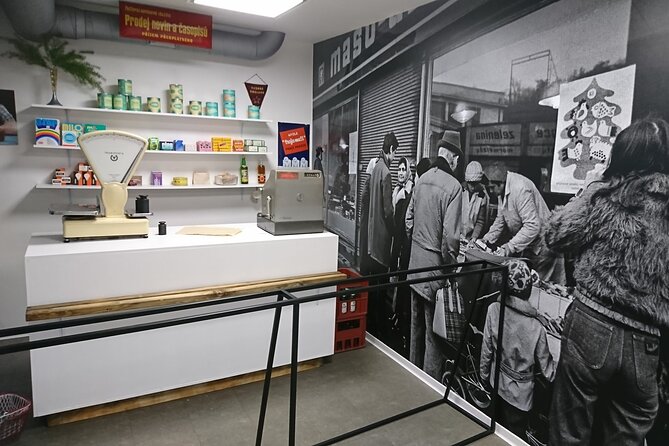
The museum covers communist Czechoslovakia from 1948 through 1989. Its focus includes political control, economics, education, sports, art, media propaganda, censorship, the army, the police, the secret police known as the StB, political courts, show trials, and labor camps during the Stalinist period.
What makes the visit useful is its attention to ordinary life. Re-created spaces include a communist-era classroom, factory, and interrogation room. These settings help you picture how the system reached beyond government offices and into school, work, family life, and public speech.
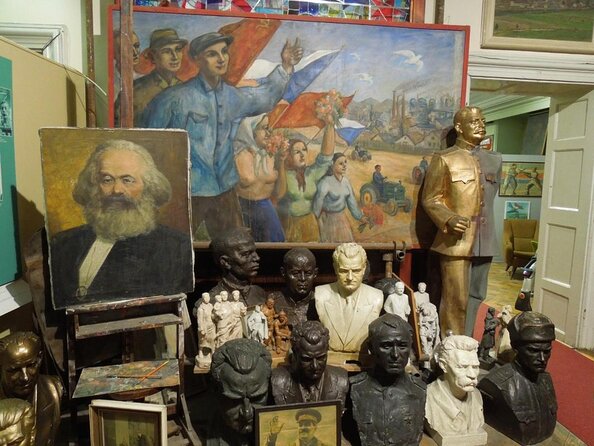
I would pay particular attention to the sections on Socialist Realism and propaganda. They explain how art and media were used to present an approved version of society, while censorship and surveillance limited what people could say or publish. The interrogation room and material on the StB give the repression a more direct, personal edge.
A museum visit alone can leave you with many dates but little sense of how people experienced them. That is where the guide matters. Iva, Hanna, and Pavel have each been described as local educators or storytellers with personal family connections to the communist period. A guide who lived through part of that era can explain not only what happened, but how the system felt in daily life.
Keep in mind that one hour is enough for an introduction, not every display in detail. If modern Czech history is your main reason for visiting Prague, you may wish you had longer inside. The private guide helps by directing your attention to the most relevant material and answering questions as you go.
Albertov and the first steps toward the Velvet Revolution
Albertov is a brief stop of about 10 minutes. It is associated with the peaceful student demonstrations that began the Velvet Revolution in 1989.
The stop is short, but it gives the later sites a clear starting point. The Velvet Revolution was not simply a single rally in a famous square. Student action, public anger, and police violence built into a movement that eventually ended communist rule.
You will not spend a long time here, so consider Albertov a context-setting stop rather than a major sightseeing visit. Its value comes from the explanation, especially if your guide links it to the events that follow at Národní třída and Wenceslas Square.
A few more Prague half-days to weigh up
- Prague Airport Private Arrival Transfer
★ 4.5 · 991 reviews - UNESCO Cesky Krumlov from Prague with Guided Tour and Transfer
★ 4.0 · 812 reviews - Prague Airport Private Departure Transfer
★ 4.5 · 780 reviews - Prague: Shared Group/Private Segway Tour with Hotel Transfer
★ 4.8 · 574 reviews
Wenceslas Square and the bullet marks of 1968
Wenceslas Square receives about 30 minutes, making it one of the main outdoor stops. This broad city-center space has witnessed several defining events in Czech history.
During the Prague Spring in 1968, Soviet armored units clashed with people in the square. The National Museum still preserves bullet holes in its walls from the occupation. Your guide can point out these marks and explain why they remain visible after the building’s renovation.
The square also became a center of protest in November 1989. A demonstration against police brutality helped trigger the Velvet Revolution and the eventual fall of communism. Today, the square is lined with hotels, restaurants, clubs, and shops, so it can look like an ordinary commercial center. Knowing what happened here changes the way you see it.
The equestrian statue of St. Wenceslas anchors the upper end of the square. The statue was erected in 1912, long before the communist period, but it has watched over many later gatherings. Your guide may also point out the Jalta Hotel, where the StB secretly listened in on foreign diplomats and businesspeople staying there.
This is a strong example of why a guided walk earns its place in the tour. Without context, you might notice the museum, statue, and busy shops, but miss the preserved evidence and the former surveillance activity nearby.
Národní třída and the violence that changed public opinion
At Národní třída, you spend about 20 minutes near the memorial often described as hands reaching from a wall. This location is tied to one of the most brutal moments of the Velvet Revolution.
Police blocked the side streets and created a narrow passage. Demonstrators trying to leave had to pass through the cordon and were beaten. The violence helped turn public frustration into a much larger challenge to the communist government.
The memorial is easy to pass without understanding its meaning. I appreciate that the tour gives you time to stop, look, and connect the site with the broader sequence of events. The location is also central and easy to continue from if you choose to remain in the city after the tour.
The outdoor stops are not museum-like presentations. Street noise, traffic, and crowds may compete with the guide’s explanation. Stay close enough to hear, and ask the guide to repeat anything lost in the noise.
Letná Park and the empty base of Stalin’s monument
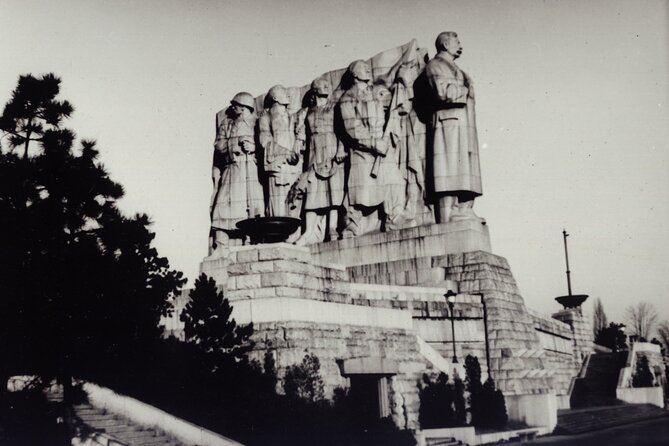
Letná Park provides about 30 minutes and closes the route with one of Prague’s best city views. The viewpoint sits where a huge statue of Joseph Stalin once overlooked the city and its people.
The monument was removed after Nikita Khrushchev exposed Stalin’s crimes. Only the base remains, and a large metronome now occupies the site. The area has become popular with young people, including skateboarders, and offers a striking contrast between the old political symbol and today’s public use of the space.
This stop adds visual relief after the museum’s heavier subjects. You get a broad view of Prague while considering how quickly public symbols can change. It is also a good place to ask final questions about the fall of communism and what remained afterward.
Letná is a park, not an indoor attraction, so weather matters. On a wet or cold day, the stop may feel less comfortable, although the tour still operates in such conditions. Dress for the forecast and bring shoes that can handle a moderate amount of walking.
How much control do you really have?
The tour lasts about four hours, but it is not presented as a rigid route. You can list special interests when booking, giving the guide time to prepare. That might include World War II history, the Prague Spring, the Velvet Revolution, communist architecture, or modern political change.
The private setup also allows reasonable changes during the day. One group used spare time for several extra stops, including the Heydrich assassination memorial, the crypt of Saints Cyril and Methodius, the Dancing House, and the television tower. These additions should be treated as possibilities, not guaranteed inclusions.
This flexibility is one of the strongest reasons to choose the private option. A shared tour has to keep everyone on one timetable. Here, your guide can spend more time on a question that interests your family or move on from a subject you already know well.
The tradeoff is that the final route can vary. If you want every listed location visited in exactly the order shown, confirm the plan with the provider. The stated stops include Albertov, Wenceslas Square, Národní třída, the Museum of Communism, and Letná Park, but a private tour naturally leaves room for adjustment.
Is $221.60 per person a fair price?
At $221.60 per person, this is not a budget activity. You are paying for a private guide, a private Mercedes vehicle with driver, hotel pickup and drop-off, bottled water, and museum admission. Food and drinks are not included.
The value improves with a group. If several people share the cost, the private vehicle and dedicated guide can make sense, especially if you want to visit sites beyond the usual central walking route. For a couple, it remains a splurge, but the personal storytelling and control over the route may justify it if communist history is a major interest.
I would not book this solely for transportation. Prague’s public transport can get you around the city. I would book it for the combination of transport, local explanation, museum guidance, and access to places that are easier to connect by car.
The tour has received a top rating from six recorded reviews, with praise focused on the guides’ personal stories, flexible planning, helpful drivers, and clean, comfortable vehicle. The strongest value comes when you ask questions and use the private format to shape the day.
Who should book this experience?
This tour suits history enthusiasts, families with different interests, and visitors who prefer a private explanation over a large group presentation. It is also a good fit if you have only a short time in Prague but want more than the Old Town and castle.
Students and younger visitors may find the re-created classroom and factory easier to understand than a display of dates and political names. Adults who remember the Cold War period may appreciate the chance to compare their own memories with a Czech guide’s account.
I would be more cautious if you dislike walking, want a relaxed scenic drive, or have little interest in 20th-century politics. The subject includes censorship, secret police activity, political imprisonment, and violence, so it is not a light sightseeing outing.
The tour is offered in English and is private for your group. Most people can participate, but the moderate walking requirement means you should consider your own comfort level. Pickup is available from a Prague hotel or another chosen location, and the tour can end at your hotel or a convenient place in central Prague.
My recommendation
Book this tour if you want to understand how Prague’s communist past shaped its streets, monuments, and public life. The best feature is not simply skip-the-line museum entry. It is the chance to connect a classroom, an interrogation room, bullet holes, a protest memorial, and the former Stalin monument through one clear story.
The price is high, but the private car, flexible route, included museum admission, and personal accounts from guides such as Iva, Hanna, and Pavel make it easier to justify for a family or small group. If you book, list your interests in advance and ask to finish in central Prague if you want to continue sightseeing or stop for lunch.
FAQ
How long does the private Prague communist history tour last?
The experience lasts approximately four hours.
Is hotel pickup included?
Yes. Your private guide can pick you up from your hotel lobby or another chosen location in Prague.
Where does the tour end?
You can be returned to your hotel or dropped at another convenient location in central Prague.
Is Museum of Communism admission included?
Yes. Museum admission is included in the tour price, with skip-the-line entry provided.
Is transportation private?
Yes. Transport is provided by a private Mercedes vehicle and driver, and only your group participates in the tour.
Which places are visited?
The stated route includes Albertov, Wenceslas Square, Národní třída, the Museum of Communism, and Letná Park.
Can I request special interests?
Yes. You should list special interests when booking so your guide can prepare for your private tour.
Is food included?
No. Food and drinks are not included, although bottled water is provided in the vehicle.
Can I cancel for a full refund?
Yes, if you cancel at least 24 hours before the experience start time. Cancellations made less than 24 hours in advance are not refunded, and changes within that period are not accepted.
More Museums and Galleries in Prague
- Prague: Museum of Fantastic Illusions Entry Ticket
★ 4.3 · 4,337 reviews - IAM Illusion Art Museum Entry Ticket
★ 4.2 · 1,664 reviews - Prague: Museum of Senses Admission Ticket
★ 4.0 · 1,445 reviews - IAM Illusion Art Museum Prague Fast Pass Ticket
★ 5.0 · 957 reviews
Just added around Prague
- Prague Highlights 4 Hour Private Walking Tour★ 5.0 · 3 reviews
- VIP Prague Segway Tour Around Monastic Breweries★ 4.0 · 3 reviews
- Private Guided Tour from Prague to UNESCO Kutna Hora★ 5.0 · 3 reviews
- From Prague Day Unique Tour To Cesky Krumlov★ 4.5 · 3 reviews
- Cesky Krumlov: Insta-Perfect Walk with a Local★ 5.0 · 3 reviews
- Prague: WWII Tour with Local Historian SMALL GROUP★ 5.0 · 3 reviews
- Learn Traditional Czech Cooking from Authentic Family Recipes★ 5.0 · 3 reviews
- Prague Tour in Spanish★ 5.0 · 3 reviews
Communism & Cold War Tours, compared.
Communism History and Nuclear Bunker Guided Tour
Read our review →
Prague Communism History and Nuclear Bunker Tour
Read our review →
Communism & Nuclear Bunker Tour + 70s Canteen Lunch (own expense)
Read our review →
Communism and Bunker Tour with 70s Canteen Lunch
Read our review →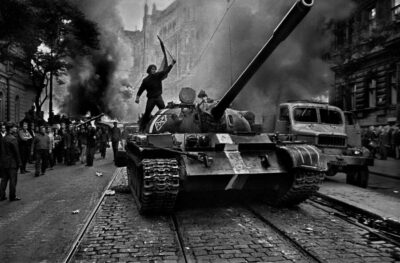
Second World War & Communism (Tip-based 3 hour tour)
Read our review →Browse the lists this tour appears in