
Reviewed · COMMUNISM & COLD WAR TOURS
Private Prague Cold War Walking Tour
Prague’s Cold War story comes into sharp focus on this private walk. You’ll pass locked bomb-shelter doors, stand inside the former mausoleum of communist leader Klement Gottwald, and finish at Wenceslas Square, where Soviet tanks crushed the Prague Spring and the Velvet Revolution later brought the regime down.
I like the small private format, which lets your guide adjust the pace and answer questions without a crowd waiting. I also like the personal angle: guides Vadim and Alzbeta bring political events down to street level, explaining how communist rule shaped ordinary family life, not just government buildings and dates.
The main drawback is the steep 20-minute climb up Vítkov Hill. It is worth considering for the views and the unusual memorial, but you should ask to skip it if hills or stairs are difficult. The tour also packs a lot into three hours, so this is a brisk introduction rather than a complete study of modern Czech history.
In This Review
- Key points at a glance
- Why this tour gives Prague’s Cold War story a human scale
- Starting at the Karlín to Žižkov tunnel
- Climbing Vítkov Hill to Gottwald’s mausoleum
- The view toward Žižkov Television Tower
- Letná Hill and the missing Stalin monument
- John Lennon Wall and forbidden Western ideas
- Wenceslas Square, from tanks to the Velvet Revolution
- The upside-down King Wenceslas
- What the three-hour format really covers
- Who should book this private walk
- Should you book the Prague Cold War Walking Tour?
- FAQ
- How long is the private Prague Cold War tour?
- What language is the tour offered in?
- Is the tour private?
- Where does the tour begin?
- Is hotel pickup included?
- Are tram tickets included?
- Is the walk suitable for people with mobility issues?
- What is the cancellation policy?
Key points at a glance
- Enter a Cold War bomb-shelter passage: The Karlín to Žižkov pedestrian tunnel has locked doors leading to nuclear shelter corridors built during the Cold War.
- See Gottwald’s former mausoleum: At the National Monument on Vítkov, you can view the old laboratory and temperature-control facilities used to preserve the communist president’s embalmed body.
- Connect monuments with political power: The Hall of the Red Army and the huge Jan Žižka statue show how public spaces were used to shape national memory.
- Get a fine Prague view: The top of Vítkov Hill looks toward the Old Town and Žižkov Television Tower.
- Follow the road from repression to protest: Wenceslas Square links the crushed Prague Spring of 1968 with the joyful demonstrations of 1989.
- Travel privately by tram and on foot: Tram tickets are included, while food, drinks, and hotel drop-off are not.
Why this tour gives Prague’s Cold War story a human scale
Many Prague history walks stay with medieval streets, Baroque churches, and castle views. This one asks you to look at a more recent and unsettled past, the period when Czechoslovakia was under communist rule from 1948 to 1989.
That focus matters because the Cold War is easy to reduce to a few grand terms: Soviet control, censorship, occupation, protest. A good guide shows how those forces affected public spaces and daily choices. Vadim, praised for asking questions and connecting with student groups, is the sort of guide who can make the subject feel like a conversation rather than a lecture. Alzbeta has also brought family experiences into the explanation, giving the politics a more personal edge.
You should expect a serious tour, but not a gloomy one. The route includes irony, visual contrasts, and broad city views. At the end, an upside-down statue of King Wenceslas riding a dead horse provides a sharp contemporary counterpoint to the official monuments seen earlier.
Because the tour is private, your guide can spend more time on the parts that catch your attention. If you want political background, ask for more context. If you prefer stories of ordinary life, say so at the start. That flexibility is one of the strongest reasons to choose a private experience.
More communism and Cold War tours:
- Prague: Communism History and Nuclear Bunker Guided Tour
★ 4.7 · 2,417 reviews - Prague Communism History and Nuclear Bunker Tour
★ 5.0 · 1,742 reviews - Communism & Nuclear Bunker Tour + 70s Canteen Lunch (own expense)
★ 5.0 · 1,036 reviews
Starting at the Karlín to Žižkov tunnel
The tour begins at the meeting point near Kostel Svatý Josef on Náměstí Republiky, unless hotel pickup has been arranged. You should arrive 15 minutes early. From central Prague, the group heads toward the Karlín to Žižkov pedestrian tunnel.
The tunnel is a modest place, but it opens the tour with a strong Cold War image. Behind locked doors are corridors connected with nuclear bomb shelters built during that era. The facilities are still maintained, though you should not expect to walk through the shelter itself. The interest lies in seeing the sealed entrances and understanding how seriously authorities prepared for the threat of nuclear conflict.
This stop takes about 10 minutes, so it will not carry the full weight of the tour. Its value is symbolic. You are looking at a practical remnant of a period when the possibility of nuclear war shaped public planning and private fears.
Climbing Vítkov Hill to Gottwald’s mausoleum
The hardest part of the walk comes next: a steep climb of about 20 minutes up Vítkov Hill. A moderate level of fitness is recommended. Wear comfortable shoes, and do not treat this as a flat city stroll.
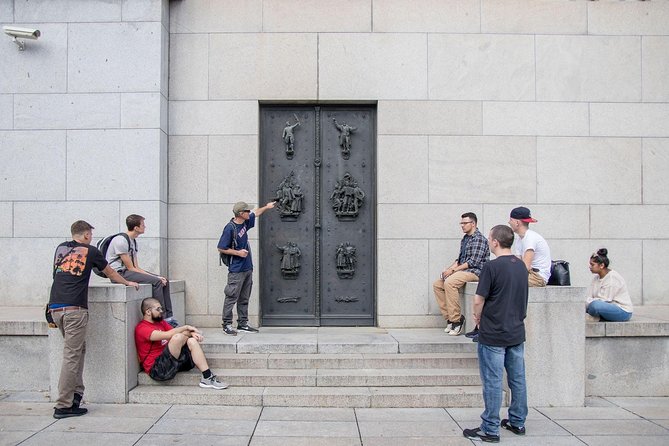
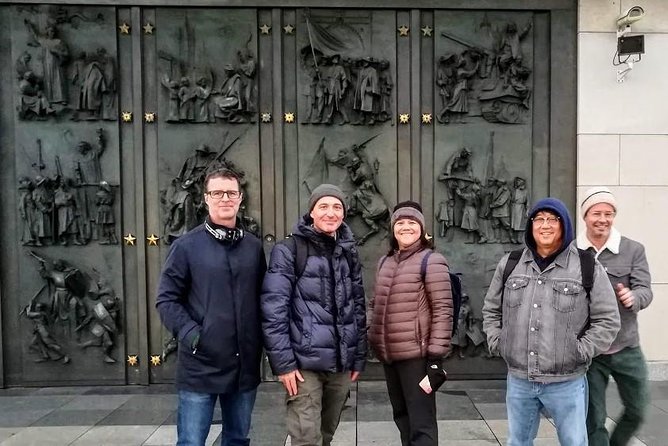
At the top, the National Monument combines several layers of Czech and communist memory. The site commemorates Czech and Slovak warriors of the First World War, while its Hall of the Soviet Soldier honors Red Army troops killed in Eastern Europe during the Second World War. Statues and decorative friezes give the space a formal, ceremonial feel.
The former mausoleum of Klement Gottwald is the unusual centerpiece. Gottwald served as Czechoslovakia’s president from 1948 to 1953 and was also general secretary and chairman of the Communist Party. After his death, his mummified body was displayed here in a state-sponsored memorial modeled on the grand political cults of the period.
You can look into the laboratory and temperature-control center where staff tried to preserve the embalmed body. This is not a polished royal tomb. It is a behind-the-scenes reminder of the technical effort required to turn a political leader into a permanent symbol.
The guide’s explanation is crucial here. Without context, the machinery and empty rooms may seem merely strange. With context, they show how communist governments used ceremony, monuments, and even the dead body of a leader to reinforce authority.
The monument to Jan Žižka adds another layer. The massive bronze equestrian statue is the third-largest of its kind in the world. It predates the Cold War, but its placement helps explain how governments repeatedly reuse older national symbols for new political purposes.
Admission to the National Monument is not included, so confirm what access your visit will have when booking. The tour information specifically includes the exterior setting and the former mausoleum facilities, but entry arrangements may affect exactly what you see.
The view toward Žižkov Television Tower
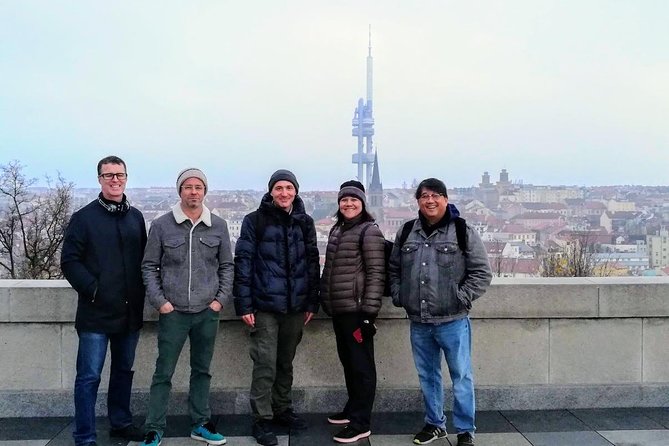
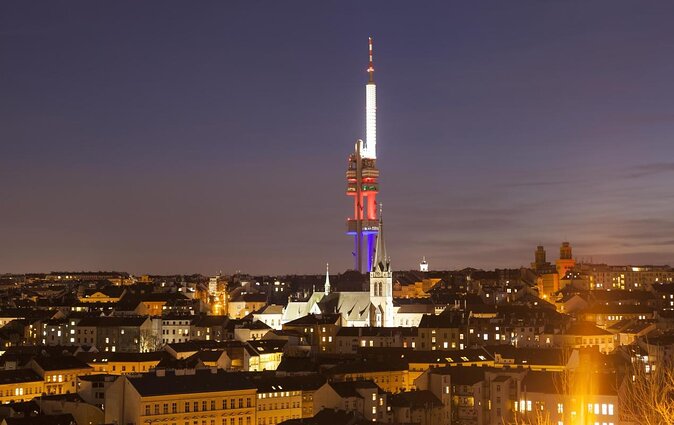
After the memorial, you’ll have a broad view across Prague. The Old Town lies below, and the distinctive Žižkov Television Tower rises on the horizon.
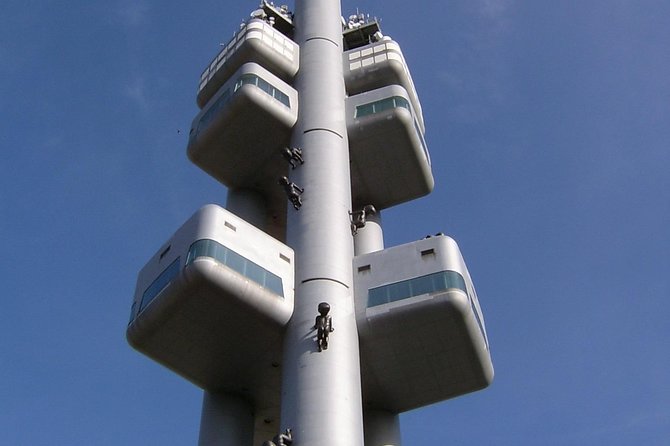
The tower is a useful visual marker for the city’s communist-era architecture. Its Brutalist design remains one of Prague’s most debated modern sights. This tour does not take you up the tower, but it gives you a good angle for seeing its form in relation to the older city.
I like this pause because it breaks up the political material. You are not only hearing about a state system. You are also seeing how the city grew and changed around it. The view helps place the later stops in a wider setting.
The sunset can be especially appealing from Vítkov Hill, according to the tour information, but timing depends on your chosen departure. Morning and afternoon starts are offered, so ask about the schedule if the view matters to you.
More walking tours in Prague:
- Prague: 3-Hour Walking Tour of Old Town & Prague Castle
★ 4.7 · 5,696 reviews - Prague: Ghost Walking Tour Where Legends Come To Life
★ 4.4 · 5,253 reviews - Prague: Jewish Quarter Walking Tour with Admission Tickets
★ 4.7 · 3,729 reviews - Prague Guided Walking Tour and Cruise with Authentic Czech Lunch
★ 5.0 · 3,627 reviews
Letná Hill and the missing Stalin monument
The route then returns to central Prague, using public transportation as needed. Tram tickets are included, which keeps the logistics simple. Your guide may point out Letná Hill, where one of the world’s largest statues of Josef Stalin once looked over the city.
The statue is gone, but its former presence still matters. Giant political monuments do more than decorate a city. They tell people who holds power and which version of the past is officially approved. The empty space left behind helps explain the changing mood after Stalin’s death and the later rejection of his cult.
This portion is less about entering a major attraction and more about reading Prague’s public spaces. You’ll need to listen closely, since some of the meaning comes from what is no longer there.
John Lennon Wall and forbidden Western ideas
The John Lennon Wall represents a different kind of public memory. During communist rule, people painted messages of peace, freedom, and hope here, often drawing on Lennon’s image and Western popular culture.
The wall became a place where private frustration could appear in public. Authorities repeatedly painted over the graffiti, but new messages returned. That cycle tells you something important about protest under censorship: even a small painted sentence could become a public act.
The wall is not a complete record of the opposition movement, and it should not be treated as the single symbol of resistance in Prague. Still, it offers a clear, visual way to discuss the desire for Western-style freedom. It also gives the tour a welcome change of mood after the formal spaces on Vítkov Hill.
Your guide can help separate the wall’s popular image from the larger political story. The best part is not simply taking a photograph. It is understanding why writing on a wall could carry such risk and meaning.
Wenceslas Square, from tanks to the Velvet Revolution
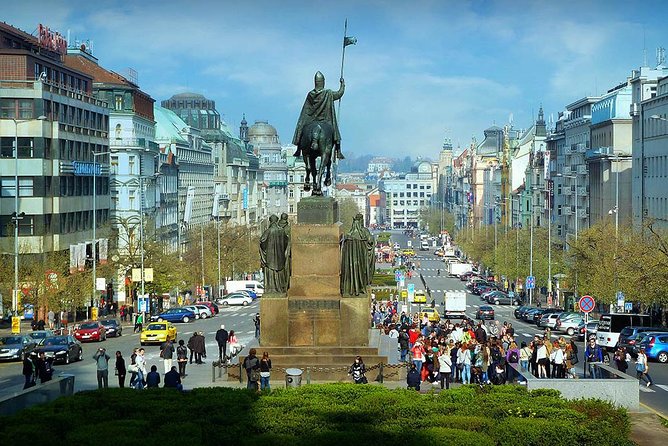
Wenceslas Square is the tour’s strongest historical setting. Though called a square, it feels more like a long urban boulevard, and its size explains why it has repeatedly served as a stage for parades, demonstrations, and mass political gatherings.
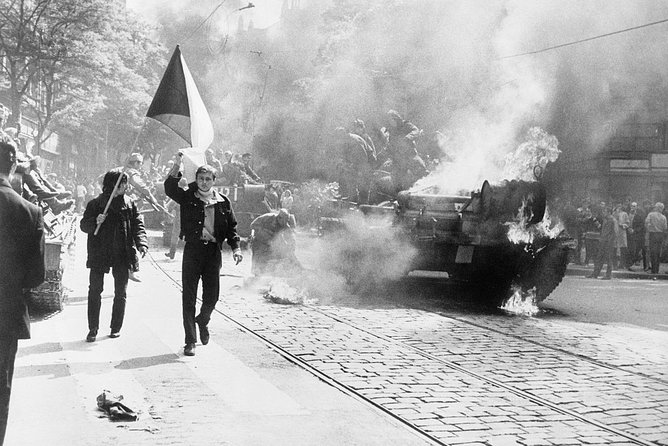
Here you’ll hear about the Prague Spring of 1968, when reforms allowed more freedom of speech and an independent press to develop for about eight months. Warsaw Pact tanks entered Czechoslovakia and crushed the reform movement. The square became part of that traumatic story, linking the broad public space with occupation and the end of political hope.
The same place later became central to the Velvet Revolution of 1989. This time, crowds gathered to demand the end of communist rule. The movement was largely peaceful, and the square filled with people who wanted a new political future.
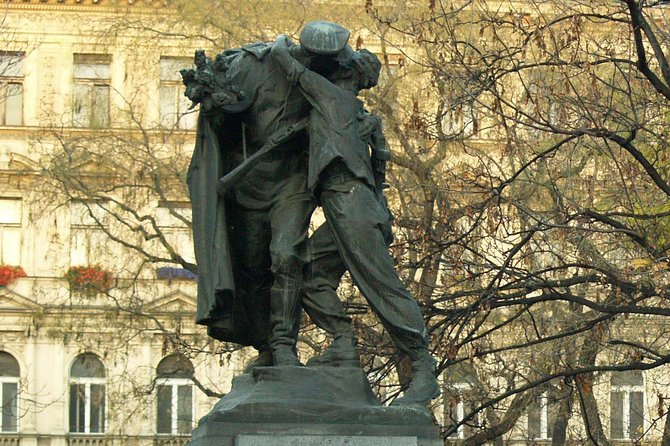
That contrast is what makes Wenceslas Square so powerful. In one period, it was associated with military force and the suppression of reform. Two decades later, it helped frame the public celebration of change. The monuments to Czech protesters add a human face to those events.
A guide who can place 1968 and 1989 in the same physical setting gives you a much better grasp of Czech history than a list of dates. Vadim has been praised for explaining political themes in clear historical context, and this is the part of the walk where that skill matters most.
The upside-down King Wenceslas
The final listed stop is the ironic sculpture of King Wenceslas riding a dead horse. It offers a wry closing note after the solemn memorials and painful political history.
The work invites you to question official symbols, national heroes, and the way public art can comment on the present. Its relevance to Central European politics is left open for discussion, which is useful. You can ask your guide how the sculpture relates to the older statue of Wenceslas in the square and to changing ideas about Czech identity.
This is a small stop, about five minutes, but it rounds out the tour. You move from official communist monuments to grassroots protest and then to modern political irony.
What the three-hour format really covers
Three hours is enough to connect the major themes, but not enough to examine every Cold War site in Prague. The route works best when you want a focused overview with a historian rather than a museum-heavy day.
You will walk, climb, ride a tram, and pause at monuments. The pace may feel brisk because the stops are spread across the city. That movement is part of the appeal, since you see how different neighborhoods and public spaces carry different memories.
The private setup is limited to your group, with the listed price of $390.37 per group. The summary describes groups of up to 10, while the pricing note says the rate is based on six people or fewer. I would confirm the exact price for your party size before paying.
For six people, the cost works out to roughly $65 per person. For a smaller group, it is a substantial expense, but you are paying for undivided guide time, a specialist subject, and tram tickets. If you have a larger group, the value improves quickly. Solo visitors or couples who mainly want general sightseeing may find a standard group walk more economical.
Food and drinks are not included, and hotel drop-off is not included. Pickup can be arranged, but the normal meeting point is central Prague near Náměstí Republiky.
Who should book this private walk
I would choose this tour if you want to understand Prague beyond its older monuments. It suits readers interested in communism, Soviet influence, protest movements, political art, or the lived experience of the twentieth century.
It is also a strong choice for families, university groups, and visitors who ask a lot of questions. The guide’s style appears especially suited to discussion. Students can connect the stops to wider European history, while adults may value the family stories and practical explanation of life under the regime.
You should think twice if you want a relaxed, flat walk or a tour centered on interiors and formal museum displays. The Vítkov climb is real, the former mausoleum is unusual rather than grand, and some stops involve listening to an explanation at an outdoor site.
The experience is offered in English, with morning or afternoon departure options. Confirmation is sent within 48 hours of booking, subject to availability. Free cancellation is available up to 24 hours before the start time. Changes or cancellations inside that window are not accepted for a refund.
Should you book the Prague Cold War Walking Tour?
Book it if you want a private, focused look at the forces that shaped Prague between 1948 and 1989. The combination of the bomb-shelter corridors, Gottwald’s mausoleum, Lennon Wall, and Wenceslas Square gives the subject both physical evidence and human meaning.
I would especially recommend it for groups of several people, since the group price makes more sense when divided among six or more participants. Ask about skipping Vítkov Hill if mobility is a concern, and confirm the price if your group has more than six people.
This is not the tour for checking off Prague’s prettiest sights. It is for seeing the city as a place where official monuments, vanished statues, protest graffiti, and public squares reveal how power changed hands.
FAQ
How long is the private Prague Cold War tour?
The tour lasts approximately three hours.
What language is the tour offered in?
The tour is offered in English.
Is the tour private?
Yes. Only your group participates in the activity.
Where does the tour begin?
Unless hotel pickup has been arranged, meet your guide 15 minutes before the start at Kostel Svatý Josef, Náměstí Republiky 1077/2, Prague 1.
Is hotel pickup included?
Pickup may be offered if arranged, but hotel pickup and drop-off are not included in the standard tour details.
Are tram tickets included?
Yes. Tram tickets are included.
Is the walk suitable for people with mobility issues?
The tour requires a moderate level of physical fitness and includes a steep climb of about 20 minutes up Vítkov Hill. If needed, you can ask to leave out Vítkov Hill and focus on other Cold War sites.
What is the cancellation policy?
You can cancel at least 24 hours before the start time for a full refund. Cancellations or changes made less than 24 hours before the start time are not accepted for a refund.
Just added around Prague
- Prague Highlights 4 Hour Private Walking Tour★ 5.0 · 3 reviews
- VIP Prague Segway Tour Around Monastic Breweries★ 4.0 · 3 reviews
- Private Guided Tour from Prague to UNESCO Kutna Hora★ 5.0 · 3 reviews
- From Prague Day Unique Tour To Cesky Krumlov★ 4.5 · 3 reviews
- Cesky Krumlov: Insta-Perfect Walk with a Local★ 5.0 · 3 reviews
- Prague: WWII Tour with Local Historian SMALL GROUP★ 5.0 · 3 reviews
- Learn Traditional Czech Cooking from Authentic Family Recipes★ 5.0 · 3 reviews
- Running Tour of Prague. Your private 6-9K intro★ 5.0 · 3 reviews
Communism & Cold War Tours, compared.
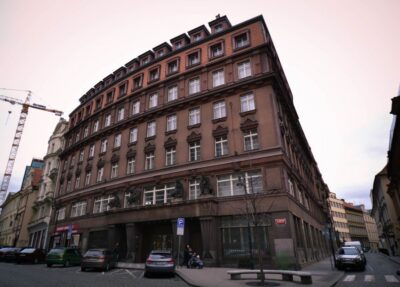
Communism History and Nuclear Bunker Guided Tour
Read our review →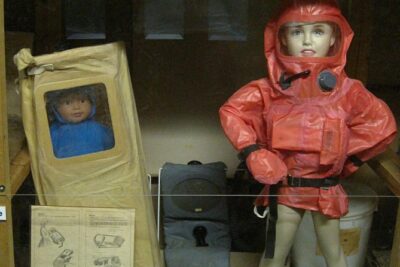
Prague Communism History and Nuclear Bunker Tour
Read our review →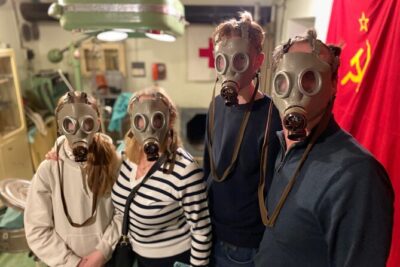
Communism & Nuclear Bunker Tour + 70s Canteen Lunch (own expense)
Read our review →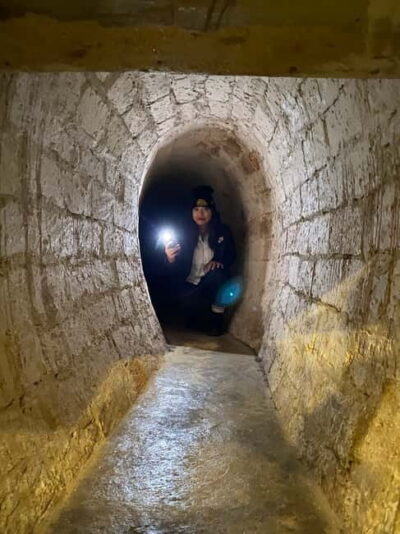
Communism and Bunker Tour with 70s Canteen Lunch
Read our review →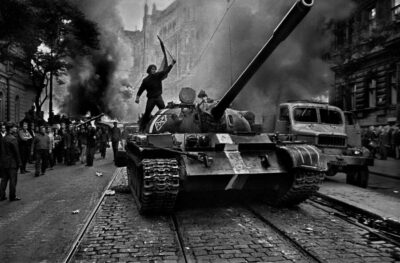
Second World War & Communism (Tip-based 3 hour tour)
Read our review →Browse the lists this tour appears in